
Reviewed · CITY TOURS
Private Berlin City Center Walking Tour
A private 4-hour walk through Berlin’s biggest sights is interesting because it connects the city’s famous landmarks to the ideas behind them, in a way you can actually remember. You get hotel pickup and a guided route that links places like Brandenburg Gate to Museum Island into one clear flow.
I like that the tour is truly private and built for your group, with a guide who can keep things flexible when interests change. I also like the focus on meaning, not just photo stops, so you leave with a sensible overview of Berlin’s toughest chapters and most recognizable civic spaces.
One consideration is pacing. With many stops kept short, you can feel a little rushed if you normally like to linger and read every sign.
Key Highlights You Should Care About
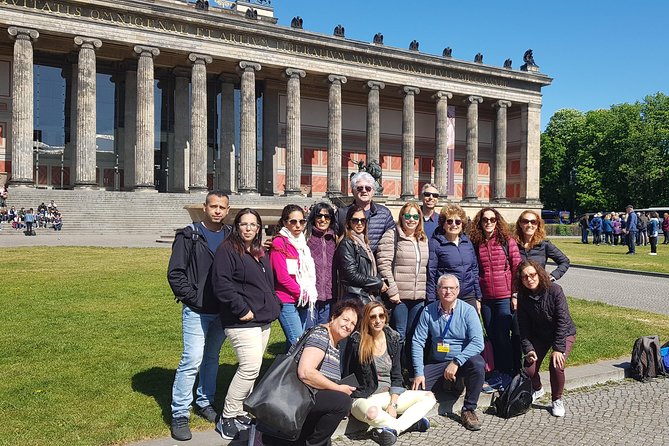
- Hotel pickup to prevent stress: your guide meets you at your hotel lobby, so you spend less time figuring out where to go.
- A high-density route with clear context: lots of major stops, kept moving, with explanations you can follow without getting lost.
- Berlin’s hard history is handled directly: Holocaust Memorial, Fuhrerbunker area, and Topography of Terror are part of the route.
- Cold War geography becomes understandable: you see Wall-related remnants and classic borderland sites like Checkpoint Charlie.
- Remembrance is explained as a moving target: Neue Wache lets you talk about how different regimes used memorial space.
- City-center architecture on foot: you pass major landmarks from Unter den Linden to Museum Island, with guidance on what you’re seeing.
A Private Berlin Walk That Gives You Bearings Fast
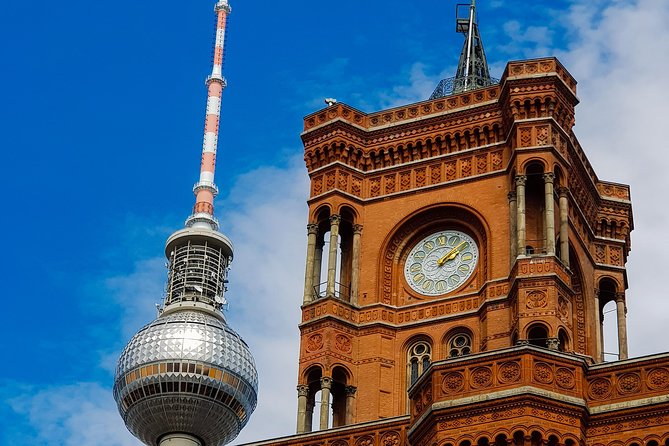
If you’re trying to get your head around Berlin, this tour is built for that exact moment. Berlin can feel huge and complicated, even when the sights look familiar. Here, you cover a lot of central ground in a short window, with a guide translating what you’re looking at into something you can place later.
You also benefit from the private format. A small group means you can ask questions as you go, and the guide can shape the pace for your comfort level. For first-time visitors, or anyone with limited time, this is the kind of structured overview that helps everything else click once you’re on your own.
And since it’s a walking tour, you get the city as a lived-in place, not a checklist you tick off at subway stops. You will still want time for independent revisits, but the tour acts like your map in human form.
More walking tours in Berlin:
- Discover Berlin Half-Day Walking Tour
★ 5.0 · 9,624 reviews - Berlin: Third Reich and Cold War 2 Hour Walking Tour
★ 4.9 · 6,830 reviews - Berlin: Discover Berlin Walking Tour
★ 4.9 · 5,998 reviews
Hotel Pickup, a Simple Start, and a Route That Keeps You Moving
The tour meets near Scheidemannstraße 5 in central Berlin, and it ends back at the meeting point. The key convenience is the pickup option, where you’re met at your hotel lobby. That matters more than it sounds. Berlin signage and transit can be straightforward, but a no-stress start is a gift when you’re juggling directions, time, and jet lag.
This experience runs daily, with hours listed from 8:00 AM to 8:00 PM. So you can usually find a slot that fits your sightseeing rhythm, whether you like mornings for energy or afternoons for softer walking.
Tickets are handled with a mobile format, and the price includes all fees and taxes. Public transport tickets are not included, but since you’ll have pickup and the route is concentrated in the center, you should be able to plan around transit without needing it as part of the tour mechanics.
Practical tip: if you’re traveling with more than one generation, a private guide can be a big advantage. One person can ask deeper questions while another focuses on getting the broad story without feeling left behind.
Brandenburg Gate and the Reichstag: Start With the Symbols, Then Understand Them
The walk begins with Brandenburg Gate, Berlin’s best-known icon, and you’ll discuss why it became so meaningful. You’re not just looking at a famous structure. You’re learning how the site’s significance connects to broader German history and how Berliners think about these places today.
Next comes the Reichstag Building, where you’ll view the building and talk about its history across different eras. The value here is the framing. You’ll learn how a landmark can keep changing its role depending on political power and public needs, so you understand why the building still feels important even when the context shifts.
Stop notes are kept short, about ten minutes each for these early highlights. That doesn’t mean the topic is shallow. It means the guide is giving you the “starter version” of the story, so you can recognize the themes later when you read, watch, or revisit on your own.
If you’re the kind of traveler who likes to come back to places with better context, this is a smart way to start. You get the visuals first, then you get the mental hooks.
Holocaust Memorial: Walk, Read the Space, and Think About Interpretation
One of the tour’s most powerful parts is the Holocaust Memorial, also known as the Memorial to the Murdered Jews of Europe. You walk through it and discuss its significance, including the context in which it was built and the different interpretations.
This stop is where the tour shifts from “sightseeing” into “understanding.” Memorial spaces are designed to make you react, reflect, and question your own assumptions. Having a guide explain how the site was framed, and why people read it in different ways, helps you avoid treating it like a photo opportunity.
The time here is also short, around ten minutes, which means you have to accept a quick first encounter. If you’re especially moved by memorials and want more time to absorb quietly, you might want to plan an extra visit later on your own.
Even so, the guide’s discussion can give you a strong base. You leave with a better sense of why remembrance is handled carefully in Germany, and why the meaning doesn’t just sit in the past.
A few more Berlin options worth a look
- Berlin: Private Reichstag and Glass Dome Tour
★ 4.8 · 2,226 reviews - Berlin Private Complete History All Day Walking Tour
★ 5.0 · 474 reviews - Private Walking Tour Berlin Third Reich Hitler and World War II
★ 5.0 · 360 reviews - Private Berlin: Iconic Sights and Hidden Gems Walking Tour
★ 5.0 · 292 reviews
Fuhrerbunker and the Last Days Questions
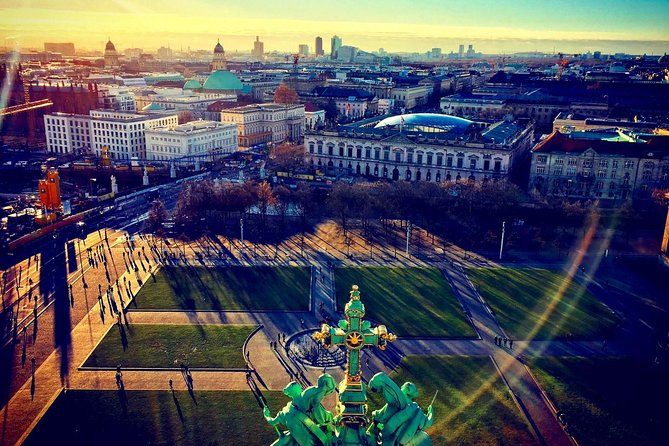
From the memorial, the tour moves into the area associated with the Fuhrerbunker, where Hitler’s bunker was located. You’ll discuss the events of the last days of the war, including the question of whether Hitler did or did not commit suicide.
This is an intense topic, and it comes with uncertainty, argument, and competing interpretations. The guide’s role matters here. Instead of letting you drown in details, you’re guided through the main themes and what the different accounts have to consider.
The practical benefit: you don’t have to “already know the story” to handle this stop. You get enough context to make sense of why the location carries weight.
Because the stop is brief, you might not walk away with every fact you could read online. But you will walk away with a clear sense of why this kind of site is controversial, and why Berlin chooses not to sanitize it.
Herman Göring’s Aviation Building, the GDR Ministries, and Berlin’s Power Shifts
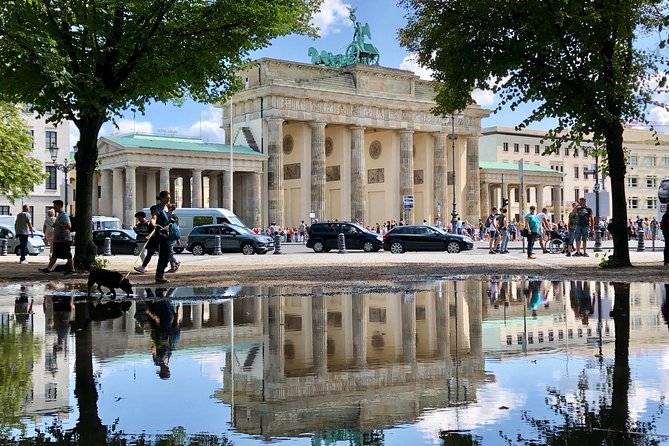
Another stop covers the Aviation Ministry of Berlin. You’ll discuss the building’s origins as Herman Göring’s Aviation Building, then its later use as the House of Ministries under the government of East Germany.
This is a smart way to learn how one building can change identities with political power. You’re not just getting a list of occupants. You’re learning that regimes reuse structures, rename spaces, and reshape what those walls represent.
That theme keeps showing up across Berlin, and this stop prepares you for it. When you later see memorials and institutions that also shifted across time periods, you’ll already understand the mechanism: power changes meaning, and the city carries those layers.
Like several other stops, the time is about ten minutes. So the guide will likely keep the focus on the big transitions you need for orientation, rather than a full architectural deep read. If you want more, you’ll know what to research next.
Topography of Terror, a Wall Fragment, and the Cold War Written in Streets
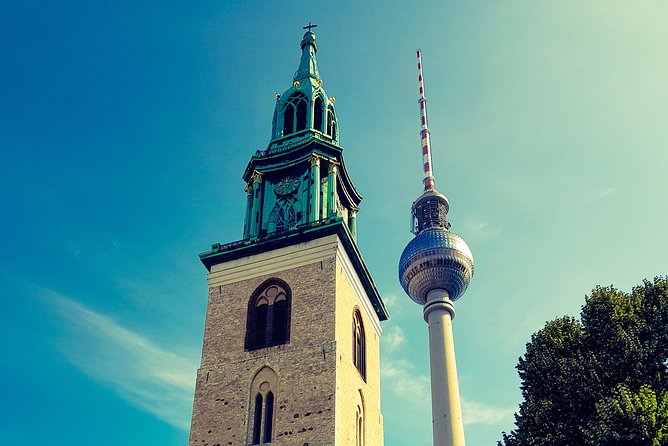
Topography of Terror is handled as more than one moment on the walk. You’ll see an original piece of the Berlin Wall and discuss how it came up, then you’ll see the site and discuss its history. You also cover the background for the division of Berlin and for the division of Germany after WWII.
This is where Berlin’s geography becomes history you can feel. Walls and border sites are easy to understand as physical facts, but a good guide helps you connect them to the political reasons behind the separation, and how the city lived with that reality.
The Wall fragment is especially useful because it makes the Cold War tangible. Even if you’ve seen pictures before, seeing a real remnant in context hits differently. And because you’re guided, you’re not left guessing what you’re looking at.
Practical note: when a stop includes discussion, you’ll get more out of it if you keep a flexible mindset. Don’t rush through to the next landmark. Let the guide explain what to notice.
After this area, Checkpoint Charlie feels less like a random famous spot and more like a piece of a larger system. You’ll understand the logic behind why those classic borderland sites became icons.
Checkpoint Charlie and Gendarmenmarkt: Reading Berlin’s Public Face
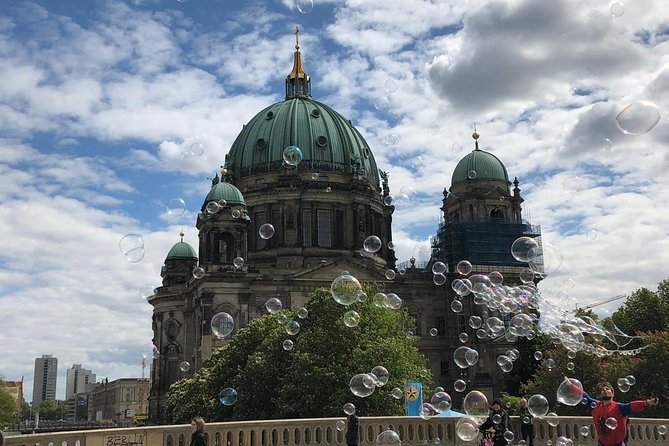
Checkpoint Charlie is next, with time to see the site. This is another place where Berlin’s history is visible, even when it has become widely recognizable through media and travel photos.
The tour also includes Gendarmenmarkt, where you’ll see the site. Here, you get a shift from political tension to Berlin’s civic and cultural presence. The guide helps connect the beauty and order of the square with the city’s bigger story, rather than treating it as a pretty break from the darker stops.
This kind of pacing is important. Berlin’s core attractions are not all the same mood, and you’ll likely appreciate that the tour doesn’t keep you in one emotional lane for all four hours.
If you have limited time, this section helps you keep a balance. You get history, but you also get the sense of what the city looks like when it’s at its most confident and public.
Bebelplatz, Unter den Linden, and Neue Wache’s Complex Remembrance
Next comes Bebelplatz, where you’ll see the square and discuss events that happened there. Then you’ll cover Unter den Linden, viewing the avenue and taking in what makes it a central spine of Berlin.
Then comes Neue Wache, described as Berlin’s central memorial for all victims throughout German history. You discuss when and in what context the building was built, how each regime used it for its own purposes, and the complexity of Germany’s culture of remembrance.
This is one of the tour’s best teaching moments because it explains remembrance as a process, not a static monument. Memorials get reinterpreted as politics changes. That helps you look at the site with more care and less certainty.
Time here is again around ten minutes, so you get direction and frameworks rather than a long contemplative stay. If you’re the type who wants to read everything on the spot, you may need extra time later.
But even a short guided stop can change how you notice the space. You’ll likely walk away thinking about how public memory gets managed, and why that’s part of Berlin’s modern identity.
Museum Island, Deutsches Historisches Museum, and the City’s Architectural Mood
The tour moves from memorial and political symbolism into Berlin’s major institutional and architectural zones. You’ll discuss the Deutsches Historisches Museum building and its architecture, then cover Lustgarten and talk about the site’s history.
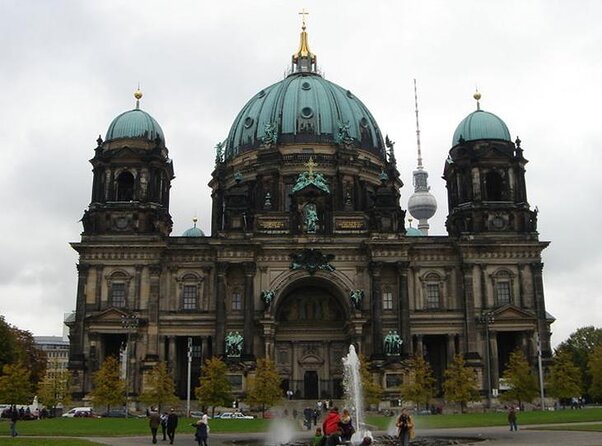
From there, you’ll reach the Humboldt Forum in the Berliner Schloss, with discussion of the Berlin City Palace history. You’ll also see Berliner Dom and discuss the history of the site, then visit Museum Island and discuss its history.
Even though these stops are short, this is where the guide’s storytelling really earns its keep. Architecture can feel like a background detail until someone helps you understand why these buildings matter, who they served, and what their presence says about the city.
This section is ideal if you enjoy seeing the big shapes and then planning a follow-up visit later. You’ll be able to say, “Okay, I get why that building belongs in this part of Berlin,” and you’ll know what to focus on when you go back.
Also, since each stop is listed as admission ticket free in the tour format, you avoid the mental hassle of constantly checking whether you need separate paid entries for this specific route.
Price and Logistics: When $397.38 Per Group Makes Sense
The price is $397.38 per group, up to 15 people, for about four hours with an expert private guide. It’s not cheap if you’re traveling solo or as a couple. But it can become very good value if you split the group cost.
If you get near the maximum group size of 15, the effective per-person cost is roughly $26.50. Even with smaller groups, a private, guided overview of major central landmarks can still feel like a bargain compared with paying for multiple separate guided services or trying to coordinate several tours yourself.
A big part of the value is convenience: pickup from your hotel lobby, mobile tickets, and a guide who meets you at the start so you avoid map panic. Also, all fees and taxes are included, and the stops are listed as admission ticket free within the tour structure.
Not included are public transportation tickets and food and drinks. So plan to cover your own snacks and transit if you need it before pickup or after drop-off.
If your top priority is getting oriented fast, this tour hits that goal efficiently. If your top priority is long museum time at a slow pace, you might feel constrained by the short stop durations.
Who This Private Walking Tour Fits Best
This tour is a strong match if you want a first-time Berlin overview without wandering around alone, and if you like having context while you’re still looking at the place. It’s also well suited for mixed ages and multiple generations, since you get guided pacing and clear explanations without requiring everyone to follow a complex plan.
It’s also a good fit if you enjoy big-picture learning. The route is packed with landmarks that represent Berlin’s political shifts and remembrance culture, so you get a structured understanding rather than random sightseeing.
If you’re already very history-heavy and want long, text-heavy visits, you might want to use this as a foundation and then pick a few single-site deep dives afterward.
And because the tour runs in English and is private for your group only, it’s a practical choice when you want control over questions and pacing.
Should You Book It? My Straight Answer
Book it if you want a guided, no-getting-lost start that covers the essentials of Berlin’s center in about four hours, with clear explanations at major landmarks. The hotel pickup and private group setup are especially worth it if you’re short on time or traveling with people who need a calmer plan.
Skip it, or pair it with extra free time, if you know you like to linger. Many stops are kept around ten minutes, so you’ll likely want to come back later for the sites that hit you hardest, like the memorial spaces and major history zones.
If you do book, I’d recommend thinking of this tour as your orientation pass. After that, you’ll be ready to explore Berlin with better instincts and less second-guessing.
FAQ
How long is the Private Berlin City Center Walking Tour?
It lasts about 4 hours.
Is this tour private, and how many people can be in the group?
Yes, it is private, and the group size can be up to 15 people.
Is hotel pickup offered?
Yes. The guide will pick you up from the lobby of your hotel. The tour also meets at Scheidemannstraße 5 and ends back at the meeting point.
What language is the tour offered in?
The tour is offered in English.
Are admission tickets included for the stops?
The tour lists admission ticket free for the stops included, and the price includes all fees and taxes.
What is the cancellation policy for a full refund?
You can cancel up to 24 hours in advance of the experience for a full refund. If you cancel less than 24 hours before the start time, the amount paid is not refunded.
Recently added around Berlin
- Berlin Private Custom Walking Tour With A Guide (Private Tour)★ 4.5 · 8 reviews
- One Up to 3 Rickshaws(6 GUESTS)-Taylor Made Rickshaw Berlin Tour★ 5.0 · 20 reviews
- Moonshine Comedy – English Stand Up Comedy by the bay★ 5.0 · 11 reviews
- Private Half-Day Berlin Sightseeing Tour with a Minivan Including Short City Walks★ 5.0 · 31 reviews
- Private taxi tour to Potsdam and Sanssouci 6-8h★ 5.0 · 30 reviews
- Private City Kickstart Tour: Berlin★ 4.5 · 71 reviews
- Private tour of Berlin★ 5.0 · 15 reviews
- Private Tutankhamun’s Tomb Live Escape Room in Berlin★ 3.5 · 11 reviews
City Tours, compared.
1-Hour City Tour by Boat with Guaranteed Seating
Read our review →
Berlin City Hop-on Hop-off Tour with Optional Cruise
Read our review →


Browse the lists this tour appears in