Reviewed · PRIVATE
Private Taxi Tour of Berlin East and West and Neighbourhood approx. 4-6h
Berlin East and West can feel like two different cities, but this private taxi loop stitches them together fast. You get the big landmarks you expect, plus the in-between streets and boundary places that help the story make sense.
What makes it interesting is the way you’re not stuck on foot for hours. You’ll get close-up viewing time at key spots, then roll on in a climate-controlled car while your guide, Gunter (GAT-Productions), explains what you’re seeing and why it matters. I also like the personal, flexible approach from Gunter, based on questions he asks in advance, so the route can match your priorities. One possible drawback to keep in mind: with a 4 to 6 hour format, it can still feel like a “see it, then move on” day if you want lots of long museum time at every stop.
Key highlights you should know before you go
- A guide who tailors the day after hearing what you want to focus on
- Comfort first: air-conditioned car, WiFi onboard, and frequent stop-and-look moments
- Big Berlin contrasts: Wilhelminian power sites, Cold War scars, and reunification rebuilds
- Photo-friendly stops: Gunter takes photos at various landmarks, and shares them after the tour (per tour feedback)
- Street-level value: several stops are free to experience, like Brandenburg Gate and major wall memorial areas
- You can trade priorities by telling the driver what to skip if the route hits areas you find less interesting
A private taxi for Berlin East and West, what you gain and what you trade
Berlin is the kind of city where walking is great. It’s also the kind of city where walking all day can turn into a slog. This private taxi tour gives you a middle path: you ride through neighborhoods efficiently, then you step out for short, meaningful views and quick context.
You’re paying for time and convenience. At $179.82 per person for about 4 to 6 hours, the value is strongest when you have limited days and want a solid first map of East and West. You’re also not on your own trying to connect the dots between sites like the Reichstag area, the Berlin Wall remnants, and the entertainment-and-embassy layers on both sides.
Tradeoff: it’s not a slow, sit-in-a-museum day. If your dream Berlin day is 3 to 4 hours inside buildings, you’ll need to treat this as the framework and then add museum time on separate days. Also, make sure the vehicle works for your group size. One piece of feedback pointed out a car-size mismatch for four people, so confirm what you’ll actually get when you book.
A few more Berlin options worth a look
- Berlin: Private Reichstag and Glass Dome Tour
★ 4.8 · 2,226 reviews - Berlin Private Complete History All Day Walking Tour
★ 5.0 · 474 reviews - Private Walking Tour Berlin Third Reich Hitler and World War II
★ 5.0 · 360 reviews
Reichstag to Brandenburg Gate, the political core you can read in layers
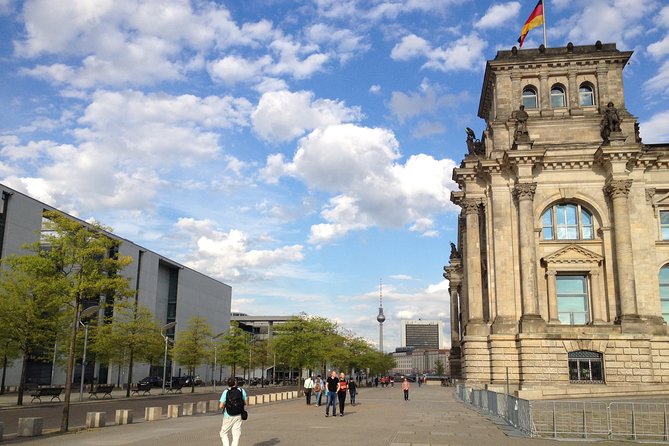
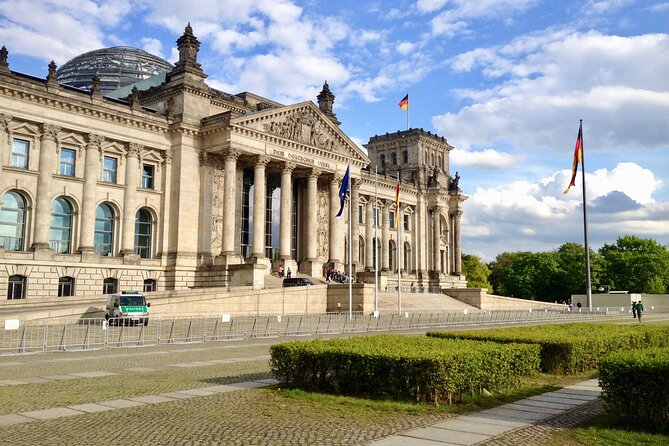
Your day starts in the government orbit, where Berlin’s identity shifted again and again. The Reichstag area is a good example of why a taxi makes sense here: the building and its surroundings carry Cold War tension, then reunification ambition, all within a short radius.
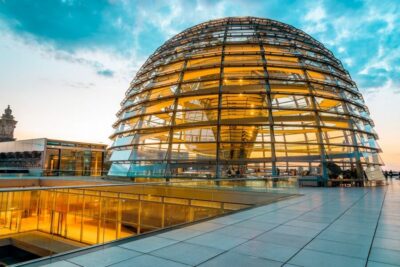
The Reichstag itself tells the story with symbolism. After the Red Army flag moment that lives on mostly through famous images, the building sat awkwardly in the divided city. For years, it was treated with restrictions in the Cold War era, even close to the Wall and affected by who could use it and for what. Today, it’s rebuilt and transformed into the reunified seat of Germany’s parliament, including the Reichstag dome concept that now reads as an icon of modern Berlin.
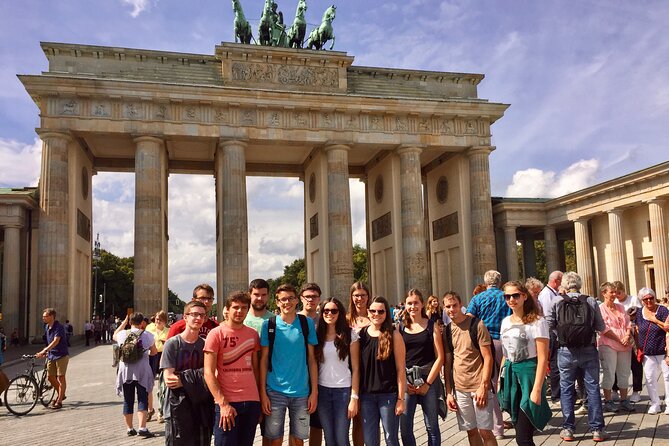
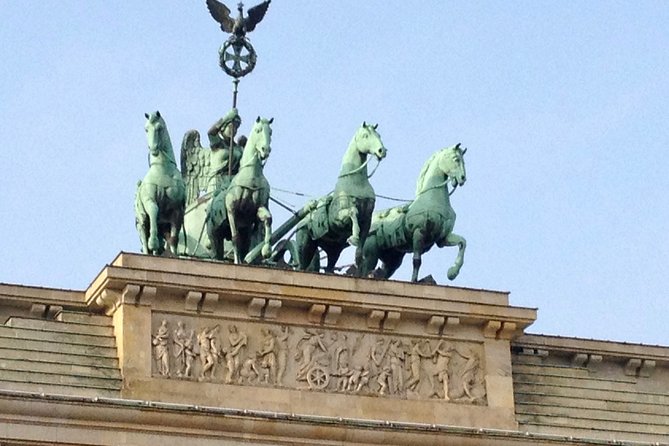
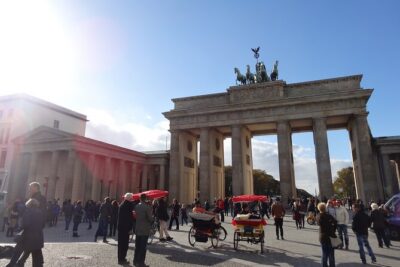
From there, you roll into Pariser Platz and the Brandenburg Gate, where the setting matters as much as the arch. If Berlin were an apartment, this is the parlor. War damage and later rebuilding shaped what you see around it, and the Gate became what was left standing in a space that was once more isolated and fenced-in than tourists today assume. It’s also one of the stops where the experience is easy to access, with street-level time and no ticket stress.
A practical tip: wear layers. Even in comfortable taxi time, the best moments often come when you step outside to look up, walk a few minutes, and take photos at the right angle.
Unter den Linden to Gendarmenmarkt, Prussian grandeur and Cold War echoes
Next comes Berlin’s classic “show you the important things” corridor: Unter den Linden. The boulevard was designed as a calmer path in earlier centuries, and the story of planting becomes part of the name you hear today. Lining the street are institutions that helped shape Berlin’s power image: the State Library, Humboldt University, and the State Opera, all in a corridor that still feels ceremonial even when traffic is loud.
But this tour does not treat Unter den Linden as just pretty facades. You also pass by sites where ideology is written into buildings. The large Soviet-era representation complex on the boulevard is one of those places where scale tells you who had leverage in the middle of the divided city. It was built to impress, and it did what big-state buildings often do: it broadcast control.
You’ll also move through the Forum Fridericianum area, a cluster of major buildings where different periods leave fingerprints. One detail you’ll likely never forget is the symbolism around the Nazi era and book burning. In the square layout, you can see how public space was used for political theater, and how the city’s later redesigns shaped what people remember and what they can understand today.
From there, you reach Gendarmenmarkt, widely described as one of Berlin’s most beautiful squares. What’s especially useful here is that you’re not just seeing two churches. You’re learning how Frederick II shaped the look of religious-like towers, and how the two cathedrals differ in use today. The German cathedral houses a museum space about parliamentary history of Germany, while the French cathedral still holds services for a Reformed congregation that uses French on Sundays. It’s a rare place where you experience a square’s beauty and its civic meaning at the same time.
Jewish Berlin and German history museums, why the architecture is part of the lesson
Berlin’s 20th-century story includes both persecution and resilience, and the tour gives you multiple angles. One stop focuses on the Moorish-style synagogue facade with a golden dome. The sanctuary itself was destroyed in the war, but the front portal and the rebuilt structure create a visible link between prewar confidence, wartime loss, and postwar reconstruction. Expect airport-like security measures at the entrance, so plan for that mindset when you arrive.
Right nearby, you visit the German Historical Museum located in the former armory. The cool thing about this stop is that “museum time” is not the only value. The building itself sets expectations: it began as storage for war equipment, then evolved into a place where war history and German history could be interpreted and reframed over time, including changes during the GDR years. Even if you only spend part of your stop looking in the courtyard area and around the building, the emotional impact of the exterior frescoes is the kind of detail that makes German 20th-century history feel personal rather than abstract.
This is one area where I’d suggest you ask your guide one question that matters to you. For example, ask how the building’s uses changed across regimes. You’ll get more out of the architecture when you connect it to the timeline.
Still in Berlin, but a different kind of day:
- Berlin: Reichstag, Dome and Government District Guided Tour
★ 4.7 · 18,288 reviews - Berlin: 1-Hour City Tour by Boat with Guaranteed Seating
★ 4.3 · 16,993 reviews - Berlin: Boat Tour Along the River Spree
★ 4.4 · 11,252 reviews - Discover Berlin Half-Day Walking Tour
★ 5.0 · 9,624 reviews
Hackesche Höfe and Humboldt Forum, what reunification rebuilds can teach
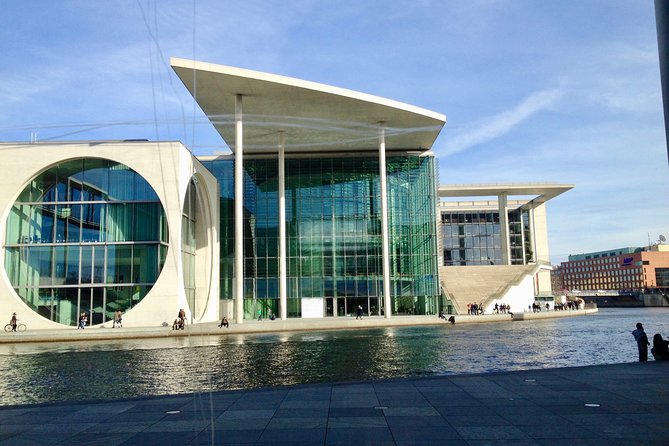
Berlin is full of ruins, but it’s also full of deliberate reconstruction. Two stops make that clear: Hackesche Höfe and the Humboldt Forum.
Hackesche Höfe is a courtyard ensemble that’s been rebuilt with its original Art Nouveau charm in mind. You’re seeing a design concept from 1908 where life, work, and small-business activity were meant to mix in a compact space. What replaced workshops is mostly retail now, including selected shops and products tied to Berlin culture. You’ll also spot references to East Berlin iconography like the Ampelmännchen. It’s not just a cute area for photos. It’s a lesson in how Berlin restored urban texture after decades of neglect.
Then comes the big reunification story: the Humboldt Forum. For decades, the site was essentially blank and used for temporary chaos, including a parking-lot phase. Before that, the Berlin Palace stood there. It was burned in the war, and the East German authorities demolished it for months even with strong criticism. Today, the idea is reconstruction, but with a modern building envelope and different collection purposes inside, including non-European art collections and university-related cultural content. The roof terrace is a highlight because it gives you a broader view of the city and helps you orient yourself for the rest of Berlin.
If you’re the type who likes to understand the “why” behind skylines, this stop is one of the best payoffs.
East Side Gallery to Checkpoint Charlie, the Wall story in manageable chunks
The Wall theme is where a taxi tour can turn from “nice overview” into “this is why Berlin matters.” You’ll see several Cold War landmarks and boundary remnants close together, but in short segments so your brain can keep up.
One stop is Checkpoint Charlie, the Allied crossing associated with the American sector. It’s not where you’ll find lots of original material, but that’s part of the point. You get a replica sentry box and a sense of what the world feared in 1961, when tanks appeared on both sides and the Cold War got too close to a breaking point. The area also includes museum-like interpretations, including a privately run Wall Museum collection tied to escape attempts.
Then you move into other Wall remnants and documentation areas. Topography of Terror is one of the most important stops on this route. It sits at the location where Nazi security organs had cellars for interrogations and mistreatment, and the site now includes excavation traces and information halls. Even if you’re not a museum person, this stop tends to land because it connects evidence on the ground to the human reality of what happened.
Right near there, Niederkirchnerstraße offers a short but original Wall remnant. It looks more perforated than threatening because of what’s been done to it over time, but that’s also why it’s memorable. You’re close enough to grasp that this was not a theoretical border. It was an everyday barrier with consequences, including escape attempts tied to nearby buildings and Cold War surveillance.
If you only do one Wall-related activity in Berlin, I’d put Topography of Terror and a brief Wall remnant stop high on your list.
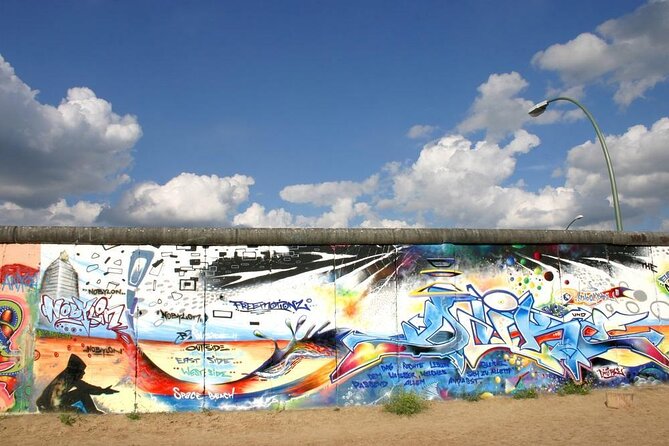
Finally, you might reach East Side Gallery, the longest surviving stretch of the Berlin Wall, about 1600 meters. It was painted after reunification by artists from around the world, and the section you see today has been renewed over time. You’re looking at art, but also at how Berlin wanted to reclaim and reinterpret its most painful dividing line.
West Berlin highlights on the Kurfürstendamm and around KaDeWe
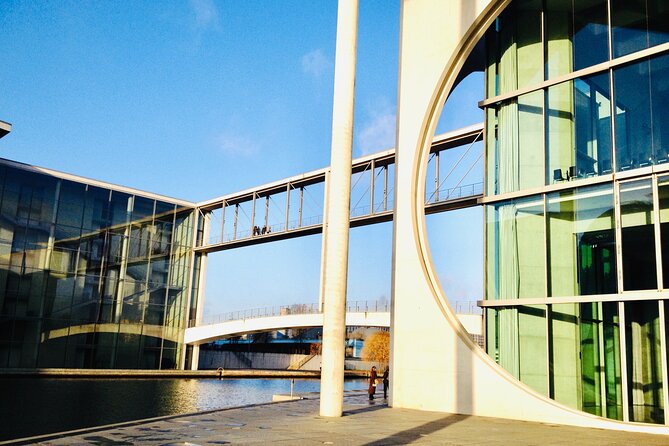
Later in the day, the tour turns toward the West Berlin signature stretch: the Kurfürstendamm corridor, often referred to as Ku’damm. This is where Berlin’s West side often shows its 1950s and later “big-city” identity, even when the city’s mood shifts block by block.
You’ll likely stop around the elegant boulevards and shopping areas, including Tauentzien and KaDeWe, the large department store known for its size. The gourmet food floor is an obvious draw if you like sampling during trips. Even if you don’t plan to shop, the area helps you understand how West Berlin rebranded itself after division, turning parts of the city into a showcase for commerce and everyday pleasure.
You might also get views near Kaiser Wilhelm Memorial Church at Breitscheidplatz from more than one angle. The preserved tower and the later modern church buildings have a “rebuild and remember” message. The details about how the new interior uses light create a surprising contrast to how crowded the square can feel outside. Right behind is the European Center, an older shopping complex, with design choices that reflect Berlin’s ongoing love of mixing civic space and retail.
One caution here: West Berlin stops can turn into “look around, then move on” unless you set what matters to you. If you love shopping, tell your guide. If you’d rather keep walking minimal, say so.
Kulturforum architecture and the Sony Center, modern Berlin you can picture in motion
This part of Berlin can be a treat for architecture fans, and it’s also a good mental break from Wall history. You pass through the Kulturforum area, including the planned institutions built as a counterpart to Museum Island. You’ll see the general idea of a cultural district created with big modern buildings and careful museum layouts.
The National Gallery building by Ludwig Mies van der Rohe is one of the most striking modern structures here. The key design point is the interior logic. There’s a self-supporting metal roof, and the exhibition setup works around the absence of internal walls in the main hall. That makes it feel airy and architectural, even though art display in such a space takes planning. The tour also points out the idea that paintings are organized in parts of the building, so the design is not only about appearance.
Then you get a major, more playful modern payoff: the Sony Center at Potsdamer Platz. This is Berlin’s “future plan” made concrete, glass, and steel. The sloping roof reads like it’s floating, and the site shows how Potsdamer Platz was reshaped into a modern business hub.
There’s also a story of survival and redesign: a historic wing from the old Hotel Esplanade survived bombing, and it was later moved and integrated in an elaborate process, turning part of the ballroom concept outward. This kind of detail is why a taxi tour works. You’re not just seeing a modern complex, you’re learning how the past got dragged forward.
A few practical tips so you don’t miss what matters
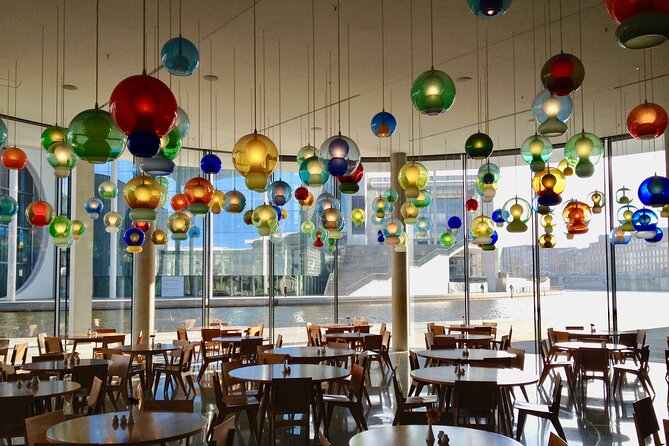
If you’re short on time, do what works in Berlin: make your list before pickup.
I suggest you send your guide:
- Your must-see top 6 to 10 places
- A skip list (for example, if you want to cut universities or office-heavy stretches)
- How long you want at each stop, especially for anything requiring standing in line or entering museums
This matters because one criticism that popped up was that the route can feel like a drive-by if you wanted deeper walking time. The strongest tours I’ve seen in Berlin are the ones where you actively steer the day, not just ride it out.
Also, plan for comfort, not just weather. A taxi tour means you’ll be sitting for stretches, so bring water and keep your phone charged for photos. If you’re traveling with mobility needs, this format often makes Berlin much more doable because you can control walking time. Reviews also praised the smooth driving, the friendly communication, and the fact that Gunter takes photos at stops, which helps you leave with proof your feet made it to those key corners.
Vehicle size is the other practical thing to confirm. If you’re a group of four, make sure the booked car matches your needs. A cramped car can reduce the “comfort value” of the whole concept.
Should you book this East-West taxi tour?
Book it if you want the fastest honest way to get your bearings across Berlin’s East and West. It’s especially good for your first day in town, for families who don’t want to march for hours, and for anyone who prefers a mix of car comfort plus short, guided stop time at major landmarks.
Don’t book it if your top priority is slow-paced museum immersion, or if you’re the type who wants hours inside specific sites every stop. In that case, you’ll likely want to add separate timed tickets and plan a more walking-heavy itinerary.
If you’re on the fence, here’s the simple decision rule I’d use: if you want structure and stories without losing the chance for photos and a bit of walking, this is a strong choice. If you want “full depth everywhere,” you’ll need additional days.
FAQ
How long is the private taxi tour of Berlin East and West?
It runs for approximately 4 to 6 hours.
What does the price include?
The tour price is $179.82 per person. It includes pickup within the S-Bahn ring (about 5 km around the center near the Brandenburg Gate), an air-conditioned vehicle, private transportation, parking fees, WiFi onboard, and both the taxi ride tariff and city tour VAT.
Is pickup included if I’m outside the S-Bahn ring or at the airport?
Pickup within the S-Bahn ring is included. Pickup from BER airport or outside the S-Bahn ring is only available for an extra charge.
Is the tour private or shared?
This is a private tour, so only your group participates.
What language is the tour offered in?
It is offered in English.
Are child seats available?
Yes. A child seat for toddlers from six months to three years is available, plus a booster seat for older children. A baby seat can be brought on request.
What is not included?
Lunch is not included.
Is the tour ticketed?
You’ll have a mobile ticket for the experience. For several major stops in the route, the time listed is free (like Brandenburg Gate, Gendarmenmarkt, Hackesche Höfe, Humboldt Forum, Topography of Terror, and Checkpoint Charlie).
What is the cancellation policy?
Free cancellation is available. You can cancel up to 24 hours in advance of the experience start time for a full refund.
Recently added around Berlin
- Berlin Private Custom Walking Tour With A Guide (Private Tour)★ 4.5 · 8 reviews
- One Up to 3 Rickshaws(6 GUESTS)-Taylor Made Rickshaw Berlin Tour★ 5.0 · 20 reviews
- Moonshine Comedy – English Stand Up Comedy by the bay★ 5.0 · 11 reviews
- Private Half-Day Berlin Sightseeing Tour with a Minivan Including Short City Walks★ 5.0 · 31 reviews
- Private taxi tour to Potsdam and Sanssouci 6-8h★ 5.0 · 30 reviews
- Private City Kickstart Tour: Berlin★ 4.5 · 71 reviews
- Private tour of Berlin★ 5.0 · 15 reviews
- Private Tutankhamun’s Tomb Live Escape Room in Berlin★ 3.5 · 11 reviews
Private, compared.
Berlin Private Complete History All Day Walking Tour
Read our review →
Private Walking Tour Berlin Third Reich Hitler and World War II
Read our review →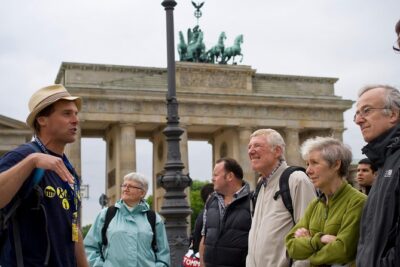
Private Berlin: Iconic Sights and Hidden Gems Walking Tour
Read our review →
Berlin Private Half-Day Walking Tour: Discover the German Capital’s History
Read our review →
Private Walking Tour: World War 2 and Cold War Sites in Berlin
Read our review →
The History of Berlin: WWII PRIVATE Walking Tour With Locals
Read our review →