
Reviewed · JEWISH BERLIN HERITAGE TOURS
In Search of Jewish Berlin Walking Tour
Jewish Berlin can feel hard to grasp at first. This walking tour strings together key places in a tight route, so the story makes sense in your head and then hits you in the heart. You go from 19th-century Jewish life and architecture to World War II memory, all on foot in about 3 hours.
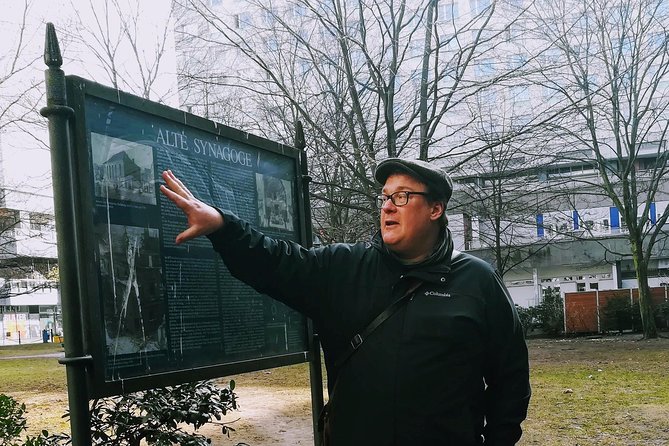
I especially like the small group size (max 10), which makes it easier to ask questions and get real conversation, not just quick facts. I also like that the guide is a Jewish history scholar, and in past groups the tour has been led by guides such as Ioana N. and Heather, both praised for handling sensitive moments with care and answering follow-ups clearly.
One drawback to plan for: the route includes places connected to persecution and the Holocaust, including a memorial experience that can feel emotionally intense. Also, food and drinks are not included, so you may want to carry water or plan a quick coffee stop nearby.
Key things to know before you go
- Small-group focus with a maximum of 10 people, so you get attention rather than rushing.
- Jewish studies scholar guide (professors, grad students, or journalists) who can answer “why does it matter” questions.
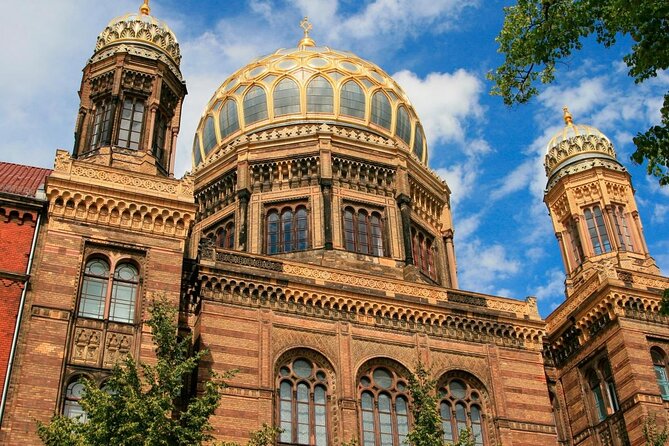
- Scheunenviertel route that includes major landmarks like the New Synagogue and the memorial sites.
- Free entries at every stop listed, so you can focus on learning instead of ticket hassles.
- English-language tour with a mobile ticket you use on your phone.
- No food included, so budget time for a snack if you need one during the walk.
Why this Scheunenviertel walk works in just 3 hours
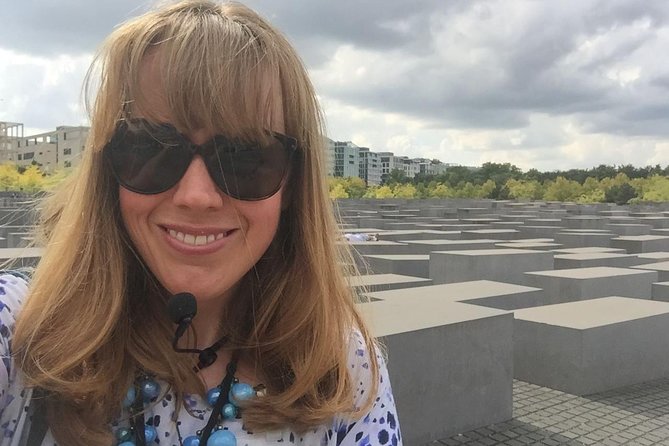
Berlin is big, and Jewish history there is layered. What I like about this tour is the way it gives you a clear route through different eras without trying to cram everything into your brain at once. In roughly 3 hours, you pass from the symbol-heavy architecture of the New Synagogue era into places tied to education, community life, and Nazi persecution, then you end at the Holocaust Memorial.
The pacing matters here. Each stop is long enough for you to actually look around and process what you are seeing, but short enough to keep the walk moving. Expect a thoughtful, story-driven rhythm rather than a race between landmarks.
Other Jewish heritage tours in Berlin:
- Nazi Berlin and the Jewish Community Tour
★ 4.8 · 55 reviews - Private Tour: Jewish Heritage Walking Tour of Berlin
★ 5.0 · 29 reviews - Jewish Berlin: Walking tour The Old Jewish Quarter (private 3 Hours tour)
★ 5.0 · 27 reviews
Meeting at Rosenthaler Str. 40/41 and getting oriented fast
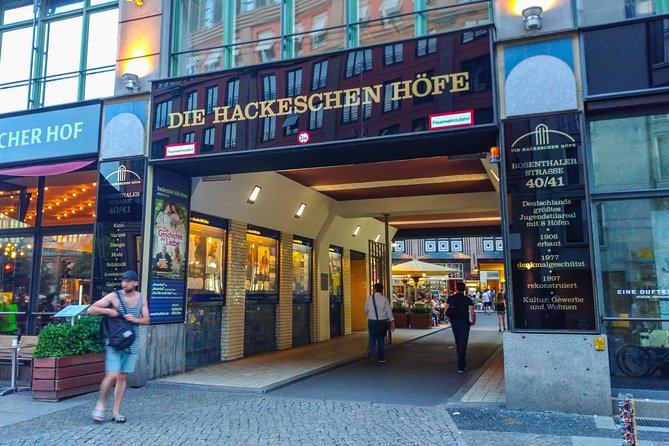
The tour starts at Rosenthaler Str. 40/41 (10178 Berlin). It is near public transportation, which helps if you are juggling tram or subway connections before the walk. Because the start point is in central Berlin, you can also add a pre-walk coffee nearby if you arrive a few minutes early.
If you are sensitive to emotional topics, consider this practical tip: give yourself a moment before the first major stop to settle your head. Even though the tour is guided, you will still have your own reactions, especially later in the route.
Stop 1: Stiftung Neue Synagoge Berlin at Centrum Judaicum
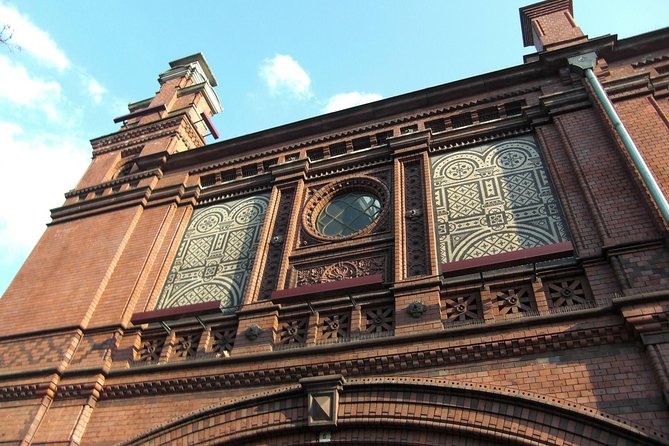
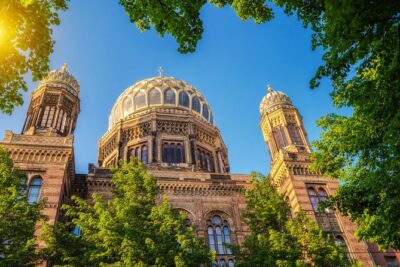
This is one of those places where architecture does part of the storytelling for you. The New Synagogue, housed at Stiftung Neue Synagoge Berlin – Centrum Judaicum, is known for its grand 19th-century look. In the tour’s framing, that style represented Jewish assimilation in Germany at the time, which is a big idea to hold while you stand in front of a building meant to be seen and respected.
Why this stop is valuable: it shifts the conversation away from only tragedy. You are reminded that Jewish life in Berlin had thriving institutions, public visibility, and an evolving relationship with broader German society. The tour also notes that the building is still connected to a Jewish community that is reviving in Berlin today, so you do not just study history in a museum bubble.
What to watch for: take time to look at the building like you would an artwork, not just a background location for photos. The more you notice about the design, the more sense the guide’s explanation will make.
Possible drawback: the time here is about 20 minutes, so you cannot linger for a full architectural tour. If you want extra time inside, plan to return later on your own.
Stop 2: Auguststraße 11-13 and the Jewish Girls School building
Next you head to Auguststraße, a street that once held multiple Jewish institutions. One highlight is the historic school building at Auguststraße 11-13, designed by architect Alexander Beer. The building is characterized by the New Objectivity style, which matters because it shows another side of the era: modern design, social purpose, and education as a serious community priority.
In a tour like this, school buildings are more than old bricks. They are a reminder of daily life, of routines, of families planning futures. The guide ties that everyday rhythm to the larger historical forces that Berlin’s Jewish community faced.
What you can do with this stop: today the building is home to an exhibit hall and a coffee shop. The coffee shop is not part of the tour, but it is a practical place to slow down. If you need a quick break, this is one of the easiest moments in the itinerary to take it.
Possible drawback: if you are the type who wants to read every label in an exhibit hall, 20 minutes may feel short. Think of this as a guided introduction, not a substitute for a longer museum visit.
More walking tours in Berlin:
- Discover Berlin Half-Day Walking Tour
★ 5.0 · 9,624 reviews - Berlin: Third Reich and Cold War 2 Hour Walking Tour
★ 4.9 · 6,830 reviews - Berlin: Discover Berlin Walking Tour
★ 4.9 · 5,998 reviews - Berlin’s Best: 2 Hour Walking Tour Third Reich and the Cold War
★ 5.0 · 5,486 reviews
Stop 3: Die Hackeschen Hoefe and the Scheunenviertel story in streets
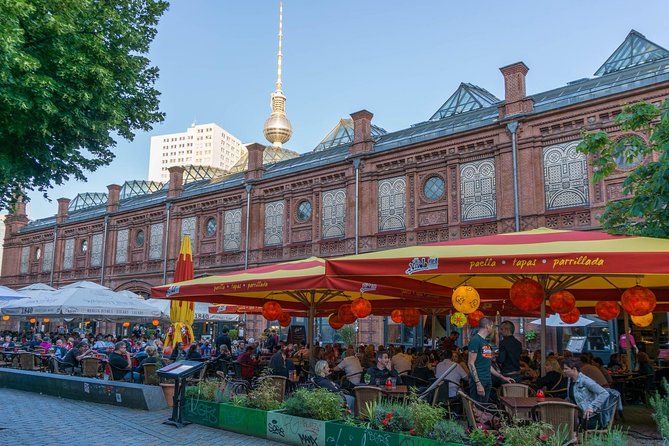
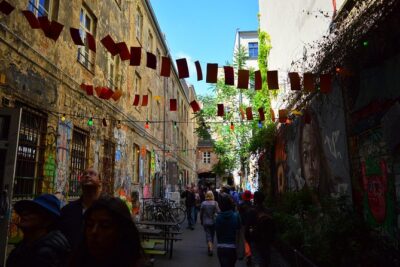
From there you move to Die Hackeschen Hoefe, near Hackescher Markt. The tour connects this area to how a Jewish community developed around the market and expanded through neighborhoods like Spandauer Vorstadt and Scheunenviertel, often called the Barn Quarter.
This stop is about connecting places to people. You are not only looking at buildings. You are listening for stories about how communities organized life in a particular part of Berlin, where architecture and street layout helped shape daily movement and social gathering.
Why it matters: when you understand where communities clustered, you can better imagine what was lost later. It also helps you notice the difference between “a few landmarks” and a lived neighborhood.
Possible drawback: the environment here can be lively and busy outside the tour context. If you want quiet thinking time, rely on the guide’s stop-and-look moments rather than trying to multitask with your phone.
Stop 4: Block der Frauen memorial and the story of resistance by families
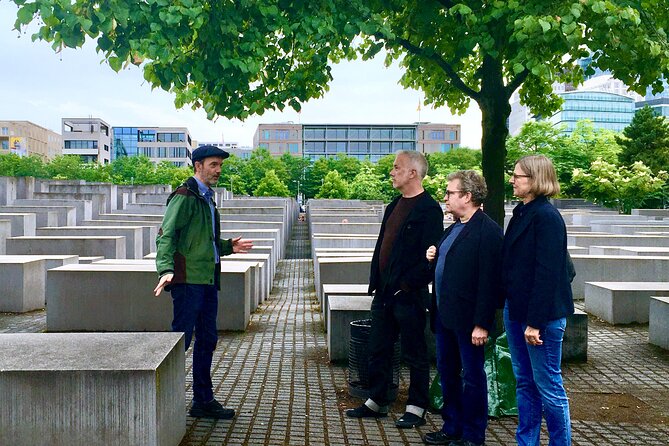
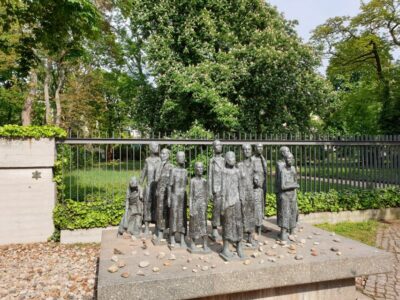
Then comes Block der Frauen, a memorial tied to protest demonstrations made by non-Jewish wives and relatives of Jewish men who had been arrested by the Nazis and targeted for deportation. That detail is important because it shifts the spotlight. It is not only about those who were persecuted. It is also about the courage, risk, and moral choices of people who stood up to Nazi actions.
This stop can feel heavy, and it deserves a slower mindset. You are given time to take in what the memorial represents, and the guide’s approach is meant to keep the focus on human actions and consequences, not just dates.
Practical note: with around 20 minutes here, you can still do what matters most, which is pause, absorb, and let the meaning settle. But you should not expect a long, uninterrupted reflection session.
Stop 5: The Holocaust Memorial, 2711 slabs of remembrance
The tour ends with The Holocaust Memorial – Memorial to the Murdered Jews of Europe. Designed by architect Peter Eisenman, it is structured as a sobering labyrinth of 2711 concrete slabs meant to represent Germany’s acknowledgment of the Holocaust.
This is one of the most intense experiences in Berlin, and you may feel it differently depending on your own background and mood that day. The guide’s job here is to help you move through the space with respect, not to rush you into a single interpretation.
What helps: take the tour at a walking pace and let your body do what the memorial is designed to trigger, disorientation and thought. If you try to power through for “the picture,” you might miss the point.
Time note: the itinerary includes about 20 minutes at this memorial. That is enough to experience the core idea, but not enough to linger for a long personal journey.
The guide makes the difference: scholars, real questions, and careful empathy
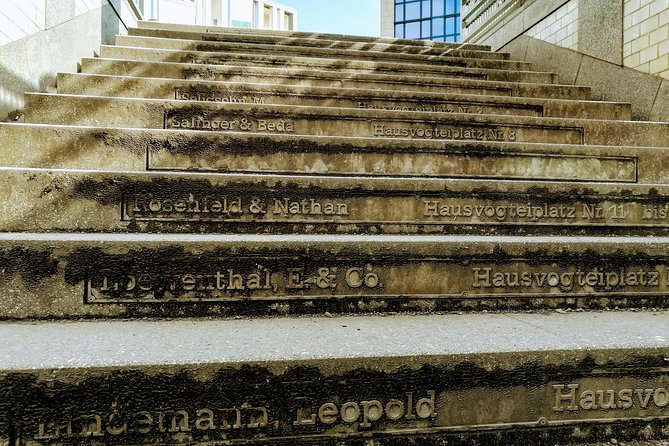
What consistently elevates this tour is not just the sites. It is how the guide handles the story.
In past departures, guides including Forrest, Lee, Heather, Ioana N., and Isabel Daniel have been praised for deep study and for talking in a way that is easy to follow. One recurring theme is that guides answer questions directly and adjust the flow if you ask something that matters to you.
This matters because Jewish history in Berlin is complex. You may want to understand assimilation, education, neighborhood life, memorial meaning, or the timeline from medieval beginnings through modern trauma. A good guide helps you connect those threads without reducing them to a checklist.
And yes, the sensitive nature of the topics is handled with care. That is not a small detail. It affects how safe you feel asking questions, and it changes how you process the memorial stops.
Price and value: paying for a scholar-led route through high-impact sites
At $156.53 per person for about 3 hours, this is not a “cheap walking tour.” The value is in what you get:
- A Jewish history scholar guiding you through key Berlin sites tied to community life and persecution.
- A route that includes multiple major stops where admission is free for the places listed in the itinerary.
- A small group with a maximum of 10 people, which turns the tour from a broadcast into a conversation.
- An English format with a mobile ticket, so you are not stuck juggling paper confirmations.
What is not included is important: food and drinks are not part of the tour. Plan for it. Bring a bottle of water, and if you want coffee, use the natural break at Auguststraße’s building area or plan a nearby stop on your own.
If you are trying to decide between a generic walking tour and this one, ask yourself what kind of experience you want. If you want depth on Jewish Berlin history, supported by a serious guide, the price starts to make sense.
Who should book this tour, and who might want to plan differently
You should seriously consider booking if you:
- Want a structured overview of Jewish Berlin tied to real locations.
- Prefer a small group and the chance to ask questions.
- Like history that includes both community life and the hard realities that followed.
You might plan differently if:
- You want a tour that includes a meal or long museum time, because food and drinks are not included and most stops are around 20 to 30 minutes.
- You know you have a difficult time with Holocaust-related memorial spaces. The tour includes the Holocaust Memorial and a memorial focused on Nazi deportation context, so it will be emotionally intense for many people.
Should you book In Search of Jewish Berlin Walking Tour?
If your goal is to understand Jewish Berlin in a focused, human way, this is a smart choice. The route hits major points, and the small-group format helps the guide turn facts into something you can actually carry with you. The free admission stops also mean your budget is used for the guide and the storytelling, not for entry fees.
Book it if you want a scholar-led walk through the Scheunenviertel area plus the memorial spaces that define Berlin’s public memory. Skip it only if you are looking for a lighter, purely architectural walk or if you need a food-included experience.
FAQ
How long is the Jewish Berlin walking tour?
It runs for about 3 hours.
What is the price per person?
The price is listed as $156.53 per person.
Is the tour offered in English?
Yes, the tour is offered in English.
How many people are in the group?
The group size is limited to a maximum of 10 travelers.
Where does the tour start?
The meeting point is Rosenthaler Str. 40/41, 10178 Berlin, Germany.
Does the tour include admission tickets?
For the listed stops, admission tickets are free. The tour also includes a mobile ticket, but admissions for the included stops are indicated as free.
Is food or drink included?
No, food and drinks are not included.
Who leads the tour?
The tour is guided by a Jewish history scholar, and guides can be professors, grad students, or journalists.
Is the meeting point near public transportation?
Yes, it is near public transportation.
Is free cancellation available?
Yes. You can cancel for a full refund if you cancel up to 24 hours in advance of the experience start time.
Recently added around Berlin
- Berlin Private Custom Walking Tour With A Guide (Private Tour)★ 4.5 · 8 reviews
- One Up to 3 Rickshaws(6 GUESTS)-Taylor Made Rickshaw Berlin Tour★ 5.0 · 20 reviews
- Moonshine Comedy – English Stand Up Comedy by the bay★ 5.0 · 11 reviews
- Private Half-Day Berlin Sightseeing Tour with a Minivan Including Short City Walks★ 5.0 · 31 reviews
- Private taxi tour to Potsdam and Sanssouci 6-8h★ 5.0 · 30 reviews
- Private tour of Berlin★ 5.0 · 15 reviews
- Private City Kickstart Tour: Berlin★ 4.5 · 71 reviews
- Private Tutankhamun’s Tomb Live Escape Room in Berlin★ 3.5 · 11 reviews
Jewish Berlin Heritage Tours, compared.
Private Tour: Jewish Heritage Walking Tour of Berlin
Read our review →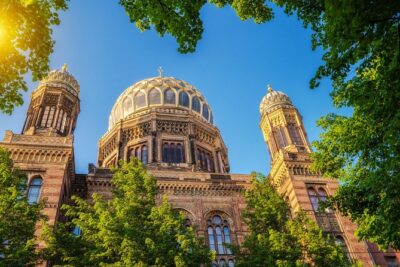
Jewish Berlin: Walking tour The Old Jewish Quarter (private 3 Hours tour)
Read our review →
Jewish Berlin Extended (private Walking tour – 5 Hours)
Read our review →
Berlin‘s Jewish Heritage Private Tour With Jacob
Read our review →Browse the lists this tour appears in