
Reviewed · BERLIN WALL & COLD WAR TOURS
Private Cold War Berlin: Espionage, Berlin Wall, a Divided City
Berlin is one of the few places where the Cold War feels physical, not abstract. This private walking tour strings together the Wall, border crossings, and the espionage world in a way that makes the stakes feel real fast, from Tunnel escapes to tearful farewells.
I love that the route is built around stories you can picture in your head, not just dates. You’ll also like the guide style, with names like Tina and Toni showing up in standout accounts for clear, calm storytelling that connects history to everyday people.
One consideration: it’s a walking tour, about 3 to 4 hours, and it runs in all weather. If you’re not used to moving for stretches, plan for a steady pace and comfortable shoes.
Key things I found especially worth your time
- Hotel pickup and drop-off so you spend less time figuring out transport and more time seeing the sites
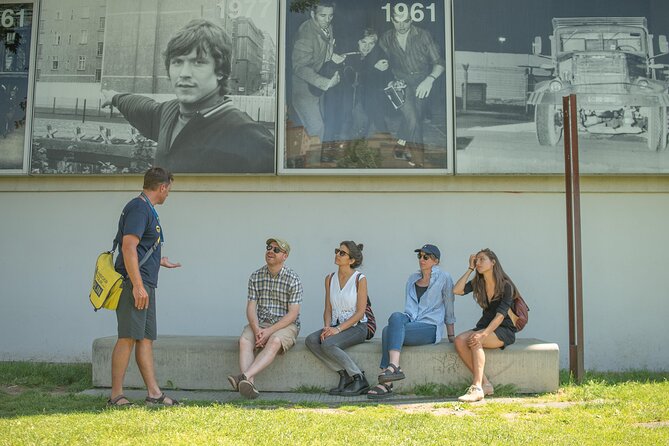
- Wall escape stories at Bernauer Straße, including Tunnel 57 and Tunnel 29
- Tränenpalast (Palace of Tears), where border control and espionage collide in one building
- Stasi Headquarters at the Stasimuseum, with specifics on surveillance tactics and informants
- A tight route that covers East Side Gallery, Checkpoint Charlie, Prenzlauer Berg prisons, and Alexanderplatz
The Cold War, in human scale, from Bernauer Straße to Berlin’s border line
The heart of this tour is the idea that Berlin was divided in more than one way. Sure, you get the Wall, but you also get the “how” and the “why”: how escape attempts were planned, how spies tried to cross, and how ordinary families got pulled into a system bigger than them.
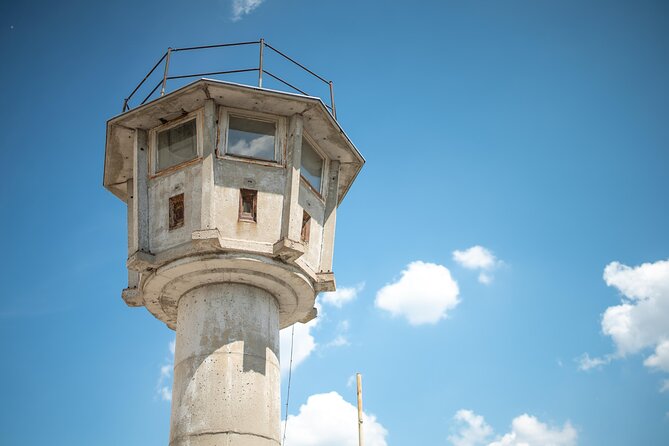
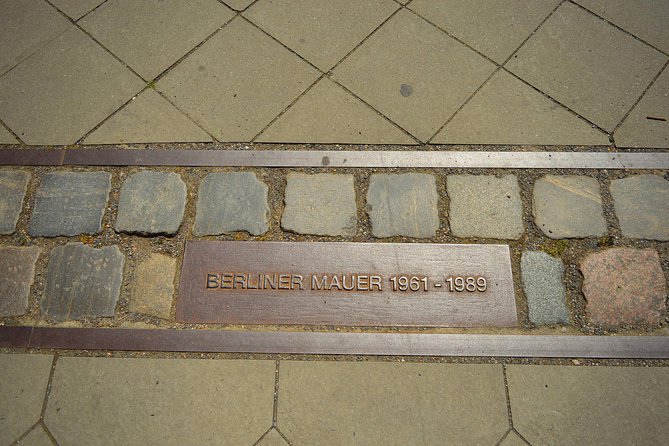
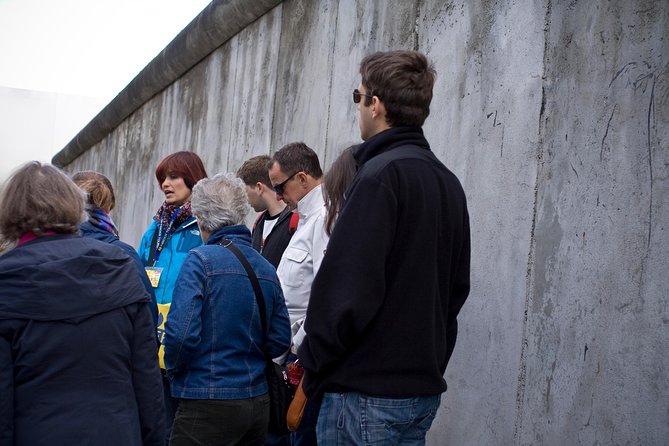
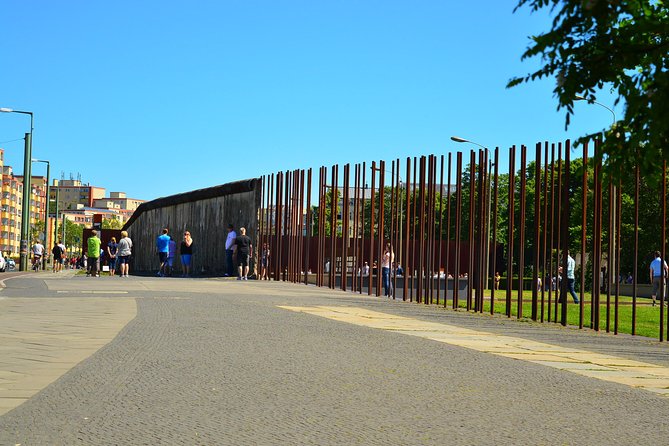
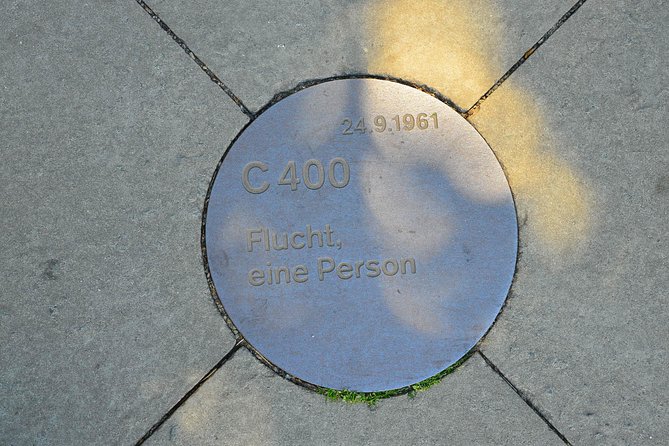
Stop 1 is the Memorial of the Berlin Wall on Bernauer Straße. You’ll see a preserved section of the Wall and the Chapel of Reconciliation, and your guide will connect the site to real escape attempts. This is where stories like Tunnel 57 and Tunnel 29 come in. Tunnel 29 is singled out for a reason, it led 29 people to freedom in 1962, which turns the tunnel idea from spy-movie talk into a lived, high-risk plan. Expect your guide to focus on the personal side too, the way the Wall affected families, neighborhoods, and the bigger Cold War narrative.
What’s especially good here: you start with the Wall itself, then your brain starts working like a detective for the rest of the walk. After this stop, every border building and prison site feels less like a random photo and more like part of the same story.
Possible drawback: this section is emotional. If you get affected by heavy topics, give yourself permission to take a breath and slow down when you need to.
More Berlin Wall and Cold War tours in Berlin:
- Berlin: Third Reich and Cold War 2 Hour Walking Tour
★ 4.9 · 6,830 reviews - Berlin’s Best: 2 Hour Walking Tour Third Reich and the Cold War
★ 5.0 · 5,486 reviews - Skip-the-Line: Berlin Wall Museum at Checkpoint Charlie
★ 4.1 · 2,041 reviews
Tränenpalast: the border crossing where farewells turned into intelligence work
Stop 2 takes you to Tränenpalast, the Palace of Tears, at Friedrichstraße. This building is remembered for the moment East Berliners said emotional goodbyes before crossing into West Berlin. That’s the human side, separation under pressure.
Then the tour adds another layer that’s easy to miss if you only think about the Wall as a barrier. Tränenpalast was also a hotspot for spies. The idea was simple and terrifying, people tried to cross between East and West using clever tactics to avoid detection. Today the museum inside the building ties it together: you’ll see exhibits about the Berlin Wall, border control practices, and spy networks operating on both sides.
Why this stop is valuable: it shows how the same crossing point could be both heartbreaking and strategic. You start to understand why espionage wasn’t an outside game. It was woven into ordinary movement.
Time note: this stop is about 20 minutes. That means you’ll get the big picture and key examples, not a museum day. If you love reading every placard, you might want extra time on your own afterward.
East Side Gallery: what’s left of the Wall after artists took over
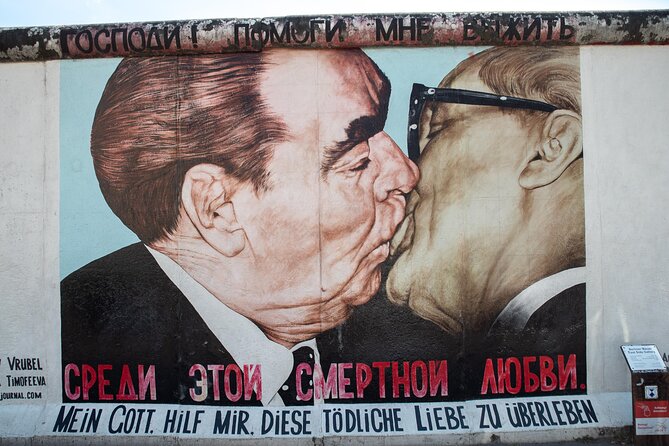
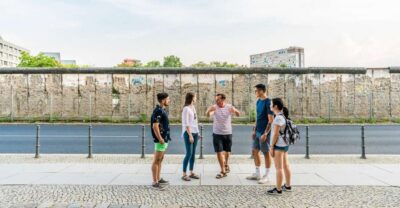
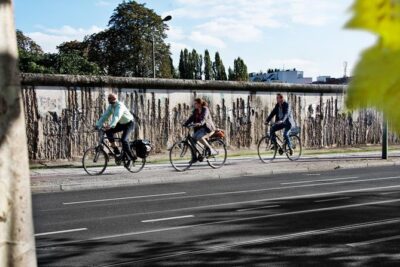
Stop 3 is the East Side Gallery, a 1.3 km stretch of the Berlin Wall that became an open-air art gallery after the Wall fell in 1989. Here, the tour shifts tone. The murals you see are about the Wall’s collapse, painted by artists from around the world, turning a symbol of division into something aimed at unity and freedom.
Your guide will explain the background of the murals and the messages behind them. Many of those messages carry optimism and hope after reunification, which matters because the story of Berlin is not only oppression. It’s also what people did after.
Why you’ll like this part: after the surveillance and prisons, walking past public art is a reset. You’re still in the same geography, but the meaning has changed.
Small caution: it’s about 20 minutes, so you’ll walk the key segment with context. If you’re the type who wants to stop for every single mural, this might feel a bit fast, but it’s a good match for the tour’s overall pacing.
Stasimuseum and the Stasi HQ: surveillance you can picture
Stop 4 is one of the most intense parts of the walk, the Stasi Headquarters, now the Stasimuseum. This is where the Cold War changes from “escape plans and border dramas” into a system built for control.
Inside, the museum focuses on the Stasi’s surveillance and suppression methods. You’ll hear how the network involved spies, informants, and tactics used to monitor dissent. Expect specifics like hidden cameras, wiretapping, and the use of everyday citizens as informants. The emotional weight here comes from how it reached into families and individuals, including interrogation and harassment.
Why this is a top stop: the tour doesn’t treat the Stasi like a vague villain. You get the mechanics. When you understand the mechanics, you understand why people felt watched even when nothing was happening in the street.
Time note: about 25 minutes. That’s enough to grasp how the system worked, but again, not enough to turn it into a full museum marathon.
A few more Berlin options worth a look
- Berlin: Private Reichstag and Glass Dome Tour
★ 4.8 · 2,226 reviews - Berlin Private Complete History All Day Walking Tour
★ 5.0 · 474 reviews - Private Walking Tour Berlin Third Reich Hitler and World War II
★ 5.0 · 360 reviews - Private Berlin: Iconic Sights and Hidden Gems Walking Tour
★ 5.0 · 292 reviews
Checkpoint Charlie: the world at the edge of the 1961 Berlin Crisis
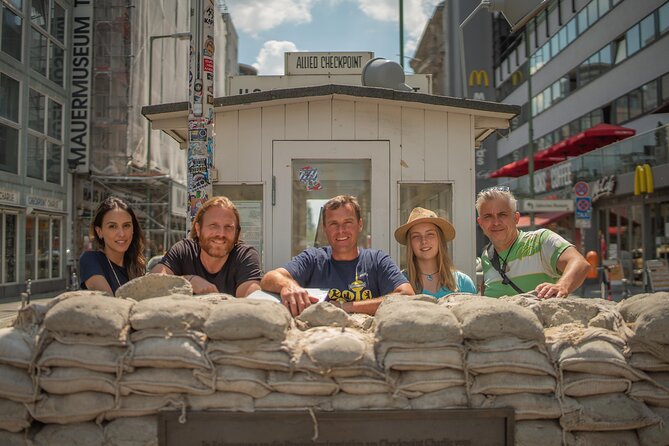
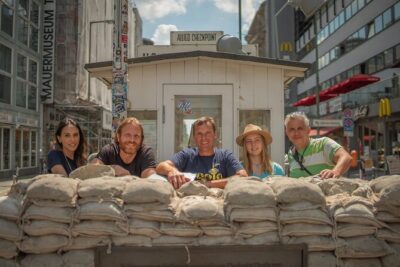
Stop 5 is Checkpoint Charlie, one of the most iconic Cold War sites in Berlin. It’s a former border crossing between East and West, and the guide frames it as a symbol of the division between communist East and democratic West.
This stop also connects Berlin to the international brinkmanship of the era. Your guide will talk about tense standoffs between American and Soviet forces during the Berlin Crisis of 1961, when the Wall was erected. You’ll also hear about escapes and spy exchanges tied to this crossing.
There’s a museum at the site with exhibits on espionage, escapes, and Cold War history. Even if you don’t read everything, the museum helps you anchor the stories your guide shares.
What to watch for: because this stop is about 15 minutes, you’ll want your guide’s narrative to do the heavy lifting. If you want to linger, you can always come back later.
Prenzlauer Berg prisons: NKVD first, Stasi next
Stop 6 moves you to Prenzlauer Berg, specifically the Fröbelstraße corner. This location matters because it shows continuity across regimes. The site links two infamous systems: the former NKVD prison and the Stasi prison.
After WWII, Soviet authorities used this space for detaining political prisoners, suspected spies, and people labeled enemies of the state. Later, when the GDR was established, control shifted to the Stasi, continuing the pattern of surveillance and repression.
Your guide will walk you through the harsh conditions and how the two intelligence systems used the prison as a tool of control. You’ll also hear about bravery and resistance, which prevents the story from becoming only about suffering.
Why it’s worth adding to your mental map: this stop reminds you that espionage and repression were not one single-story villain. They changed hands, but the method, control through fear, stayed consistent.
Alexanderplatz: the protest that helped end the division
Stop 7 ends at Alexanderplatz, a place where Cold War politics played out in public view. Your guide will connect it to the November 4th, 1989 protest, when over half a million East Berliners gathered to demand change. That kind of crowd power helps you understand why the Wall could not hold forever.
You’ll also see Cold War landmarks discussed in the tour context, including the Television Tower (Fernsehturm) and the Red City Hall, which was home to GDR leadership. The guide will explain how Alexanderplatz fit into Stasi surveillance efforts and how it became a focal point for both repression and peaceful resistance.
How this ending works on your brain: the tour starts with the Wall as a barrier and ends with people pushing back in the streets. It makes the transition from fear to change feel grounded, not magical.
Price and pacing: is $191.44 per person worth it?
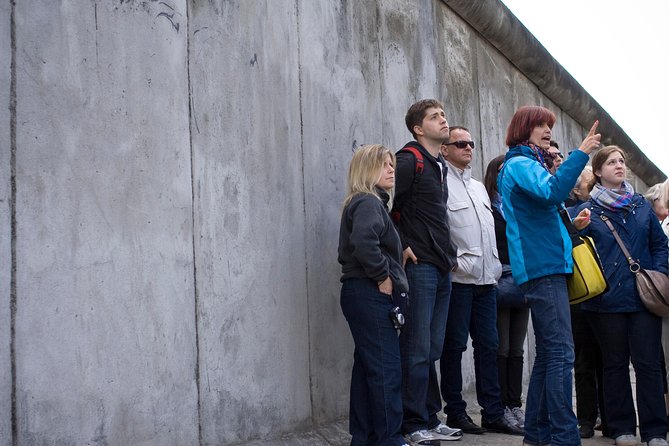
At $191.44 per person for about 3 to 4 hours, you’re paying for a private guided experience with structure. What makes this feel like value is what’s included: hotel pickup and drop-off plus a professional guide, and the stops themselves list free admission tickets. So you’re not budgeting for multiple entry fees just to follow along.
Also, private format matters here. When the subject is heavy and detailed, you don’t want to compete with a big group for attention, or hear your guide turn your questions into general answers.
Pacing-wise: the stop times are short but meaningful, ranging from about 15 to 40 minutes. It’s a walking route designed to keep moving while still giving each site a clear focus. The “active traveler” label is accurate, because the tour is still a true walk through real neighborhoods.
What you should budget for: food and drinks are not included. Bring water, and consider a light snack if you’re sensitive to long breaks. You’ll likely want your attention for stories at Tränenpalast and the Stasi museum, so plan your energy.
Who should book this private Cold War Berlin walk
This is a great fit if you want your Berlin history straight and story-driven, and you like the “see it, then understand it” method. It’s also ideal for both first-time and repeat Berlin visitors, because it focuses on a specific theme and ties multiple sites together into one narrative.
It’s especially good for people who:
- like walking and can handle 3 to 4 hours outdoors
- want Cold War espionage and the Wall explained through concrete places
- care about the human consequences, not just the political facts
If you have physical limits, you should know the tour is a walking one. That said, at least one guide was noted for accommodating physical limitations, so it’s worth telling the operator what you need.
Should you book it?
If your goal is to understand Cold War Berlin in a way that sticks, I think this tour is an easy yes. You get hotel pickup, a focused private route, and a guide who can turn Wall escapes, the Stasi system, and border crossings into something you can actually follow without feeling lost.
Book it if you’re curious about espionage and the Wall, and you’re comfortable with an active walk in any weather. Skip it if you only want a quick highlights loop with minimal walking, because this one is built for movement and sustained attention.
Recently added around Berlin
- Berlin Private Custom Walking Tour With A Guide (Private Tour)★ 4.5 · 8 reviews
- One Up to 3 Rickshaws(6 GUESTS)-Taylor Made Rickshaw Berlin Tour★ 5.0 · 20 reviews
- Moonshine Comedy – English Stand Up Comedy by the bay★ 5.0 · 11 reviews
- Private Half-Day Berlin Sightseeing Tour with a Minivan Including Short City Walks★ 5.0 · 31 reviews
- Private taxi tour to Potsdam and Sanssouci 6-8h★ 5.0 · 30 reviews
- Private tour of Berlin★ 5.0 · 15 reviews
- Private City Kickstart Tour: Berlin★ 4.5 · 71 reviews
- Private Tutankhamun’s Tomb Live Escape Room in Berlin★ 3.5 · 11 reviews
Berlin Wall & Cold War Tours, compared.
Berlin’s Best: 2 Hour Walking Tour Third Reich and the Cold War
Read our review →
Skip-the-Line: Berlin Wall Museum at Checkpoint Charlie
Read our review →
2.5-Hour East Side Boat Cruise with Commentary
Read our review →
East Side Gallery Spree Cruise in a Solar Catamaran
Read our review →
Cold War, Berlin Wall, Spies and the East Side Gallery
Read our review →
Guided Bike Tour of the Berlin Wall and Third Reich
Read our review →Browse the lists this tour appears in