
Reviewed · HISTORICAL TOURS
Private Walking Tour Berlin 3 hours: Brandenburg, Historic Center
Berlin is a city where the street corners matter. This private walking tour gives you a guided way to connect the dots across East and West, from Cold War scars to Jewish heritage, without spending your energy hunting for the right route.
What I really like is how you can steer the focus. You can build the walk around topics like the 3rd Reich, World War II, the Berlin Wall, Cold War politics, Prussian history, or Berlin’s Jewish heritage, and your guide stays flexible with the pace.
One thing to consider: it’s still a walking tour for about 3 hours, and the tour does not use personal headsets on the street. If crowds make it hard for you to hear, plan to stay close to your guide and dress for the weather.
Key highlights that make this Berlin walk practical
- A route built around your interests, with flexible topic options from WWII to Jewish Berlin
- Local expertise in English, with guides who are members of the Berlin Guides Association
- Iconic Cold War and architectural stops, chosen to match your time window
- A true private format, only your group participates, so questions stay on-topic
- Pickup on request from airport, train station, hotel, or another Berlin meeting point
- No personal headsets, so hearing depends on your proximity to the guide
Private walking tour Berlin: what you’re really buying
This is a 3-hour private walking tour in Berlin’s historic center area, designed to do one job well: help you see more of the city’s meaning, not just its sights. Berlin has too many layers to learn all at once on your own, and a guide helps you move with purpose instead of guessing.
The price is listed per group, up to 15 people. That can make it great value if you’re traveling with friends or family, because you’re not paying an extra fee for each extra person until you hit that group ceiling. If you’re traveling solo or as a couple, it can still be worth it for the orientation and focused attention, but you’ll want to go in knowing you’re paying for privacy and planning.
Guides include local experts who speak English very well, and they’re members of the Berlin Guides Association. In the reviews, Harald Zawuski comes up often, including for Jewish Berlin themes, and Susane Grauchy is also named as a guide. That matters because Berlin can turn into a blur if your guide only knows a few headlines.
One more practical note: it runs in all weather conditions. The tour says it operates in all weather, so you should dress accordingly, bring a compact umbrella if you do that sort of thing, and don’t plan on long indoor breaks.
More history tours in Berlin:
- Berlin: Natural History Museum Entrance Ticket
★ 4.6 · 3,382 reviews - Berlin: World Heritage Cruise to Potsdam
★ 4.5 · 1,435 reviews - Berlin Historical Highlights Walking Tour
★ 4.9 · 657 reviews
Custom themes: WWII, Cold War, Berlin Wall, Prussia, and Jewish Berlin
The tour’s biggest strength is that it’s not stuck to one storyline. Your guide can shift the focus depending on what you want to understand, with options that include the Berlin Wall, the Cold War, World War II and the 3rd Reich, Prussian history, and Berlin’s Jewish heritage.
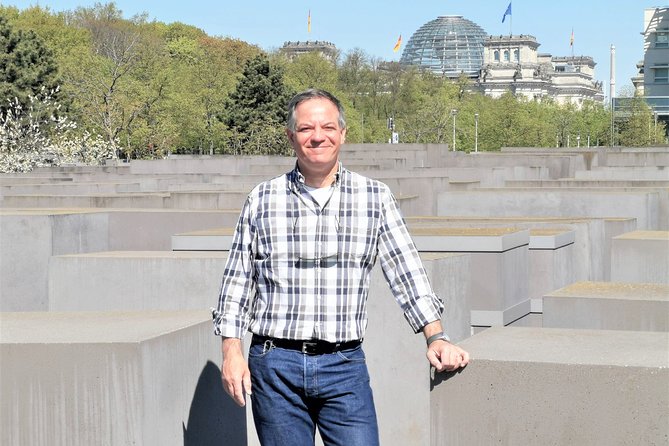
That flexibility changes how you experience the city. Instead of walking past famous names and hoping they click, you get the why behind them. For example, a stop like the Holocaust Mahnmal is not just a photo stop, it’s a place where your guide can explain what the memorial is meant to communicate and how it fits into Berlin’s wider history.
If you’re interested in Jewish Berlin, this tour can be shaped that way too. Reviews specifically mention an excellent Jewish tour led by Harald Zawuski, with explanations of meaning and value that you might not find on your own.
And if your interest is political history, you can likely spend more time on Cold War contrasts and Berlin’s border-era landmarks, including places tied to the city’s division. The point is simple: you get to choose the lens, and the guide adapts the route and emphasis.
The historic-center spine: Brandenburg Gate, Unter den Linden, and big-city orientation
If you want your first day in Berlin to feel organized, this kind of private walk is built for that. The tour includes classic central landmarks that help you understand where things sit relative to each other.
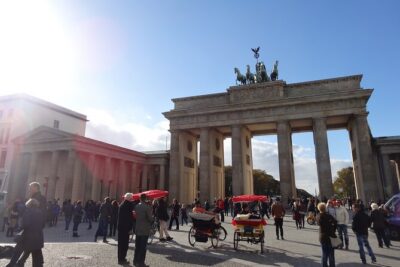
One anchor is Brandenburger Tor, Berlin’s iconic gate and a symbol people associate with major shifts in the city. Pairing it with a walk along Unter den Linden, one of Berlin’s famous boulevards, helps you grasp how the city’s grand axis works in practice. On foot, you get scale fast, and you can later use that mental map when you wander independently.
Unter den Linden also connects the “old power” feel of earlier eras with the modern political identity of Germany. That connection is useful even if you do not go deep into architecture. You start to see why certain buildings were placed where they were, and why Berlin feels both orderly and endlessly layered.
A watch-out for expectations: in just 3 hours, you will not see every single major site in full depth. The tour is flexible, so you should decide what matters most to you before you start. If you want time for questions, prioritize fewer stops and ask your guide to zoom in.
Checkpoint Charlie and the border-line story in the center
Berlin’s division was physical, and the city still carries that idea in its layout. Checkpoint Charlie is one of the most famous border-crossing locations in central Berlin, and it’s the kind of stop that makes the Cold War feel real in a way that a museum text sometimes cannot.
A guided stop here works best as a history decoder. Your guide can explain what made the crossing important, how the border operated, and why the location became such a global symbol. Even if you have seen pictures, hearing the details in the street context helps you understand what you’re actually looking at.
One practical benefit: with a guide, you spend less time figuring out where you are and more time understanding what the place represents. Berlin navigation is not hard, but it is easy to waste energy on routes that do not make your limited time count.
More walking tours in Berlin:
- Discover Berlin Half-Day Walking Tour
★ 5.0 · 9,624 reviews - Berlin: Third Reich and Cold War 2 Hour Walking Tour
★ 4.9 · 6,830 reviews - Berlin: Discover Berlin Walking Tour
★ 4.9 · 5,998 reviews - Berlin’s Best: 2 Hour Walking Tour Third Reich and the Cold War
★ 5.0 · 5,486 reviews
Museumsinsel and Gendarmenmarkt: architecture that also teaches
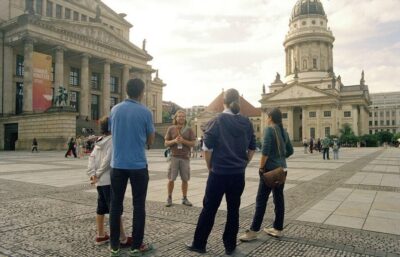
Two stops often give Berlin a different texture: Gendarmenmarkt and Museumsinsel. Gendarmenmarkt is a baroque square, and it’s included for a reason. In one spot, you can feel how public space and power display intersect in Berlin.
Museumsinsel is an island area in the middle of Berlin associated with major museums. Even if you do not go into every museum, the setting helps you understand the way Berlin has invested in learning and culture for generations. For many first-time visitors, it’s also a quick lesson in how Berlin organized itself around key institutions.
What makes these stops valuable in a 3-hour format is that they break up the political heavy hitters. You get visual variety: squares, monumental facades, and a sense of how Berlin’s identity is expressed through design.
Because the tour is customizable, you can spend more time on architecture if that’s your thing, or you can keep moving if your focus is history and politics.
Alexanderplatz and the East-Germany viewpoint
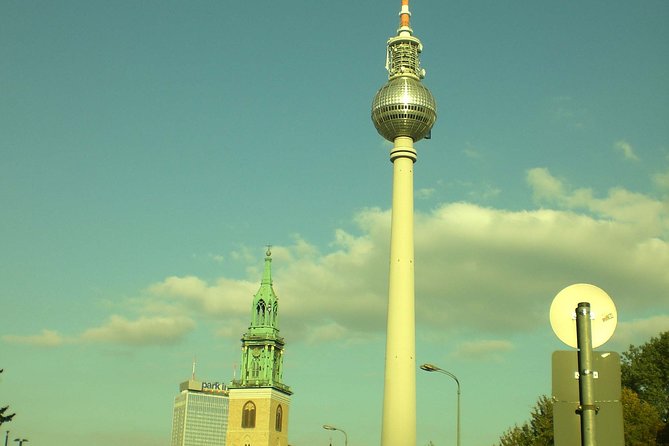
Alexanderplatz is another major included landmark, and it comes with its most recognizable modern symbol, the TV Tower. It’s a strong stop for understanding Berlin’s East-side identity and the idea of a central meeting point.
On your feet, Alexanderplatz can feel both purposeful and slightly overwhelming, because it’s large and built for different kinds of movement. A guide helps you frame what you see, instead of just treating it like a busy square.
This is the moment where the tour’s theme flexibility can really pay off. If you choose a Cold War focus, your guide can connect the square to how East Berlin functioned and why certain public spaces carried political meaning.
If you choose a Jewish heritage focus instead, this stop may be used as a contextual anchor to show how different communities experienced the city as it changed. Either way, the goal is orientation you can use on later days.
The Wall story: East Side Gallery and surviving remnants
Berlin’s Berlin Wall story is not only in museums. It’s in surviving sections, paintings, and physical traces in the city fabric. Two included ways to see that are the East Side Gallery and original remnants of the Wall.
The East Side Gallery is famous for the painted wall, and that’s exactly why it works on a walking tour. It turns a political boundary into public art and memory. Your guide can help you read what the murals represent and why the wall has become a global symbol of division and survival.
Seeing original remnants of the Wall also changes your understanding. Photos can flatten the sense of scale, but on foot you feel how the city once organized movement around barriers.
One realistic consideration: in a 3-hour window, you may not be able to linger as long as you want at every Wall-related point. Decide if you want the artistic Wall message first, or the more raw survival fragments. Either choice can be meaningful.
Hitler’s bunker site and the weight of remembering
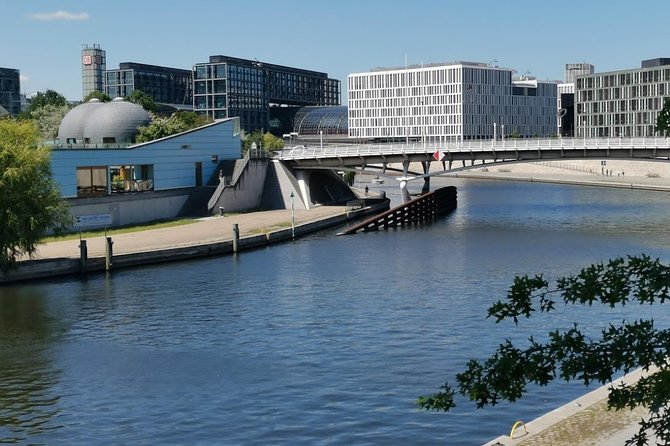
The former site of Adolf Hitler’s bunker is included, and this is the kind of stop where a guided explanation matters. It’s not a place for casual sightseeing.
A good guide here should help you understand the site’s importance and the surrounding context without turning it into a theme park stop. If you want a darker, more political focus, this is one of the key “why it matters” moments of the whole experience.
If you prefer to keep your pace lighter, you can still include it, but ask your guide to keep the explanation focused and respectful, and then move on.
Reichstaggebäude and Kaiser-Wilhelm-Gedächtniskirche: power then and now
Two included landmarks reflect Berlin’s shift from imperial and wartime identities into modern democracy.
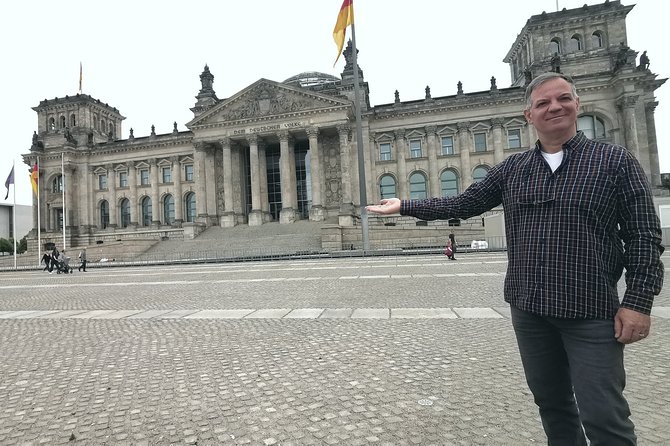
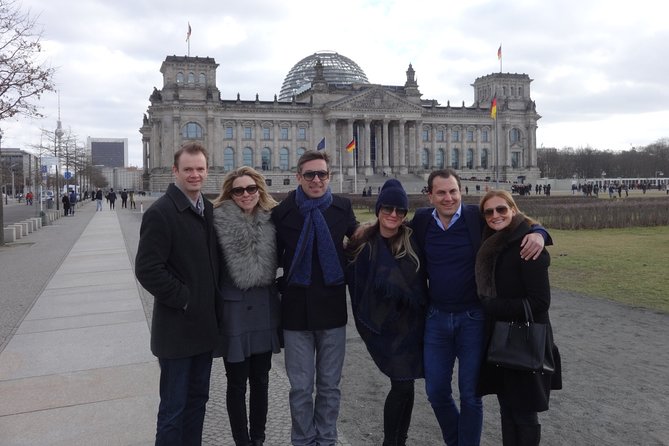
The Reichstagsgebäude is described as the former emperors parliament, today Germany’s parliament. That transformation is powerful on foot, because it makes the idea of continuity and change feel less abstract. In a private tour, your guide can point out what changed, what stayed, and how Berlin uses architecture to communicate authority.
On the other side of the timeline, the Kaiser-Wilhelm-Gedächtniskirche, the Emperor William Memorial Church, is included as well. It’s the kind of stop that helps you feel Berlin’s approach to memory. Instead of wiping the past clean, the city keeps traces visible and uses them to tell people what happened.
These stops are especially good if you want a balanced tour: not only Cold War division, but also how Berlin rebuilt itself.
Potsdamer Platz and Kurfürstendamm: where Berlin feels like a living city
Berlin is not only monuments. It’s also shopping streets, modern squares, and daily movement.
Kurfürstendamm is included as a famous bustling shopping street in former West Berlin. It can be a great palate cleanser after heavier history stops, and it shows you how “West Berlin” identity expressed itself through everyday life and consumer energy.
Potsdamer Platz is included too, described as one of Berlin’s new centers with modern architecture. This area works well for the theme of rebuilding and change. It helps you understand how Berlin’s modern urban design sits on top of older political realities.
In a 3-hour private walk, these segments are useful because they keep your mental picture of Berlin from becoming only gray and historical. You leave with a sense of where people actually go now.
Food and pace: snack stop by request, but you bring your own lunch plan
Food is not included. The tour notes that food and drinks are not included, and that lunch is not included.
That said, your guide can build in a short stop for a typical Berlin snack or lunch on request. This is a good option if you want a quick break without breaking the flow of your history stops.
Pacing is where private tours win. Since it’s only your group, your guide can slow down for questions or speed up if you have a packed day after.
Also, no personal headsets are used when you’re on the street. Translation: you should plan to hear your guide by staying close, and be ready for ambient city noise.
Practicalities that affect your day: pickup, weather, and timing
Pickup is available on request from the airport, train station, hotel, and other places in Berlin. For many people, that removes a whole layer of friction, especially when you land with luggage and a time crunch.
It also helps to understand how confirmation works. Confirmation is received at time of booking, and the tour uses a mobile ticket.
The tour operates in all weather conditions, so build your clothing plan around walking. If it’s rainy, you’ll want shoes that handle wet sidewalks. If it’s cold, dress in layers because you’ll be moving the whole time.
Finally, think about the non-refundable nature of this booking. If you cancel or request an amendment, the amount you paid will not be refunded and it cannot be changed for any reason. For a tour like this, I treat booking as a commitment to showing up, so only lock it in when your schedule is firm.
Who this tour is best for, and who should skip it
This tour is a strong fit if you want:
- A private, flexible Berlin walk where you can choose the theme, not just follow a fixed route
- A fast orientation to central Berlin using major landmarks like Brandenburg Gate, Unter den Linden, Checkpoint Charlie, and Alexanderplatz
- A structured way to understand the Wall story, including the East Side Gallery and surviving Wall remnants
- Guides who can explain meaning, not only names, with English-friendly communication
It might be less ideal if you want:
- A long, museum-heavy day, because this is a walking tour around a 3-hour window
- Headset-supported listening in crowds, since the tour does not use personal headsets on the street
- A fully sedentary experience, because moderate physical fitness is required
Should you book this private Berlin walking tour?
If you’re choosing between random wandering and getting your bearings with real context, I’d book this. The best reason is the mix of control and structure: you get to steer the themes, while the guide handles route flow and keeps the time window working.
If you’re a group of friends or family, the price per group can be especially fair because it scales better with a larger group up to 15 people. If you’re traveling as two people, it can still be a smart move for the orientation value, but only if you know you want a guided, meaning-focused walk through Cold War and historic-center highlights.
Bottom line: book it when you want a guided Berlin that makes sense fast, and when you’re ready to walk for a solid 3 hours without personal headsets.
Recently added around Berlin
- Berlin Private Custom Walking Tour With A Guide (Private Tour)★ 4.5 · 8 reviews
- One Up to 3 Rickshaws(6 GUESTS)-Taylor Made Rickshaw Berlin Tour★ 5.0 · 20 reviews
- Moonshine Comedy – English Stand Up Comedy by the bay★ 5.0 · 11 reviews
- Private Half-Day Berlin Sightseeing Tour with a Minivan Including Short City Walks★ 5.0 · 31 reviews
- Private taxi tour to Potsdam and Sanssouci 6-8h★ 5.0 · 30 reviews
- Private City Kickstart Tour: Berlin★ 4.5 · 71 reviews
- Private tour of Berlin★ 5.0 · 15 reviews
- Private Walking Tour: Behind the Iron Curtain and Berlin Wall★ 5.0 · 10 reviews
Historical Tours, compared.

Berlin Private Complete History All Day Walking Tour
Read our review →


Small group Potsdam: A Journey Through History and Palaces
Read our review →Browse the lists this tour appears in