
Reviewed · WALKING TOURS
Private walking Tour: Berlin Architecture Tour
Berlin architecture is fascinating because it is basically a history lesson you can walk through. This private tour uses Berlin’s buildings to explain how the city got divided after World War II, and how East and West rebuilt with totally different ideas in mind. You get the big-name sights too, but the real value is the way the guide connects each style to what Berlin was trying to become.
I especially like two things. First, it is private and customizable, so you can steer the route toward what you care about most. Second, the tour is built around photo-friendly architectural ensembles, so it is easy to capture the shapes and details without racing around on your own.
One drawback to consider is timing. With only about 4 hours, most stops are short looks, not long museum time, and it is a walking or biking day, not a sit-down lecture. Also, food and drinks are not included, so plan a snack strategy.
Quick reasons to book this Berlin Architecture Tour
- Private guide, private pacing: your group only, and the route can be adjusted to your interests.
- East vs West in real buildings: the architecture changes because the politics changed.
- Friedrichstrasse stop: a key central street for culture and shopping, tied to postwar renewal.
- Gendarmenmarkt trio focus: Deutscher Dom, Französischer Dom, and Schinkel’s Konzerthaus, plus Schiller in the middle.
- Kulturforum and Philharmonie photos: modern concert-hall design in the West Berlin cultural zone.
- Neoclassical to art nouveau to modern glass: you see several eras in one efficient arc across town.
Cold War lines in the stone and glass
Berlin’s buildings are not just pretty. They are arguments. In the East you see housing blocks and planning approaches tied to communist ideals. In the West, architecture pushes different themes, like modern design, cultural ambition, and postwar rebuilding priorities.
This is why I like this tour’s core idea: it keeps coming back to contrast. Even when you are looking at something that feels decorative, like domes, courtyards, or concert halls, the guide frames what you see in terms of what Berlin was doing at the time. That turns a collection of stops into a story you can follow.
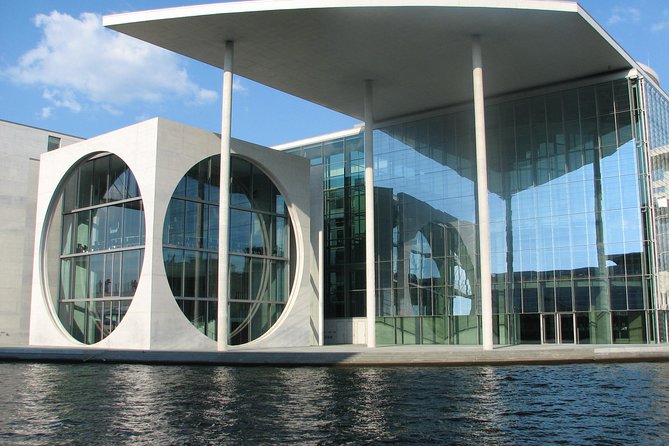
And it’s not only about the past. Stops like Potsdamer Platz and the Reichstag show how Berlin wanted to rebrand itself after reunification, using glass and new construction to signal a new political mood. You end up with a mental map of the city that makes everything else you do feel easier.
More walking tours in Berlin:
- Discover Berlin Half-Day Walking Tour
★ 5.0 · 9,624 reviews - Berlin: Third Reich and Cold War 2 Hour Walking Tour
★ 4.9 · 6,830 reviews - Berlin: Discover Berlin Walking Tour
★ 4.9 · 5,998 reviews
Price and Logistics: what your $191.87 per person buys
At $191.87 per person for about 4 hours, you are paying for time, access, and a guide who can connect architecture to context. It is not a budget street-walk, but it can be good value if you would otherwise spend a day bouncing between places with no plan.
A few practical things make the pricing feel more reasonable:
- Hotel pickup and drop-off are included, and that saves you time in a city where transfers can chew up half a day.
- It is offered in English, and it is private, so you are not stuck waiting for other group members.
- The tour includes mobile tickets (helpful for finding your bearings at the start).
If you are traveling with people who love architecture, or if you want a strong first-day orientation, this kind of private format is often where the money lands as value. In past departures, the guides have been flexible, adjusted timing to match guest priorities, and communicated clearly, including examples like Ariel, Sara, Thomas, Daniel, Heiko, and Tarek Ibrahim.
Starting at your hotel, then sweeping across Berlin’s key architecture zones
The day starts with a meet and greet at your central Berlin hotel lobby. Pickup is offered, and the tour ends with a hotel drop-off, so you are not constantly figuring out transit after you have already been walking.
This format matters because the tour is designed as a sweep across the city. You cover the architectural “greatest hits” without needing to build a route yourself, and you get stop-by-stop interpretation along the way. Since it is private and customizable, it also helps you ask questions on the fly, like what to prioritize if your group is more interested in design details or in the political story behind them.
One good planning trick: do a quick check with the guide before you start. The tour is set up, but your guide can still shape how long you linger at photo points and which side streets you might want to see more of.
Museum Island quick-hit tour: neoclassical to restored modern details
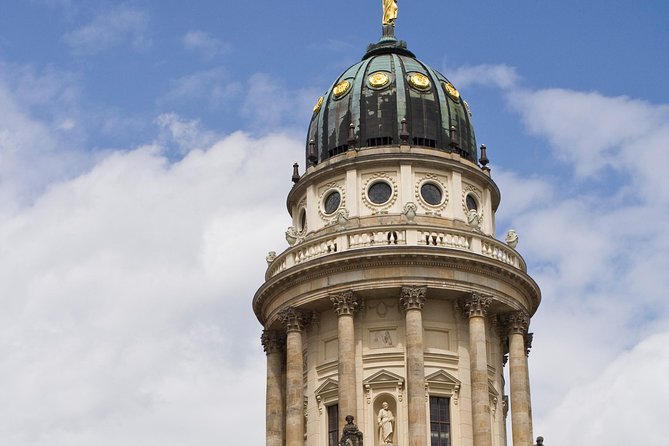
You begin at Museum Island, where the buildings feel like a skyline made for architecture photos. The guide points you toward standout exteriors, so even when you are not spending hours inside, you still get the visual payoff.
You start with the Altes Museum, known for its grand neoclassical look. Next up is the Pergamon Museum for those monumental classical facades and dramatic sculptural presence. Then you move across the island’s range of styles, including the Bode Museum with its dome and graceful curves, and the Neues Museum, which carries a powerful theme of restoration after wartime damage.
For me, the best part here is how fast you can see variety. In one location you get neoclassical weight, classical monumentality, and a restored building that shows Berlin’s willingness to rebuild and reframe its identity. If your group likes photography, you will find angles and sightlines around the river views too.
A few more Berlin options worth a look
- Berlin: Private Reichstag and Glass Dome Tour
★ 4.8 · 2,226 reviews - Berlin Private Complete History All Day Walking Tour
★ 5.0 · 474 reviews - Private Walking Tour Berlin Third Reich Hitler and World War II
★ 5.0 · 360 reviews - Private Berlin: Iconic Sights and Hidden Gems Walking Tour
★ 5.0 · 292 reviews
Gendarmenmarkt and the three-part architectural ensemble
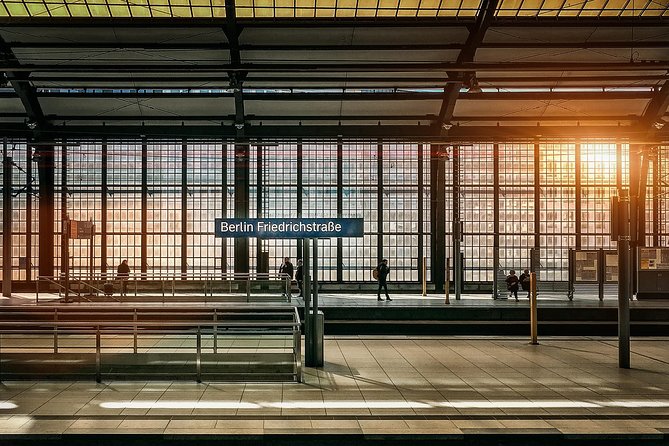
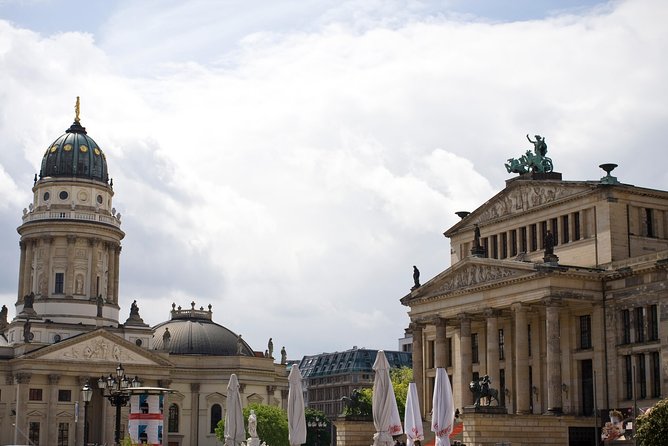
At Gendarmenmarkt, you get one of the most elegant architectural “set pieces” in central Berlin. It is famous for a reason, and the tour spotlights the core trio:
- Deutscher Dom (German Cathedral)
- Französischer Dom (French Cathedral)
- Schinkel’s Konzerthaus (concert hall)
The square also features a statue of Friedrich Schiller in the center, which gives the whole composition a clear focal point. This is the stop where you can slow down for photos, especially because light changes the mood quickly. If you time it around golden hour, the buildings can look warmer and more dimensional.
A practical note: this square is popular, so expect movement around you. The guide helps you pick view angles without turning the experience into a crowd shuffle. If your group cares about symmetry and how different facades create a unified picture, this stop is a highlight.
Kulturforum’s Philharmonie and the Reichstag’s glass dome contrast
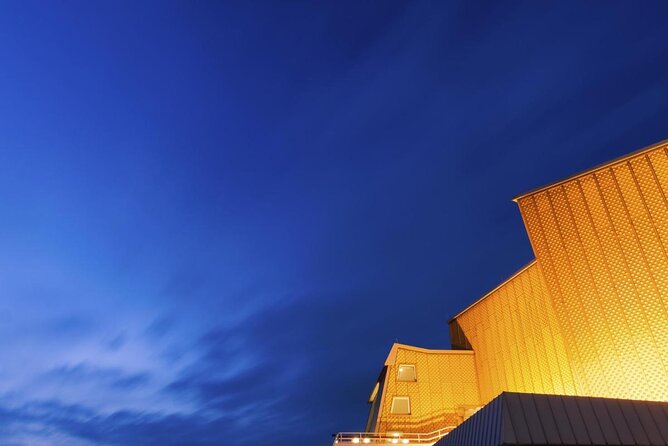
Next you head to the Kulturforum, a West Berlin cultural zone built up after many cultural assets were cut off behind the Berlin Wall. This is where the Berliner Philharmonie comes in, described as an Expressionist-style hall in this tour plan, with a dramatic exterior shape and a modernist attitude.
Even if you are not going to a concert that day, you can appreciate the idea behind the building. The exterior is distinctive, and the interior concept is designed around great acoustics, including a circular layout that keeps the audience close to the performers. For architecture lovers, it is a lesson in form serving function.
From there, you go to the Reichstag Building. The big visual story here is the contrast between the historic structure and the modern symbol layered on top: the glass dome designed by Norman Foster after reunification. The dome is not just a design flourish. It represents transparency and a new political message in a place that once projected power.
This is also a great stop for views. Even in a short visit, you can see why Berlin wanted the dome to change how people relate to government space.
Friedrichstrasse, Potsdamer Platz, and Berlin’s rebuild-from-ruins energy
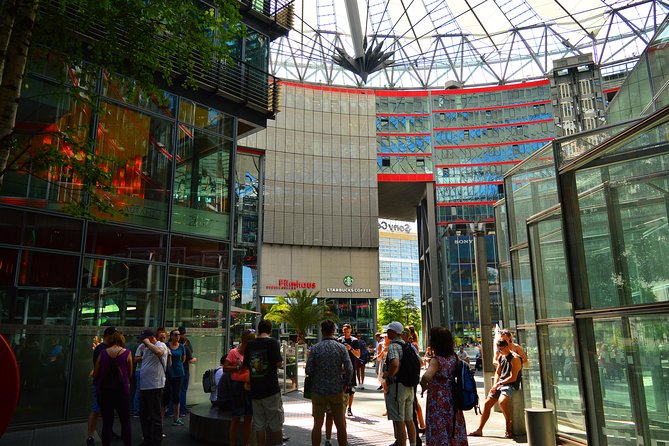
A strong Berlin architecture tour should include places that show what happened after the war and after division. Friedrichstrasse fits that role, and the tour plan focuses on urban renewal themes along this famous central street. It is known for combining the tradition of the “Golden Twenties” with newer layers of Berlin. If you like street-level architecture where offices, coffee stops, and department stores share space, this is a good breather from the big monuments.
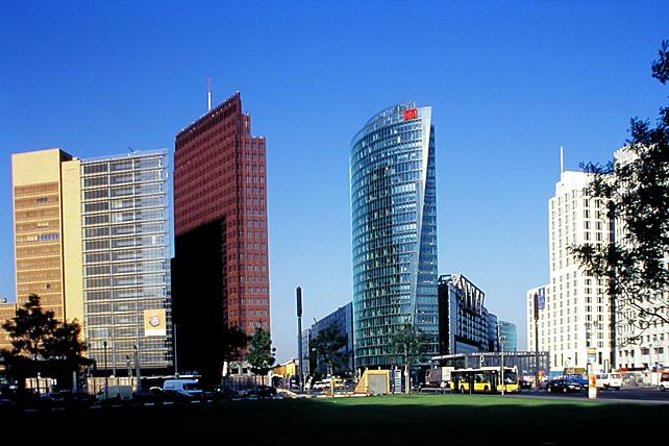
Then you move to Potsdamer Platz, one of the clearest “before and after” zones in the city. This area was a major center before World War II, became ruin during the Cold War era, and was shaped by division. Today it is a living example of contemporary planning and design, with eye-catching elements like the Sony Center, the DB Tower, and the Panoramapunkt views.
What I like about Potsdamer Platz on this kind of tour is that the architecture is not only about aesthetics. It shows how Berlin wanted to come back, and how new construction helped the city reposition itself. It feels like Berlin learning to speak a modern language without forgetting its scars.
Berliner Dom and the feeling of scale you do not get from photos
After Potsdamer Platz, you head to the Berliner Dom, completed in 1905. This is baroque and renaissance revival in spirit, and it is all about scale. The central dome is enormous, and the symmetrical facade gives it a ceremonial, almost formal presence.
Inside, the emphasis is on drama: soaring arches, marble columns, and elaborate mosaics that fit the style’s taste for ornament. Even if you do not spend much time here, the stop is a useful reminder that Berlin did not only build for politics and culture. It also built for grandeur, and the Berliner Dom shows that side clearly.
If you like churches and civic buildings with a strong sense of power through design, this stop will land. If your group prefers lighter, residential architecture, you might not love it as much, but it is still a good contrast piece after the modern glass and plaza spaces.
Kreuzberg and Friedrichshain: where architecture feels lived-in
The tour shifts from major landmarks into neighborhoods where buildings reflect everyday Berlin. Kreuzberg is where you see an architectural mix that includes 19th-century Altbau apartment facades alongside later industrial and contemporary conversions. The guide points out how restoration can keep older character while making the spaces functional for modern life.
You also get a major photo anchor in this part of the route: Oberbaum Bridge. Its red-brick towers and Gothic-inspired arches make it one of those structures you instantly understand visually, even without a long explanation.
Then you continue into Friedrichshain, which sits in what used to be East Berlin. This is where the tour leans into contrasts again, with socialist-era influence and a strong presence of restored pre-war Altbau buildings. The vibe is different from the museum zones because the architecture is tied to street life and how people actually use the spaces.
If your group wants a concrete Berlin Wall connection, this stop covers the East Side Gallery, an open-air mural stretch on a surviving section of the Wall. It is art, but it is also architecture in the sense that it turns a boundary structure into a public canvas.
Pariser Platz to Hackescher Höfe: from the Brandenburg Gate to art nouveau courtyards
You end the day in places where architecture mixes with politics, luxury, and design craft.
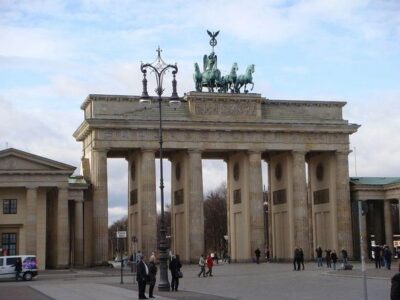
Pariser Platz is anchored by the Brandenburg Gate, a neoclassical triumphal arch symbolizing unity and peace. But the tour does not stop at the gate. You also get a look at surrounding landmarks like the Hotel Adlon, the French Embassy, and the American Embassy, plus the more modern contrast of the DZ Bank building designed by Frank Gehry. The area is also linked to the Academy of Arts.
It’s a good example of how Berlin can place modern sculptural glass close to classic stone without feeling like the city is apologizing for either era.
Then you finish with Hackescher Markt, focusing on Hackescher Höfe, a complex built in 1906 by architect August Endell. The tour highlights early 20th-century art nouveau design with intricate facades and courtyard details, including eight interconnected courtyards. If you enjoy ironwork, ceramic tile textures, and the way courtyards can turn a busy area into something more contained, this stop is a strong ending.
Bike vs walking: choosing the pace that fits your group
This tour can be done on foot or by bike, and that choice can change the experience. Walking usually helps you notice smaller details and take more time at photo points. Biking can cover more ground with less leg burn, which is handy if your group has limited stamina.
Either way, because the tour is private, the guide can help you choose what makes sense for your day. In practice, I would base the decision on two things: how sensitive your group is to walking for about four hours, and how much you want to linger at photo stops like Gendarmenmarkt and the cultural buildings near the Kulturforum.
For the best photos, plan for a couple of short stops to position yourselves. The tour is structured for that, and the guide will know where to stand to frame the architecture cleanly.
Who this Berlin architecture private tour is best for
This is a smart match if you are the type of traveler who wants structure. You like a clear route, you want context that connects style to history, and you want a guide who can explain what you are seeing in plain language.
It also works well for mixed-interest groups. If one person wants Cold War stories and another wants design details, the tour keeps both threads moving. And because it is private, you can ask the guide to shift focus, like spending a bit more time on domes and facades or on modern rebuilding areas like Potsdamer Platz.
If you are traveling with kids or teens who can handle walking, the private format can make it easier to keep attention since the guide can tailor the pace. If your group hates walking, you should consider the bike option, assuming it is available on your departure.
Should you book this Berlin architecture private tour?
Yes, if you want an efficient, story-driven way to understand Berlin through architecture, this is worth booking. The private guide and the fact that the tour is customizable are the big wins, especially if you care about the East-West division theme and you want real architectural contrasts instead of a random grab bag of photos.
If you are hoping for a slow museum day with lots of interior time, you may want to pair this with a separate museum visit. The tour is designed for highlights, short stops, and photo moments, not for taking your time in every building.
One last practical check: because the tour is about 4 hours, plan snacks since food and drinks are not included. And if you want to make it extra personal, message your guide with your top two must-see styles or buildings before you start, so the time goes where your group cares most.
FAQ
How long is the Private Walking Tour Berlin Architecture Tour?
It runs for about 4 hours.
What is the price per person?
The price listed is $191.87 per person.
Is this a private tour or a shared group?
It is a private tour, so only your group participates.
Do you get hotel pickup and drop-off?
Yes, hotel pickup and drop-off are included, and pickup is offered.
Is the tour only on foot?
No. You can choose to do the tour on foot or by bike.
What language is the tour offered in?
The tour is offered in English.
Are food and drinks included?
No. Food and drinks are not included.
Are there entrance fees for the stops?
The plan shows the stops as admission ticket free.
Is a mobile ticket provided?
Yes, a mobile ticket is included.
Is free cancellation available?
Yes. You can cancel up to 24 hours in advance for a full refund.
Recently added around Berlin
- Berlin Private Custom Walking Tour With A Guide (Private Tour)★ 4.5 · 8 reviews
- One Up to 3 Rickshaws(6 GUESTS)-Taylor Made Rickshaw Berlin Tour★ 5.0 · 20 reviews
- Private taxi tour to Potsdam and Sanssouci 6-8h★ 5.0 · 30 reviews
- Moonshine Comedy – English Stand Up Comedy by the bay★ 5.0 · 11 reviews
- Private Half-Day Berlin Sightseeing Tour with a Minivan Including Short City Walks★ 5.0 · 31 reviews
- Private City Kickstart Tour: Berlin★ 4.5 · 71 reviews
- Private tour of Berlin★ 5.0 · 15 reviews
- Private Tutankhamun’s Tomb Live Escape Room in Berlin★ 3.5 · 11 reviews
Walking Tours, compared.

Berlin’s Best: 2 Hour Walking Tour Third Reich and the Cold War
Read our review →
Third Reich Berlin: Hitler and WWII Walking Tour
Read our review →
Browse the lists this tour appears in