
Reviewed · HISTORICAL TOURS
Private Taxi Tour City East & West History and Architecture 3-4h
Berlin is the kind of city where history is written into buildings, not just museums. This private taxi tour is a practical way to connect the dots between East and West while you hop from one meaningful landmark to the next. My favorite part is how Gunter Bauer (your English-speaking guide and driver) turns street scenes into stories, and how the whole format is comfortable and flexible, since you are riding in an air-conditioned taxi with WiFi.
Two things I particularly like: you get a tight highlight route that still includes thoughtful details (like how and why certain structures survived or were rebuilt), and you can take breaks without burning your whole day walking. The main drawback to consider is pacing. In 3 to 4 hours you will see a lot, so some stops are short photo or orientation moments, not full museum sessions.
Key highlights worth aiming for
- A guide who stays human and flexible, including rescheduling when plans change and sending photos after the tour
- East and West in one ride, with transitions that make the city feel less like random sightseeing
- Architecture with reasons, from memorial churches to government buildings and restored courtyards
- Comfort-first logistics, pickup within the S-Bahn ring, parking handled, and WiFi on board
- Stops that mix serious and lighter moments, from Topography of Terror to KaDeWe and Berlin Zoo
Why Berlin’s East and West makes more sense from a taxi

Berlin can feel like two cities that never fully stopped arguing. The fastest way to understand that is not by scrolling photos, it is by watching how neighborhoods change as you move. A taxi tour does that well. You are not fighting buses, ticket lines, or transfers. You are simply going block to block, with your guide explaining what you are seeing as you go.
This is also a smart move if your trip has limited time. With a planned 3 to 4 hour window, you can still cover major landmarks across the historic divide. And because it is private, you are not stuck with a pace that works for someone else’s interests.
One more practical benefit: you can ask for small course corrections on the fly. That matters in Berlin, where one street can lead to a whole different era.
More history tours in Berlin:
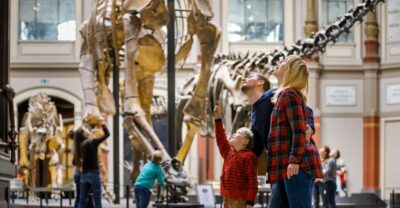
- Berlin: Natural History Museum Entrance Ticket
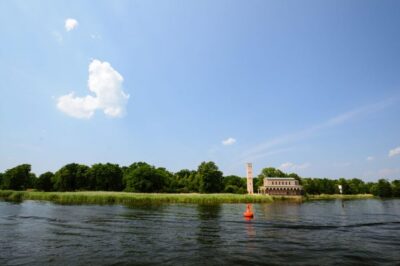
★ 4.6 · 3,382 reviews - Berlin: World Heritage Cruise to Potsdam
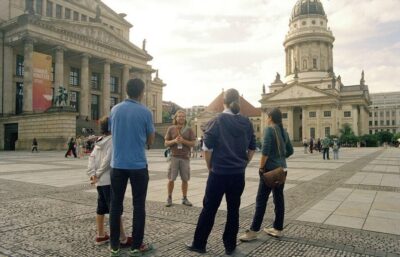
★ 4.5 · 1,435 reviews - Berlin Historical Highlights Walking Tour
★ 4.9 · 657 reviews
Price and what you actually get for $150.18 per person
At $150.18 per person, this is not a bargain-basement deal. But you are paying for a specific kind of value:
- Private transportation with an air-conditioned vehicle
- Pickup from within the S-Bahn ring included
- Guide-led touring plus the taxi ride and city tour VAT included
- WiFi on board and parking fees covered
If you are traveling as a couple, or you care about history and architecture enough to want context at each stop, it often feels worth it. If you are the type who wants long museum time, you may find the overall feel more like an efficient “orientation with major anchors,” rather than a deep dive into every site.
The route that connects Prussian ambition to modern Berlin
The tour moves like a guided conversation: you hear about what came first, what broke in the middle, and what rebuilt Berlin after the fall of the Wall. Here is how the main stops add up.
Kaiser Wilhelm Memorial Church, the preserved scar plus the modern echo
You start near Kaiser Wilhelm Memorial Church, the famous damaged church you see often from photos, but this time you approach it from a side that makes the story clearer.
What I find compelling is the way the site refuses to hide the damage. The preserved tower and west portal were kept after debates about whether to clear the war-torn area completely. Later, the church tower and hall were added around the outside in a modern design based on work by Egon Eiermann, and Berliners even nicknamed the new form as a lipstick and powder compact. It is an urban “then and now” statement in stone and glass.
In your photo stops later, you will see the church again from another direction. That second look is useful because the new building changes the whole mood depending on the light and surrounding traffic.
Consideration: this is a high-activity area. You will likely do quick look-and-learn moments rather than slow wandering.
A few more Berlin options worth a look
- Berlin: Private Reichstag and Glass Dome Tour
★ 4.8 · 2,226 reviews - Berlin Private Complete History All Day Walking Tour
★ 5.0 · 474 reviews - Private Walking Tour Berlin Third Reich Hitler and World War II
★ 5.0 · 360 reviews - Private Berlin: Iconic Sights and Hidden Gems Walking Tour
★ 5.0 · 292 reviews
Berlin Zoo and the animal-themed architecture that survived
Next comes Berlin Zoo, one of the oldest in Germany and built on a royal idea. The guide frames it as a practical move by King Friedrich Wilhelm IV, who wanted animals relocated near Berlin and used parts of his hunting grounds for the project. The result is a zoo that does not just hold animals, it also holds architecture that echoes the animals’ places of origin.
From the exterior, the elephant gate is especially striking, and behind it you can spot the monkey enclosure. The lion gate near Zoo station also makes the transition between city transit and zoo spectacle feel effortless.
Why you will like this stop: it is a reminder that Berlin’s history includes empire-era planning and cultural taste, not only politics and war.
The Theater of the West and the birth of a western leisure zone
You then shift toward Berlin’s western entertainment energy, including the Theater of the West. The guide explains the “west” logic behind it: it was built in what was then the new west of Berlin, when people were moving out of the overcrowded center (Mitte) toward greener areas where villas and gardens were possible.
Today it is used as a musical theater, but the building still communicates that older idea of luxury leisure.
Ku’damm, Berlin’s famous shopping boulevard that got reinvented
As you pan over to Kurfürstendamm, you get a sense of how Berlin’s glam changes over time. The guide breaks down the boulevard as a model inspired by Paris, including the grand candelabras that echo the Champs Élysées. Over the years, the boulevard has shifted from villas to shopping, and that also changes the evening atmosphere.
If you are expecting a romantic, candle-lit promenade every time you step outside, keep your expectations flexible. But if you want to understand how a single avenue tells multiple eras of Berlin, it works.
Another look at Kaiser Wilhelm Memorial Church in blue light, plus the European Center
From there, you see the memorial church again, this time with the new building lit in that famous mysterious blue effect from thousands of glass stones that were made in France. Inside, the guide points out it is surprisingly quiet thanks to construction with a double wall and soundproofing air gap.
One detail I appreciate is the honesty about maintenance. The concrete structure can be fragile, which is why scaffolding is often visible.
Right behind you is the European Center, one of the oldest shopping centers in Berlin, recently reaching its 50-year mark. The original plan even included an ice rink, which was sacrificed later to optimize space. That is a great Berlin lesson: the city keeps adapting to what people actually do day to day.
KaDeWe: where the gourmet floor turns sightseeing into a snack plan
You do a dedicated stop at KaDeWe (Kaufhaus des Westens). Even if you do not plan to shop big, it is worth walking through. The guide frames it as the largest single department store on continental Europe, with 60,000 square meters.
The best part for me is the idea of a “destination floor.” On the gourmet level, you can find everything from champagne to oysters, with a huge range of chocolates, breads, and cheeses. Some people joke about it as an eat-more day, but the store is really a slice of West Berlin consumer culture.
Practical tip: if you want to taste something, treat this as the one place to spend money. Otherwise, browsing is still a win.
Government Berlin and the architecture of power
A major strength of this tour is that it does not treat “government buildings” like generic backdrops. It tells you what they were built to do, and what that means for how Berliners interpret them.
Victory Column and the propaganda math of empire
Next you reach the Victory Column (Siegessäule). The guide explains how it originally stood shorter in front of the Reichstag and how it was built with three drums featuring gilded captured cannons from Denmark, Austria, and France. There is a clear explanation here of why the French were angry and what happened after the war.
Then you get the later chapter: it was shipped and repositioned by Hitler, including adding another drum meant for the next victory that never arrived the way it was planned.
You will look up at it differently after the explanation. It is not only a landmark, it is a timeline in metal and stone.
The Reichstag: a building that kept getting rewritten
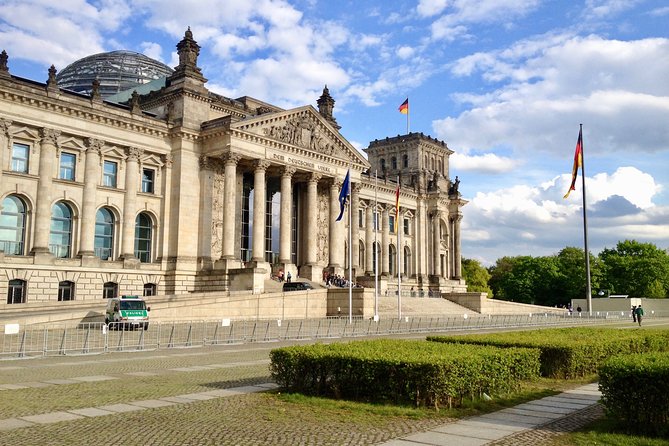
Then comes the Reichstag, and the guide takes a stance that feels fair. The building has long been criticized as a chat room or monkey house, and it also was historically placed away from the city center. The tour explains how Red Army soldiers placed their flag on the building after WWII, and why in West Berlin decades it could be politically awkward to use it, since it was near the Wall.
In the 1990s, it was gutted and redesigned for a reunified Bundestag with over 700 members. The guide also mentions the Christo wrapping action, which is one of those moments where you can see art and politics shaking hands.
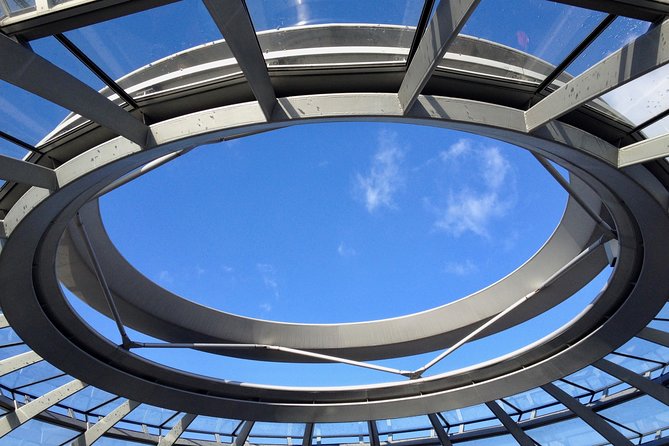
You also learn about the dome update and how the vision for the roof changed from the original plan. Even if you never go into the dome on this tour, understanding the architecture’s evolution gives you a better eye.
The glass parliament and why committees matter
Inside the narrative, the tour distinguishes what you can see from outside versus what you cannot. The guide describes the parliamentary work as happening mostly in committees, with closing speeches in the main chamber. There are also many “bulges” on three floors where committee space sits.
It is a glass building, so outside views give you a sense of the layout, but the guide points out that certain committee activities, including EU and secret committees in a larger rotunda facing the Spree, are not visible from the street.
That kind of detail is what turns “big building photography” into real understanding.
Chancellery and the press facade that feels built for surveillance
From there you see the Chancellery building, described as massive, with 10 floors and hundreds of rooms, including the Chancellor’s office. The guide notes the presence of an official apartment that is not used, and where the Chancellor lives instead.
Then you move to a modern government building with a striking giant window, where accredited journalists observe official happenings once or twice a week, facing a blue wall that also reflects in the facade. This is one of those spots where the design itself tells you this is a system built for reporting and controlled visibility.
Restored courtyards, theater spectacle, and Jewish Berlin stories
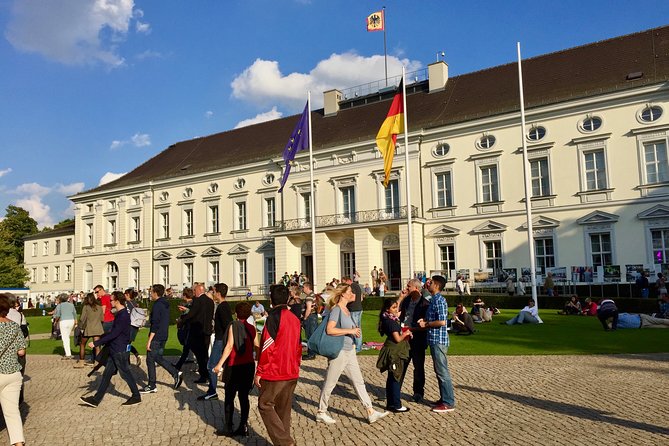
The East-West theme continues, but the tour also brings in neighborhoods where Berlin feels lived in rather than only monumental.
Die Hackeschen Höfe: Art Nouveau courtyards reborn
At Die Hackeschen Höfe, you get one of the best contrasts on the itinerary. The guide explains these courtyards as a restoration success. Built in 1908 as a showcase courtyard for mixing life and work, they included factories, printing houses, workshops, and green atria large enough for living space upstairs.
During GDR times they were dilapidated and partly used as warehouses. Later restoration brought back the old Art Nouveau charm. Today workshops are largely replaced by shops, including selected goods and displays like KPM porcelain, plus the East Berlin Ampelmännchen.
This is also a great stop for you if you want a brief break from heavy history without losing the Berlin context.
Synagogue stop: security, design, and what survived
You also visit a major synagogue area with security described as intense. The guide points out bollards, a no-stopping ban, and police presence with submachine guns.
The building’s Moorish-style design and golden dome are part of its identity. The guide explains that the main church was destroyed in the war, while the front portal building was at least started to be rebuilt later. Today there is an exhibition inside the front part about Jewish life in Berlin.
This is not a casual walk-through stop. It is a moment where architecture, memory, and present-day security all meet.
Friedrichstadt-Palast: built for spectacle
Another stop is Friedrichstadt-Palast, described as the Revueplatte in West Berlin slang. The guide shares how the house is known for big in-house productions, including stage tech like a retractable swimming pool and rotating ice surface.
If you like theater, this works as a fun counterweight to the government and memorial sites.
Under den Linden and the city as a palace corridor
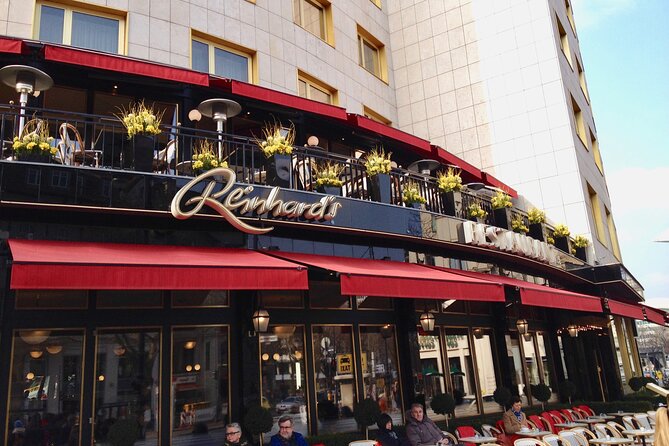
Then you get the “spine” of Berlin: Unter den Linden. The guide explains it as a former bridle path that led from the Berlin Palace through the Brandenburg Gate toward the hunting grounds that became the zoo.
You also learn about the linden-versus-nut-tree planting choice, so the boulevard’s name is not only pretty, it is a record of a decision.
The street becomes a moving timeline. You pass key buildings including the State Library, Humboldt University, and the State Opera, with cafes tucked along the median.
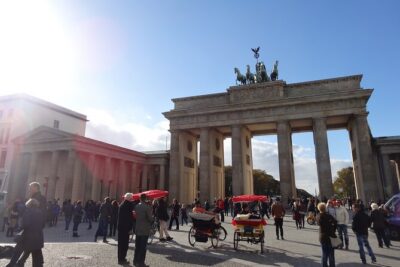
Brandenburg Gate and the Pariser Platz rebuild story
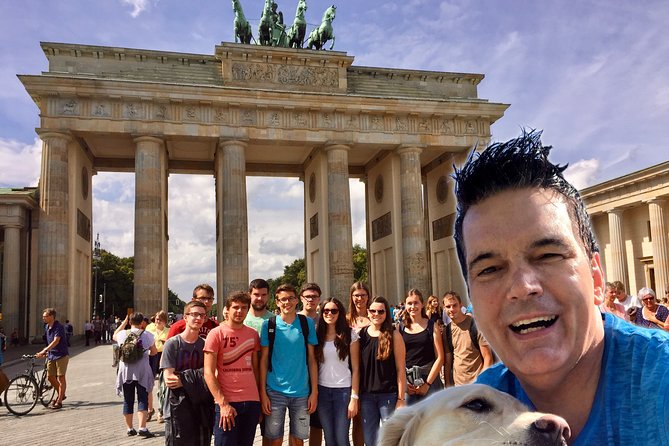
At Brandenburg Gate, the guide frames the location as Berlin’s parlor, but also as the place where the city’s wounds shaped the landscape.
You get the Cold War layout: thick walls from the west, an east fence, and the fact that you could not simply walk from either side as if it were a normal public plaza. After reunification, the surrounding buildings were rebuilt, modernized in style, but kept in similar volume.
You also hear the Soviet chapter: a huge Stalin-era foreign representation building was constructed here because embassies across Pariser Platz were in ruins. The guide explains that the building design allowed an inner courtyard to satisfy the idea of political alignment, and that the site became associated with the successor group called GUS.
Even if you have seen Brandenburg Gate a hundred times in photos, this stop gives the place its real weight.
Humboldt Forum and the politics of rebuilding
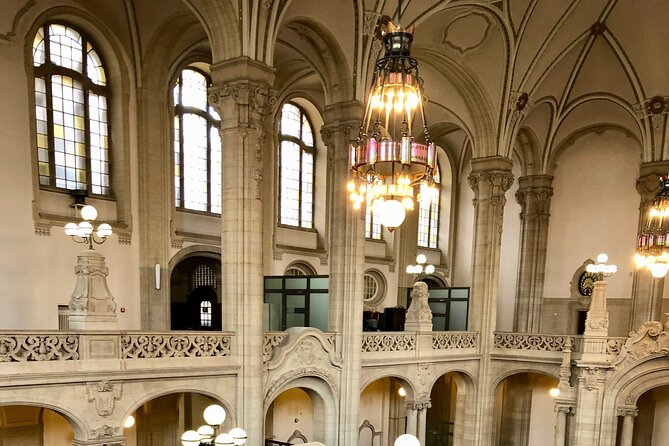
The tour includes a stop at Humboldt Forum, where the guide explains how this area was basically empty for decades after WWII, used at times as a parking area.
It also covers the Berlin palace story: the palace burned out but the silhouette remained, then East Berlin authorities demolished it for months. The guide emphasizes the documentation effort before demolition, including detailed photo records, which made a precise reconstruction possible. The Schlüter inner courtyard is reconstructed in detail too.
The stop is also framed as a future-looking cultural space that will add non-European art and Humboldt University collections. Admission is noted as included, and the stop is timed as a focused visit window.
Consideration: if you love architecture and reconstruction debates, you will enjoy this. If you want purely hands-on museum time, you may wish for more hours here.
Topography of Terror and the “stacked history” lesson
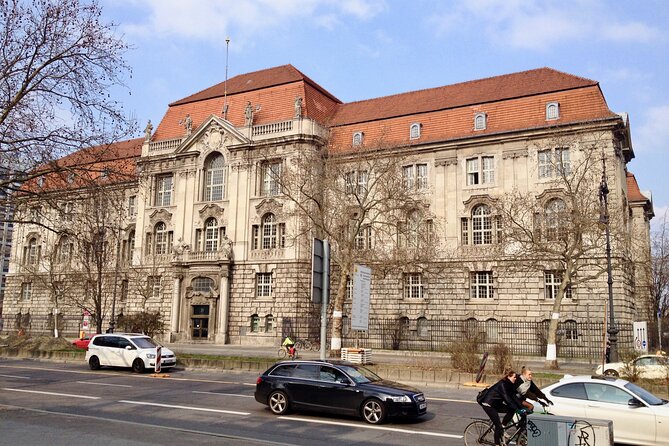
One of the most serious stops is Topography of Terror. The guide describes it as four layers of Berlin history in one place, moving from imperial and Prussian structures to major Nazi-era buildings tied to Göring, then excavated torture cells uncovered in the 1980s, and finally the documentation center and Cold War wall-related elements.
This is a short stop, but the guide’s structure helps you understand why this memorial site matters: it is not only tragedy, it is a map of how power built itself over time.
What stands out most from the guide and the reviews
This tour earns its reputation because of how it is run. The feedback you will feel in the experience is clear:
- Gunter is responsive and flexible. If your schedule shifts, the guide works to adjust rather than treating you like a booking number.
- He is fun, social, and sharp, and he takes time to make sure your group is comfortable.
- He drives well. You are in a taxi for much of the day, which matters if weather or mobility is an issue.
- He takes photos during the tour and sends them afterward. It is a nice extra, especially if your phone battery is not your friend.
- The tour works for different ages. Even when someone in your group cares less about deep history, the mix of architecture, street scenes, and lighter stops helps keep things moving.
My practical advice before you go
If you only remember a couple things, make it these:
- Bring water. Even with breaks, the pace can add up fast.
- Dress for quick transitions between inside stops and busy outdoor areas.
- Decide what you want more of: history and architecture explanations, or shopping and wandering. This tour can flex, but time is still limited.
Also, if you are visiting in cooler months, you will appreciate the warm taxi time between stops. In warmer weather, you will want to keep your breaks efficient and use the taxi’s comfort wisely.
Should you book this private Berlin East and West taxi tour?
Yes, if you want a smart, guided route that makes Berlin’s contradictions click. Book it if your time is short, you want East and West context, and you like your sightseeing explained in real-world order from street to street.
I would skip it if your travel style is mostly “one museum, one deep afternoon.” This tour is broad and efficient, not slow and exhaustive. But if you want to leave Berlin with a clearer mental map and stories that stick, this is a strong pick.
FAQ
How long is the private taxi tour?
It runs for about 3 to 4 hours.
What is the price per person?
The price is $150.18 per person.
What languages are offered?
The tour is offered in English.
Is pickup included?
Pickup within the S-Bahn ring is included, and pickup from outside the S-Bahn ring or from BER airport is available for an extra charge.
Is this a private tour?
Yes. Only your group participates.
What is included in the tour cost?
Private transportation, WiFi on board, an air-conditioned vehicle, parking fees, pickup within the city area described above, and both the taxi ride and the city tour with VAT are included.
Is lunch included?
No, lunch is not included.
Are child seats available?
Yes. A child seat for toddlers from six months to three years is available, plus a booster seat for older children. A baby seat (MaxiCosy) can be brought on request.
Are service animals allowed?
Yes, service animals are allowed.
Can I cancel for a full refund?
Free cancellation is available up to 24 hours before the experience’s start time for a full refund.
Recently added around Berlin
- Berlin Private Custom Walking Tour With A Guide (Private Tour)★ 4.5 · 8 reviews
- One Up to 3 Rickshaws(6 GUESTS)-Taylor Made Rickshaw Berlin Tour★ 5.0 · 20 reviews
- Private taxi tour to Potsdam and Sanssouci 6-8h★ 5.0 · 30 reviews
- Moonshine Comedy – English Stand Up Comedy by the bay★ 5.0 · 11 reviews
- Private Half-Day Berlin Sightseeing Tour with a Minivan Including Short City Walks★ 5.0 · 31 reviews
- Private City Kickstart Tour: Berlin★ 4.5 · 71 reviews
- Private tour of Berlin★ 5.0 · 15 reviews
- Private Tutankhamun’s Tomb Live Escape Room in Berlin★ 3.5 · 11 reviews
Historical Tours, compared.
Berlin Private Complete History All Day Walking Tour
Read our review →

Small group Potsdam: A Journey Through History and Palaces
Read our review →Browse the lists this tour appears in