
Reviewed · THIRD REICH & WW2 HISTORY WALKS
Berlin: Third Reich and World War II Private Guided Tour
Berlin’s World War II story is hard to miss because it is literally built into the streets. This private walk takes you from the grand political symbols of the era to the places where the consequences still shape how Berliners remember. You get a clear timeline, not just a list of famous sights, and that makes it a smart use of a short visit.
I like that it combines major stops in one tight route, including the Reichstag area, the Holocaust Memorial, and the ground-level sites tied to Hitler’s last days. I also like the private format with a professional guide, so you can ask questions and get context that fits your pace. One thing to consider: the topic is emotionally heavy, and the tour involves significant walking.
Key things I think you’ll care about
- Private, professional guide so you can tailor questions and keep the story moving at a good pace
- Big-hits route in 3 hours, pairing “power” landmarks with memorial and evidence-based sites
- Holocaust Memorial plus Topography of Terror, two places that teach you how memory is presented in Berlin
- Photo-friendly stops, but no flash in certain indoor areas
- Start near Hotel Adlon Kempinski and finish at Wall Museum, Checkpoint Charlie
- Multi-language guide options including English, German, Russian, French, Spanish, and Italian
A 3-hour Berlin walk through the Nazi era and WWII aftermath
If you only have a few hours in Berlin, this is one of the best ways to get oriented fast. The route connects the political heart of the Nazi period with the places that force a reckoning, then finishes near one of Berlin’s best-known Cold War landmarks. In other words, you get the arc of the story, not just isolated scenes.
The format is private. That matters because these sites are dense with meaning. With a group, you can still learn, but you often lose the chance to ask a “why does this matter” question when it comes up. With a private guide, that conversation can happen immediately.
Plan for heavy subject matter and a physical tour. Comfortable shoes help a lot, and you’ll want water. Also, food and drinks are not part of the tour plan, so eat beforehand if you can.
Other Third Reich and WW2 history walks in Berlin:
- Berlin: Third Reich and Cold War 2 Hour Walking Tour
★ 4.9 · 6,830 reviews - Berlin’s Best: 2 Hour Walking Tour Third Reich and the Cold War
★ 5.0 · 5,486 reviews - Third Reich Berlin: Hitler and WWII Walking Tour
★ 5.0 · 3,301 reviews
Meeting near Hotel Adlon Kempinski and getting your bearings
Your morning starts near Brandenburg Gate, with the meeting point listed next to Hotel Adlon Kempinski Berlin. That location is convenient for getting on your way quickly, and it also works as a mood setter. Brandenburg Gate is one of the city’s most iconic monuments, and using it as a starting point helps you understand how power, symbolism, and public space overlap in Berlin.
A guide usually sets expectations right away. You’ll hear what you’re about to see and why each stop matters to the broader WWII story. I like this approach, because it prevents the common problem of walking into a place and only half grasping what you are looking at.
If the weather turns rough, don’t worry too much, but do dress for it. The guidance you’ll receive includes being ready for different conditions, and this route includes a fair amount of walking on city streets and at outdoor memorial spaces.
Brandenburg Gate: more than a postcard
You start at Brandenburg Gate, and that’s a smart choice. This is not just a “nice photo spot.” It is tied to Berlin’s public life across multiple eras. Standing near it with a WWII-focused guide gives you a chance to shift your mindset from sightseeing to historical reading.
The Gate functions like a timeline marker. Even if you know the general story of the 20th century, seeing it first gives you a framework to interpret what comes next. You’ll also be able to compare how Berlin’s meaning changes depending on who is holding the narrative at the time.
From here, the tour moves toward the era when Berlin became the command center for Nazi power and, later, the ground where Germany’s defeat played out.
The Reichstag: where politics happened, and where it was reinterpreted
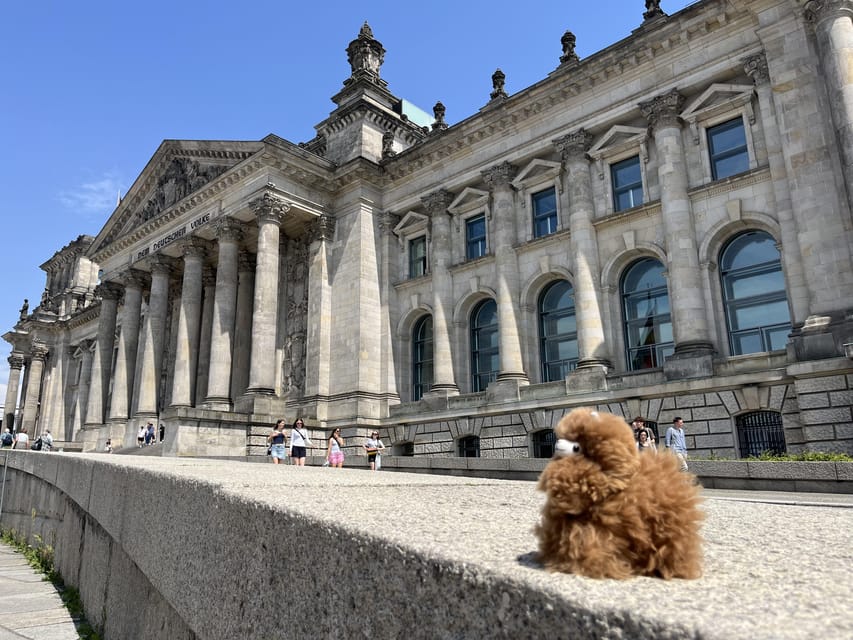
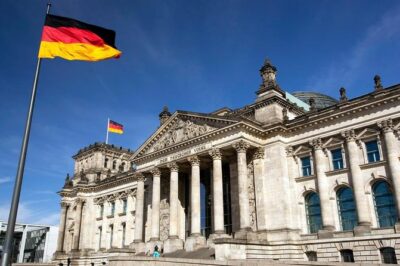
The tour includes a guided stop at the Reichstag. This is a key site because it represents state power at its most dramatic. The Reichstag building is famous, but you’ll get much more out of it with a guide who can explain why it matters beyond architecture.
Look for how the story is told through the building’s role and symbolism. This is one of those places where you can feel the tension between past intent and present memory. A good guide will help you connect the Nazi-era story to the later meaning of the seat of government, and that connection is what turns your visit into real understanding.
Practical tip: you’ll likely spend time listening and then scanning the surrounding area. If you want photos, have your camera ready, but remember this tour follows the general photo rule that flash photography is not permitted inside certain landmarks.
A few more Berlin options worth a look
- Berlin: Private Reichstag and Glass Dome Tour
★ 4.8 · 2,226 reviews - Berlin Private Complete History All Day Walking Tour
★ 5.0 · 474 reviews - Private Walking Tour Berlin Third Reich Hitler and World War II
★ 5.0 · 360 reviews - Private Berlin: Iconic Sights and Hidden Gems Walking Tour
★ 5.0 · 292 reviews
Soviet War Memorial in Tiergarten: understanding Berlin’s defeat and aftermath
Next up is the Soviet War Memorial in Tiergarten, also guided. This stop expands the story beyond German perspectives. In the WWII era, Berlin was not only a target, it was also a battlefield of competing narratives, and memorial sites are where those narratives are made visible.
The memorial helps you see the immediate aftermath. You learn how victory and loss are framed differently, and how a city can carry multiple layers of remembrance. Even if you already know the basics of the war’s end, a memorial like this adds a concrete, human-scale element to the final chapters.
This is also a good moment to slow down. The tour remains structured, but memorial sites tend to work best when you give yourself a few minutes to look before rushing to the next stop.
Holocaust Memorial: what to do when the space is doing the talking
The tour includes the Holocaust Memorial, guided. This site is unlike typical museums. You don’t just read panels and move on. The layout pushes you to move through the space, noticing how scale, repetition, and silence create a different kind of understanding.
A guided visit here is valuable because it helps you understand what you are experiencing and why it is designed that way. You’ll get context that makes your time at the memorial feel purposeful, not just solemn.
Practical tip: bring a camera if you want one, but don’t treat it like a photo shoot. This is a place where you’ll probably learn better if you pause, look, and let the guide’s explanation land. Flash is not the point of this space anyway.
Hitler’s Bunker area: history at ground level
You’ll also visit Hitler’s Bunker area, guided. This is one of the most sensitive parts of any Berlin WWII tour, because the location connects to the final phase of the Nazi regime. Even with a historical overview, this stop can feel stark because it turns abstract facts into physical geography.
The value of having a guide here is that you avoid the trap of guessing. You learn what happened, how the bunker fits into Berlin’s last weeks, and how the site is understood today. In a city with so many layers, that guidance keeps your understanding accurate.
Because it is emotionally charged, go at the pace the guide sets. If you need a minute to step back, do it. A private tour is built for your comfort level, as much as for your schedule.
Topography of Terror: reading evidence, not just headlines
Then you reach Topography of Terror, guided. This is the kind of place where the details matter. The name tells you the focus: terror created through systems, decisions, and a cruel machinery, not just isolated events.
A guided visit helps you connect the dots between what you’ve already seen and what the site is showing. You also learn how the location functions as a historical record. Berlin handles uncomfortable history with documentation and structure, and understanding that approach makes your visit more meaningful.
If you plan to take photos, be aware that the general guidance is that photography is allowed, while flash photography is not permitted inside certain landmarks. This matters most if you are inside exhibition areas.
Finish at Wall Museum, Checkpoint Charlie: closing the story with a Berlin landmark
The tour ends at the Wall Museum – Checkpoint Charlie. That finish point is clever because it helps you shift from WWII to Cold War Berlin, without jumping away from history. Checkpoint Charlie is one of the city’s most recognizable names, but in this context, it becomes more than a selfie stop.
You can treat the ending as a reset. After a heavy WWII arc, finishing near a landmark tied to Cold War tensions gives you a sense of continuity in how Berlin’s history keeps reshaping public space. It also gives you an easy place to plan your next move, since the area is busy and well connected.
The “private group” value: why $224 for 3 hours can make sense
The price is $224 per person for a 3-hour private guided tour. On the face of it, that might look steep compared with group walking tours. The value is in what you cover and how the guide can manage the flow.
You are not just seeing one highlight. You are moving through multiple major sites tied to WWII and Nazi history, including the Reichstag area, the Holocaust Memorial, and the bunker-related stop. A skilled guide helps you understand why each stop exists and what it is meant to communicate. That kind of explanation can be hard to get on a larger group format where time gets split.
Also, this is a multi-language experience. The guide is listed as available in English, German, Russian, French, Spanish, and Italian. If you want the story in a specific language, that can be a real quality upgrade.
One helpful note from an account you can learn from: the guide Sven is specifically described as punctual and professional, and another comment highlights how enjoyable Spanish interpretation was, with strong knowledge of the topics. You should still expect quality to vary by guide and day, but these signals point to a service that can work well for people who care about clarity.
Photos, flash rules, and what to bring for an easier walk
You’ll want a camera for sure. The tour is set up for capturing photos of Berlin’s iconic landmarks, with the reminder that flash photography is not allowed inside certain landmarks. That rule is important, because it affects how you shoot if you plan to go indoors at any point.
Bring:
- Comfortable shoes for significant walking
- Water so you stay steady during memorial stops
- Weather-appropriate clothing, since you are outside a lot
Also, large bags and luggage might not be suitable. If you’re traveling light, you’ll likely feel less stressed.
Food and drinks are not allowed during the tour. Eat before you meet your guide, and consider a snack after you finish, especially if the 3-hour route includes more walking than you expect.
Who this tour suits best, and who might want to choose differently
This tour is a good fit if you want a structured WWII-focused route and you value professional context. It works for history buffs and curious travelers who want clarity on how events shaped Berlin and the 20th century.
It is also private, which makes it easier for people who want to ask questions. If your group includes different interests, a guide can adjust how much time you spend at each stop, since the specific landmarks visited may vary based on preferences, time of year, and weather.
A big caution: children under 10 are listed as not suitable. This makes sense given the subject matter and the walking pace.
Accessibility info is a bit mixed in the details you are given. The activity is labeled as wheelchair accessible, but it is also listed as not suitable for people with mobility impairments and wheelchair users. I strongly suggest you verify directly with the provider before booking so you know what the guide can accommodate on the ground.
A quick word on reliability: the one risk worth noting
Most trips like this go smoothly, but one account included a serious issue: a guide did not show up, and that person expected a full refund. While that sounds like an outlier, it is enough to make a practical point.
Do this: confirm the meeting details and set a backup plan for where you can wait nearby. If your schedule is tight, give yourself a little buffer around the start time.
If you want peace of mind, the tour details also include free cancellation up to 24 hours in advance and a reserve now, pay later option, which can help you keep flexibility.
Should you book this Berlin private WWII tour?
Yes, if you want a focused, private way to connect Berlin’s WWII landmarks into a clear story. The combination of Reichstag, the Holocaust Memorial, and the bunker-related stop, plus Topography of Terror, is a strong set of learning stops for only 3 hours.
I’d book it especially if:
- you care about historical context, not just photos
- you want a guide in English, Spanish, or another listed language
- you like the idea of a private pace through heavy sites
I’d think twice or verify first if:
- your priority is a lighter, more casual sightseeing day
- you need specific accessibility support, since the details conflict
- you are very time constrained, because while the experience is generally described as professional, there is at least one report of a guide no-show
FAQ
How long is the Berlin Third Reich and World War II private guided tour?
It lasts 3 hours.
Where does the tour start?
It meets next to the Hotel Adlon Kempinski Berlin and begins near the Brandenburg Gate area.
What are the main stops on the tour?
You’ll visit the Reichstag, Soviet War Memorial Tiergarten, Holocaust Memorial, Hitler’s Bunker area, and Topography of Terror, then finish at Wall Museum – Checkpoint Charlie.
What is included in the price?
The tour includes a professional multilingual guide with historical insights and stories, and it is a private group experience.
Are entrance fees included?
No. Entrance fees to attractions are not included.
Is flash photography allowed?
Photography is allowed, but flash photography is not permitted inside certain landmarks.
Are meals provided during the tour?
No. Meals and drinks are not included, and food and drinks are not allowed during the tour.
What languages are available for the live guide?
The live guide is available in English, German, Russian, French, Spanish, and Italian.
Recently added around Berlin
- Berlin Private Custom Walking Tour With A Guide (Private Tour)★ 4.5 · 8 reviews
- One Up to 3 Rickshaws(6 GUESTS)-Taylor Made Rickshaw Berlin Tour★ 5.0 · 20 reviews
- Moonshine Comedy – English Stand Up Comedy by the bay★ 5.0 · 11 reviews
- Private Half-Day Berlin Sightseeing Tour with a Minivan Including Short City Walks★ 5.0 · 31 reviews
- Private taxi tour to Potsdam and Sanssouci 6-8h★ 5.0 · 30 reviews
- Private City Kickstart Tour: Berlin★ 4.5 · 71 reviews
- Private tour of Berlin★ 5.0 · 15 reviews
- Private Tutankhamun’s Tomb Live Escape Room in Berlin★ 3.5 · 11 reviews
Third Reich & WW2 History Walks, compared.
Berlin’s Best: 2 Hour Walking Tour Third Reich and the Cold War
Read our review →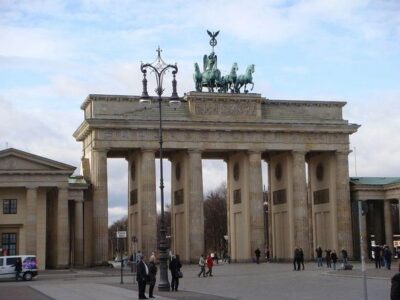
Third Reich Berlin: Hitler and WWII Walking Tour
Read our review →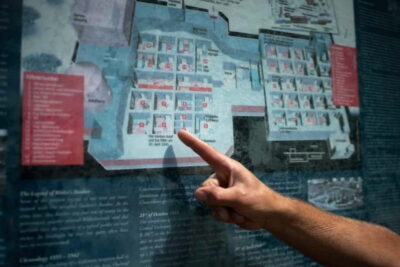
Berlin Third Reich Sites: Half-Day Walking Tour
Read our review →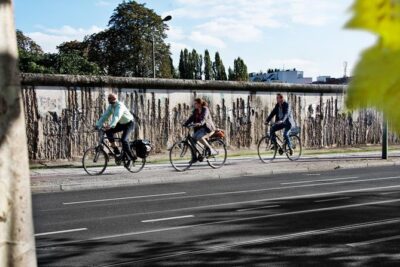
Guided Bike Tour of the Berlin Wall and Third Reich
Read our review →
Hitler’s Germany: Berlin During the Third Reich & WWII
Read our review →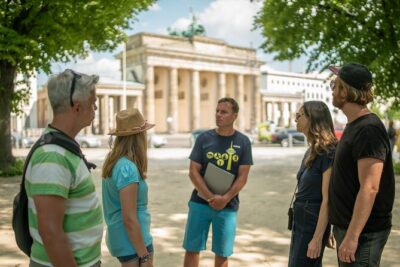
Private Walking Tour Berlin Third Reich Hitler and World War II
Read our review →Browse the lists this tour appears in