
Reviewed · THIRD REICH & WW2 HISTORY WALKS
Berlin: Jewish Walking Tour including World War II
Berlin Jewish history has one of those rare, jaw-dropping arcs you cannot see anywhere else in quite the same way, from early rebuilding to the horror of the Holocaust, and then the question of what comes next. This walking tour threads those chapters through Mitte with real places you can point to.
I especially like two things here. First, I love how the tour starts near Hackescher Markt and connects the community’s re-establishment in the late 1600s to later shifts in Berlin life, including the story of Ostjuden arriving from eastern Europe. Second, I like that you do not just see memorials, you also stop at the Otto Weidt Workshop for the Blind, where courage had a name and a day-to-day plan.
One possible drawback to plan around: you are walking for about 3.5 to 4 hours with multiple stops, so you need solid shoes and a realistic pace. It also runs into the usual sensitivity rules for these sites, like no flash photography.
Key highlights you will feel on this tour
- Tal (certified Berlin guide) brings both lively storytelling and academic context, including Berlin’s Holocaust-era healthcare history at Charité
- Hackescher Markt to Jewish institutions in Mitte shows how the community reshaped parts of the city
- Otto Weidt Workshop for the Blind adds a rescue story inside the wider WWII timeline
- Rosenthalstraße women’s protest memorial gives a human, specific angle on resistance and survival
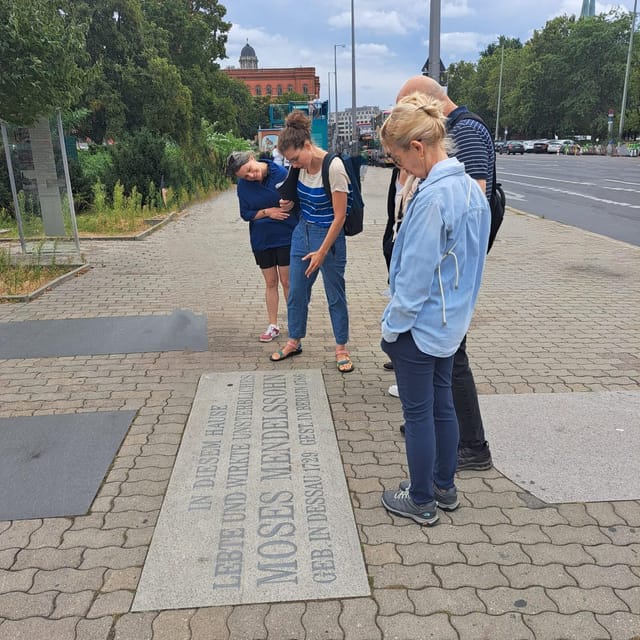
- Old Jewish Cemetery and synagogue sites connect early Berlin Jewish life to names like Moses Mendelssohn
- Optional extensions let you add Schönhauser Allee Cemetery, Kindertransport Memorial at Friedrichstraße, or the Grunewald Deportation Memorial
Jewish Berlin from Mendelssohn to WWII, mapped street by street
This is the kind of tour that makes Berlin feel smaller in the best way. You start in an area where Jewish community institutions were concentrated, and you end in a cemetery setting that brings the story full circle. You get both the “golden era” and the breaking point, with enough context to understand what people faced, not just what happened.
Your guide is Tal, a certified Berlin guide (Berlin Guides Association), and she leads in English and Hebrew. You can tell early that this is not a checklist tour. Tal has a strong personal interest in Jewish war history and also brings professional and academic experience, including post-doctorate work tied to how staff at Charité Hospital in Berlin deals with its past in the 1930s and 1940s. That background shows up as careful wording, clear cause-and-effect, and a willingness to explain internal community shifts, not only external Nazi persecution.
The overall tone is respectful but never vague. You will hear stories of community growth, disputes within the community, and the changing social texture of Berlin, followed by the brutal turn of World War II. If you are the type who likes your history in real locations, not just dates, this one fits.
Other Third Reich and WW2 history walks in Berlin:
- Berlin: Third Reich and Cold War 2 Hour Walking Tour
★ 4.9 · 6,830 reviews - Berlin’s Best: 2 Hour Walking Tour Third Reich and the Cold War
★ 5.0 · 5,486 reviews - Third Reich Berlin: Hitler and WWII Walking Tour
★ 5.0 · 3,301 reviews
Meeting in Mitte and how the walk actually flows
The tour meets in front of Starbucks in Mitte, at Hackescher Markt. That’s a smart choice because the area is a hub, easy to reach, and it keeps you grounded in the part of Berlin where many Jewish institutions were clustered.
You are in a private group, and the tour runs around 3.5 to 4 hours with a short break. You are also expected to walk enough to make timing matter, so I recommend you plan your day so you do not have a tight dinner reservation right afterward. It is the kind of tour where you may linger in your head on a stop longer than you planned.
As for accessibility, the listing says wheelchair accessible, but it also notes it is not suitable for wheelchair users and not suitable for people with mobility impairments. That is the kind of conflict you should handle by contacting the provider before you go, especially if you use a wheelchair or rely on step-free routes.
Tal’s tour style is built for questions. She gives you context at the right moment, so the walk stays fluid instead of turning into a lecture. Still, come ready with basic expectations: this is a WWII-focused Jewish history route, and the tone at memorial stops will be serious.
Stop 1 and Stop 2: Hackescher Markt as a starting point, not a backdrop
Right away, the tour teaches you how to read the map. Hackescher Markt is not random. Tal frames it as a focal point for the later arrivals in Berlin, including the Ostjuden who sought refuge from pogroms.
Even if you already know a bit about Berlin Jewish history, this starting area helps you understand why certain institutions ended up where they did. You get a short guided segment at Hackescher Markt, then you move into the neighborhood story.
What I like about this start is that it avoids a common trap: jumping straight to WWII without explaining the earlier community base. Here, you build the foundation first, and then the later events hit harder because you understand what was lost.
Women’s protest memorials and the wartime human angle
One of the most striking parts of the walk is the stop at the memorial connected to the Block of Women, with time set aside for a guided explanation. You also visit a memorial tied to the Rosenthalstraße women’s protest of 1943.
This is where the story becomes personal in a different way. You are not only learning about what Nazis did. You are also learning about what Jewish women and community members did in response, in real time, and why protest, paperwork, and public pressure mattered even when the overall system was crushing.
The practical takeaway for you: when you reach memorial stops like this, slow down. Take in what is placed there, what is emphasized, and what the guide points out. You do not need to rush to the next corner to “finish the tour.” Let the silence land.
There is also a second brief stop in this stretch where Tal ties together community institutions in Mitte with the wartime disruption. Since the itinerary keeps moving, you will get a sense of how quickly the city’s social life changed, and how many institutions were affected.
Other Jewish heritage tours in Berlin:
- Nazi Berlin and the Jewish Community Tour
★ 4.8 · 55 reviews - Private Tour: Jewish Heritage Walking Tour of Berlin
★ 5.0 · 29 reviews - Jewish Berlin: Walking tour The Old Jewish Quarter (private 3 Hours tour)
★ 5.0 · 27 reviews - Jewish Life in Berlin – Private Walking Tour
★ 4.5 · 21 reviews
Otto Weidt Workshop for the Blind: a rescue story with specific people
If you only did one “extra” thing on this tour, do this stop. The Otto Weidt Workshop for the Blind is included with an entry ticket when the museum is open, and the guided time at the site is built in.
This matters because WWII tours can sometimes feel like a one-note march: oppression, then deportation, then aftermath. Here, you get a different kind of courage, a story of protection and improvisation inside the machinery of persecution. Tal shows you why Otto Weidt’s workshop became a refuge for people who were otherwise vulnerable, and she connects that to the broader story without sanding down the truth.
What you should know before you go: entry is included except on days the museum is closed. If your date lands on a closure day, you will still get the guided context, but the hands-on part may differ. That is worth factoring into your expectations.
Also, because this is a Holocaust-era site, keep your camera use respectful. Flash photography is not allowed.
Seeing the New Synagogue area and the shift from golden days to fracture
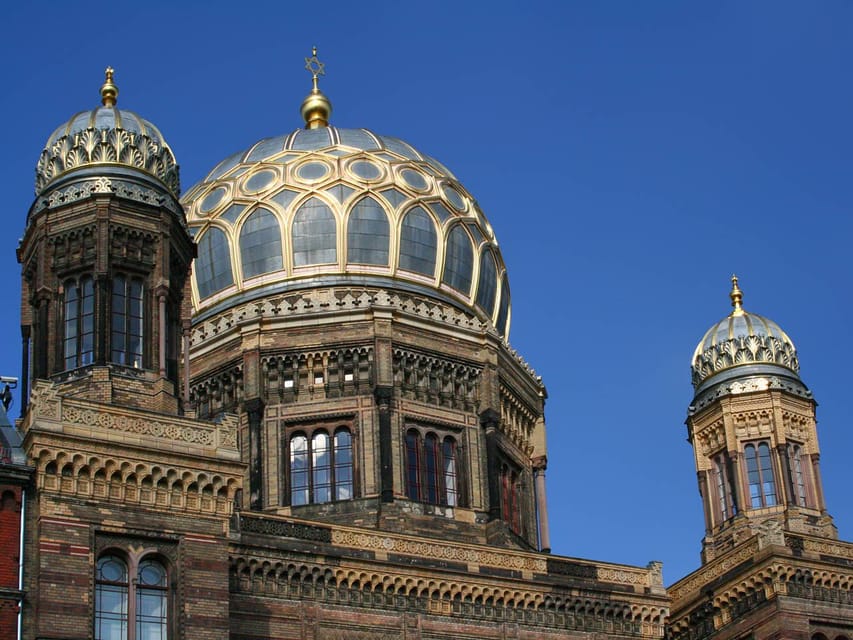
Next you get to the section focused on synagogue landmarks and community institutions in Mitte. You will spend guided time at the New Synagogue Berlin – Jewish Centre, and you will also learn how the community’s religious and civic life expressed itself in public architecture.
Tal frames the new synagogue era as part of the community’s “golden era,” then makes the connection to its later fall. From the outside, the building works like a historical snapshot. The guide helps you understand what you are looking at, and then you connect it back to the people who used it when life was still intact.
If you like architecture but also care about meaning, this part is worth your attention. Tal’s approach is not just “pretty building.” It is building as a sign of community confidence, followed by the brutal interruption.
On the way, you will also pass or visit key community-linked spots such as the Mendelssohn School and the girls’ school, plus additional institutions in the same broader zone. These stops help you see Jewish life as education and daily structure, not only faith and memorials.
Moving west in Berlin and the arrival of Ostjuden
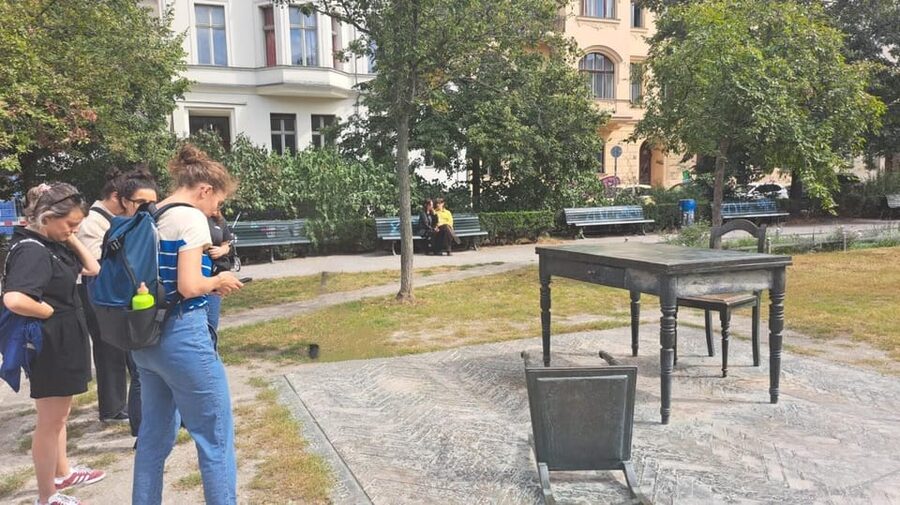
One of the tour’s best teaching moments is the explanation of how Berlin’s Jewish community changed over time, including the move to the west of the city and the arrival of Ostjuden.
This is not just a demographic note. It helps you understand why Berlin Jewish life looked different in different eras, and why internal debates and social tensions could exist. Tal touches on things like community splits connected to changes within religious practice, including the introduction of the organ, and she also explains why German Jews sometimes felt embarrassment or social tension as Eastern European Jews arrived.
You do not leave with one simple moral. You leave with a more believable human picture, including how communities debate themselves even while facing outside threats. That nuance is rare on tours, and it is one reason the guide earns such strong marks.
Old synagogue site and the first cemetery, where names matter
Later in the walk, you shift into the early foundation layer. You visit the Old Jewish Cemetery, the first cemetery tied to the community’s early days in Berlin. Tal also connects the space to Moses Mendelssohn, including the detail that he is buried here.
This stop changes the emotional temperature. Cemeteries are not museums. You walk slower here, read names if you can, and let your mind do the work.
The tour includes entry to the old cemetery except on Jewish holidays and Saturdays. That matters because if your trip lands on a day when access changes, the guide may adapt the visit to what is permitted.
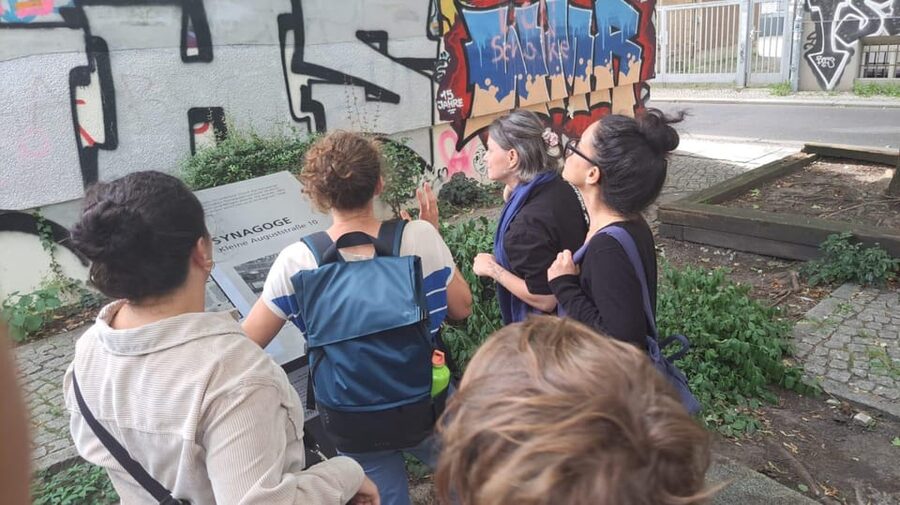
You also see the site of the community’s first synagogue. Even if you cannot always go inside, the point is to place early Jewish institutions on the Berlin map so you understand where the community began, not just where it ended.
Where you finish: memorial Jewish cemetery and a full-circle feeling
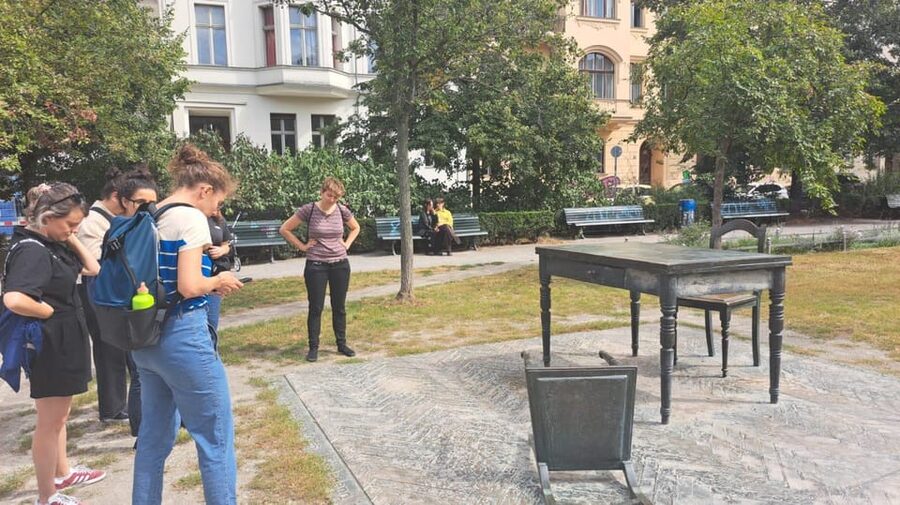
The tour ends at the Memorial Jewish Cemetery area, with the route described as ending back at the meeting point. Translation for you: plan to end in the Mitte area, and do not assume you will be dropped somewhere far from public transit.
This closing is built for reflection. You are not done with the story at the final stop. But you are given a clean landing spot where the theme of continuity and loss comes into focus.
Customizing the tour with extensions if you want more sites
One of the strengths of this experience is that you can customize. Tal can add additional sites based on your interests.
If you want to extend beyond the core route, the options listed include:
- Schönhauser Allee Cemetery, final resting place of famous members from the community’s golden era
- Kindertransport Memorial at Friedrichstraße Station
- Grunewald Deportation Memorial, commemorating the deportation of Berlin’s Jews
These add time and cost, so you should treat them as planning decisions. If your priority is WWII story and memorials, add the deportation-linked stop. If your priority is refugee rescue and survival pathways, add the Kindertransport memorial. If you want names and community stature, pick Schönhauser Allee.
Price and value: why $318 can make sense for this format
At $318 per person, this is not a cheap “quick walk” tour. Here is where the value comes from.
You are paying for:
- A private group format
- A guide with both certification and academic depth
- Guided time at multiple significant sites in Mitte
- Included entry to the Otto Weidt Museum (when open)
- Included entry to the Old Jewish Cemetery (with the noted holiday and Saturday exceptions)
When you price it out the usual way, entry fees and guided time stack quickly, especially with a respected site like Otto Weidt. The private group also matters. You can ask questions that fit your interests, and Tal can tailor the direction without the friction of a large group.
Also, the booking is presented as flexible, with free cancellation up to 24 hours in advance and a reserve now, pay later option. That lowers risk for you when Berlin weather or schedules change.
What to bring, and how to be comfortable without rushing
Bring comfortable shoes first. You will be walking enough that blister prevention matters more than you think. Next, bring water and think about the weather, including sunscreen and a hat.
You may want a head covering or kippah. The tour explicitly suggests having one, and it helps you feel at ease at religious and memorial sites.
Two rules you should remember:
- No smoking
- No flash photography
One more practical note: the tour is offered in English and Hebrew, and it is set up for people who prefer guided interpretation. If you are someone who wants total quiet, this may feel like too much talking. If you like context as you go, you will be glad the guide speaks.
Should you book this Berlin Jewish walking tour?
Book it if you want a Berlin Jewish history route that is grounded in real places and a guided story that connects early community life, internal changes, and WWII devastation. I especially think it fits well if you value both the memorial side and the “human behavior” side, like the Otto Weidt rescue story.
Skip it or ask extra questions before booking if you need step-free mobility guarantees, given the mixed accessibility notes. Also skip it if you are only looking for a light, fast overview. This tour has weight, and it deserves your full attention.
If you do book it, come with one goal: leave the tour able to recognize the places you walked past. You will be able to put names to corners, and that is what makes Berlin history stay with you long after you head back to your hotel.
FAQ
How long is the Berlin Jewish Walking Tour including World War II?
The tour lasts about 3.5 to 4 hours, with a short break.
Where does the tour start?
The meeting point is in front of Starbucks in Mitte, at Hackescher Markt.
Where does the tour end?
It finishes at the Memorial Jewish Cemetery area, and the activity is described as ending back at the meeting point.
What languages are offered on the tour?
The live guide offers English and Hebrew.
Is the tour wheelchair accessible?
The information provided says wheelchair accessible, but it also states it is not suitable for wheelchair users and not suitable for people with mobility impairments. You should confirm directly with the provider based on your needs.
What is included in the price?
You get a walking tour with a guide, entry tickets to the Otto Weidt Museum (except days it is closed), and entry to the old cemetery (except Jewish holidays and Saturday).
Are meals included?
No, meals and drinks are not included.
What sites are included beyond general sightseeing?
The itinerary includes stops such as Hackescher Markt, the Block of Women, the Otto Weidt Workshop for the Blind, and the New Synagogue Berlin – Jewish Centre, plus cemetery and synagogue-related sites.
Can I add extra stops?
Yes. You can customize and extend the tour with additional sites like Schönhauser Allee Cemetery, the Kindertransport Memorial at Friedrichstraße Station, and the Grunewald Deportation Memorial.
What should I bring and what rules should I follow?
Bring comfortable shoes, a hat, head covering or kippah, sunscreen, and water. Smoking is not allowed, and flash photography is not allowed.
More Walking Tours in Berlin
- Discover Berlin Half-Day Walking Tour
★ 5.0 · 9,624 reviews - Berlin: Discover Berlin Walking Tour
★ 4.9 · 5,998 reviews - Berlin: Hidden Backyards Guided Walking Tour
★ 4.8 · 5,360 reviews - Berlin: Alternative Berlin Walking Tour
★ 4.6 · 1,204 reviews
Recently added around Berlin
- Berlin Private Custom Walking Tour With A Guide (Private Tour)★ 4.5 · 8 reviews
- One Up to 3 Rickshaws(6 GUESTS)-Taylor Made Rickshaw Berlin Tour★ 5.0 · 20 reviews
- Moonshine Comedy – English Stand Up Comedy by the bay★ 5.0 · 11 reviews
- Private Half-Day Berlin Sightseeing Tour with a Minivan Including Short City Walks★ 5.0 · 31 reviews
- Private taxi tour to Potsdam and Sanssouci 6-8h★ 5.0 · 30 reviews
- Private City Kickstart Tour: Berlin★ 4.5 · 71 reviews
- Private tour of Berlin★ 5.0 · 15 reviews
- Private Tutankhamun’s Tomb Live Escape Room in Berlin★ 3.5 · 11 reviews
Third Reich & WW2 History Walks, compared.
Berlin’s Best: 2 Hour Walking Tour Third Reich and the Cold War
Read our review →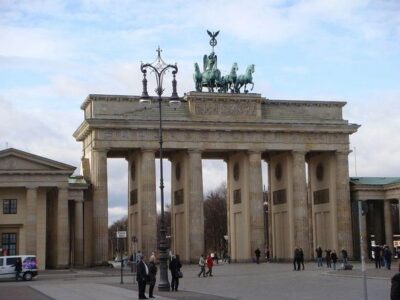
Third Reich Berlin: Hitler and WWII Walking Tour
Read our review →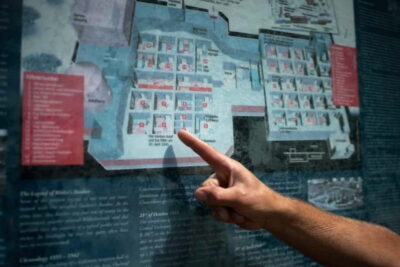

Berlin Third Reich Sites: Half-Day Walking Tour
Read our review →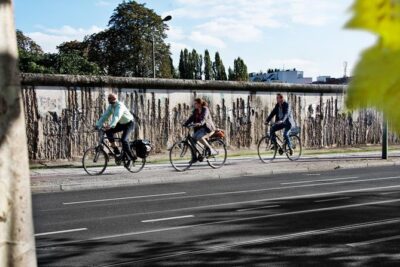
Guided Bike Tour of the Berlin Wall and Third Reich
Read our review →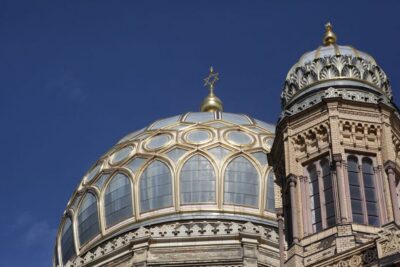
Hitler’s Germany: Berlin During the Third Reich & WWII
Read our review →
Private Walking Tour Berlin Third Reich Hitler and World War II
Read our review →Browse the lists this tour appears in