
Reviewed · HISTORICAL TOURS
Explore Berlin History and Highlights Sightseeing Walking Tour
This Berlin history highlights walk is interesting because it turns major landmarks into one long, easy-to-follow story, starting at Brandenburg Gate and ending near Museum Island. I love that the guide keeps the timeline straight, so Imperial Germany, the Nazi era, and the Cold War connect without feeling like random sightseeing. I also like the small-group size, capped at 15, which makes it easier to ask questions as you go. The main drawback is that it is still a walking tour with plenty of mentally heavy stops, so if you prefer a lighter day, you may want to plan for extra breaks.
I also like that it is led by experts from Birchys Berlin Tours and run in English, and you can often feel the guide’s personality in how they explain what you are seeing. Names I’ve seen mentioned include Al, Aurel, Eugen, Cairan, Rhys, Rhys, Steve, and Paul, and the common thread is clear, friendly storytelling plus time for interaction.
Plan for about 3.5 hours on foot starting at 10:00 am, plus short stops that add up fast. It helps to bring water and snacks, because once you start stacking up Brandenburg Gate, Reichstag views, memorial sites, and Cold War checkpoints, the hours go by quicker than you think.
Key highlights you will actually feel on this tour
- A tight loop of 11 major sites that covers Imperial Germany, World War II, and Cold War Berlin
- Small groups (max 15) so the guide can keep your questions in the conversation
- Free admission stops at every scheduled landmark, so you are not doing ticket math all morning
- Guide-led, on-foot explanations that turn sculptures and buildings into real context
- A smart end point at Museum Island so you can roll into museums or other central sights
- Time for photos and questions at each stop, not just a quick point-and-go
Why this Berlin history walk is a great first-day plan
If Berlin feels like too much at once, this tour helps you sort it. You start in the heart of the city’s big political symbols, then you move step by step through the places that shaped Germany’s 20th-century story. You finish near Museum Island, where you can keep going, grab lunch, or choose a museum that matches what you just learned.
I like tours like this because you leave with a mental map. The guide is not just naming buildings. You get the “why does this matter” version: what happened here, what changed after the war, and how Berlin built memory into the city itself.
This is also a practical way to cover distance. In a few hours, you can hit many of the most famous names without trying to stitch them together yourself across Berlin’s districts.
More history tours in Berlin:
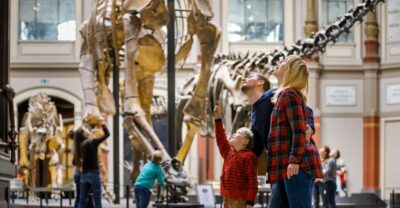
- Berlin: Natural History Museum Entrance Ticket
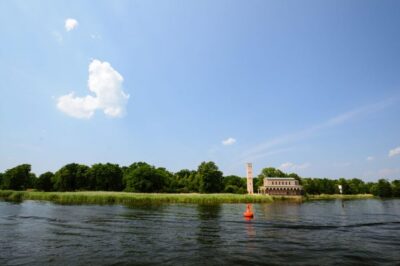
★ 4.6 · 3,382 reviews - Berlin: World Heritage Cruise to Potsdam
★ 4.5 · 1,435 reviews - Berlin Historical Highlights Walking Tour
★ 4.9 · 657 reviews
Start at Wurst 🙂 and Brandenburger Tor, then get the timeline right
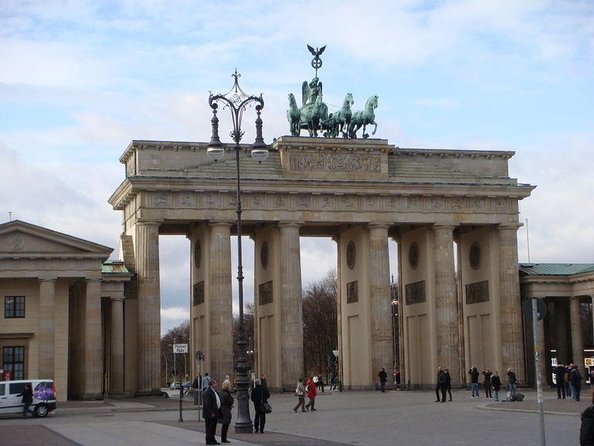
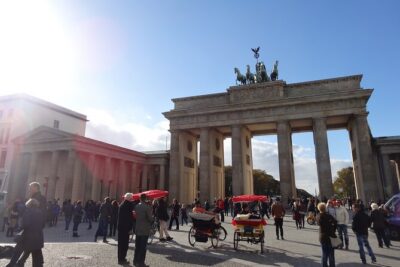
The meeting point is Wurst 🙂 am Brandenburger Tor, on Ebertstraße, Ecke Scheidemannstraße, 10117 Berlin. You start at 10:00 am, and from there you head to Brandenburg Gate (about 20 minutes).
Brandenburg Gate is one of those places where you can see the hype. But with a guide, it becomes more than a photo stop. You hear how it sits inside Berlin’s turning points, and why this gate is still used as a reference point in modern storytelling about Germany and Europe.
If you care about photos, you might appreciate this tip: the gate gets busy. If you want quieter images, try to catch it earlier or later when you can. On the tour, you get a solid 20 minutes, but the crowd reality is real at 10:00 am.
Reichstag Building: the Parliament story, plus the fire and the aftermath
Next is the Reichstag Building (about 20 minutes). The stop matters because it touches two different eras of power: Germany’s Imperial period and the brutal shift that followed.
You’ll hear about the Reichstag’s role during the time of Hitler’s rise, including the notorious fire shortly after he was made Chancellor. Then the story swings to the end of World War II, when the Soviets took Berlin by force and the building became a key target in that final phase.
Even if you have seen Reichstag photos before, this stop works better with context. You start to understand why the building is more than architecture. It is a symbol that different regimes fought over.
Holocaust Memorial: take your time here, and let the guide frame it
The Holocaust Memorial, Memorial to the Murdered Jews of Europe, is next (about 15 minutes). This is a large, central site, and it can feel overwhelming if you show up with only a vague idea of what to look for.
The guide explains the history around its construction and how the crimes of the Nazi regime made it possible for such atrocity to happen in the first place. The point is not to rush you through. The best tours at this stop help you slow down, notice the scale, and understand why Berlin chose a memorial like this in the first place.
Practical note: this stop is emotionally heavy. If you need to step away briefly, do it. A pause does not ruin the experience.
More walking tours in Berlin:
- Discover Berlin Half-Day Walking Tour
★ 5.0 · 9,624 reviews - Berlin: Third Reich and Cold War 2 Hour Walking Tour
★ 4.9 · 6,830 reviews - Berlin: Discover Berlin Walking Tour
★ 4.9 · 5,998 reviews - Berlin’s Best: 2 Hour Walking Tour Third Reich and the Cold War
★ 5.0 · 5,486 reviews
Fuhrerbunker and the end of Hitler’s rule
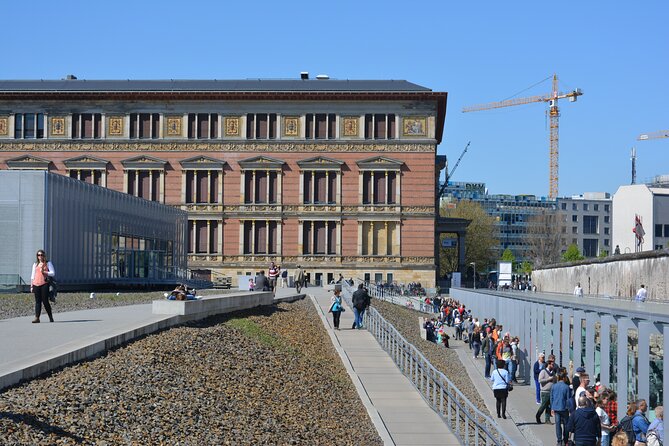
After the memorial, you go to the Fuhrerbunker (about 15 minutes). The tour description calls it a notorious car-park, and that’s exactly the kind of contrast Berlin is good at showing: ordinary modern space sitting above sites tied to extreme violence.
You learn where the Fuhrer Bunker was located, within what used to be the gardens of the New Reich’s Chancellery Building, and how it connects to the place where Hitler’s reign ended. The guide’s job here is to keep the facts grounded so the location does not just feel like a grim tourist stop. You should leave with a clearer sense of where the endgame happened and why the site still matters.
Bundesministerium der Finanzen: Luftwaffe HQ, then Cold War history
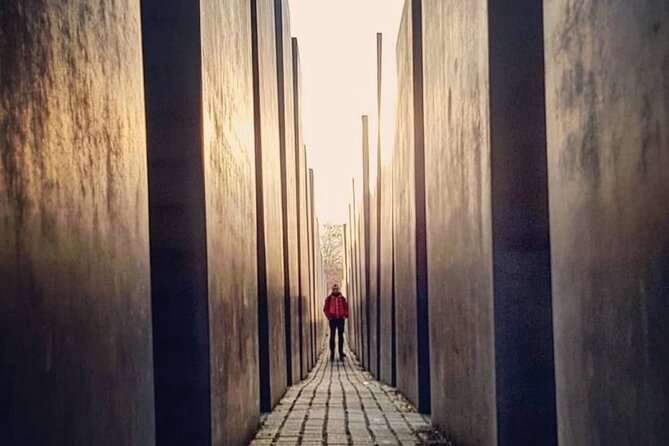
Then you visit the Bundesministerium der Finanzen building (about 15 minutes). Today it is the Finance Ministry, but it used to be the Luftwaffe headquarters.
This is one of those “now and then” moments that really helps when you are trying to read Berlin. The guide shares how the building was constructed, how it was used, and why it became important during the Cold War. You get a sense of continuity and transformation, and why so many German government buildings have layered identities.
Topography of Terror: where SS, Gestapo, and SD operated
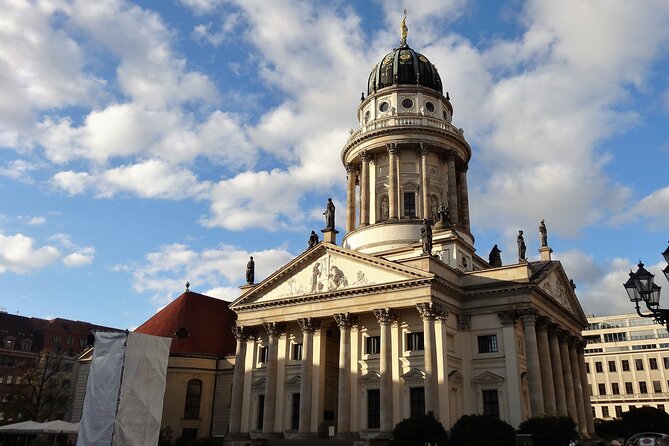
Topography of Terror is next (about 20 minutes). This site is connected to the former Headquarters of the SS, Gestapo, and SD, and the tour focuses on both Nazi-period history and post-war memorialization efforts.
If you only skim Berlin’s major “name” sights, this is the stop that gives you the mechanism behind the terror. It helps you understand that this was not just random cruelty. It was an organized system, with offices and operations tied to the Nazi state.
And yes, it is intense. I find it helps to think of this stop as part of the same story as the Holocaust Memorial, just one step more focused on the machinery.
Checkpoint Charlie: Cold War Berlin, reduced to a place you recognize instantly
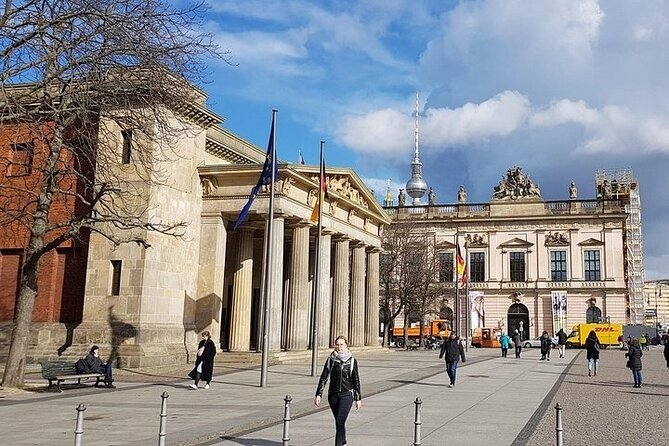
Checkpoint Charlie comes after (about 20 minutes). Even if you have never visited Berlin before, you probably recognize the name. On this tour, the focus is on what made Checkpoint Charlie iconic in Cold War Berlin and how it functioned as a symbol of division.
This is a nice reset after the heavy concentration of Nazi-era sites. You shift into the Cold War context, which helps you see how Berlin became the stage for competing power systems after the war.
Gendarmenmarkt: elegant architecture as a counterweight
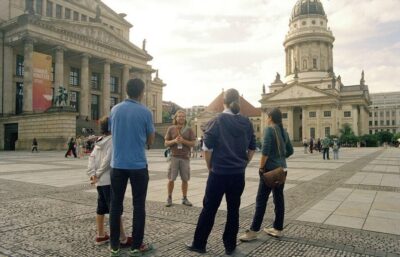
Then you reach Gendarmenmarkt (about 15 minutes). The tour includes the history behind the square’s foundation and development, and you also get to enjoy the beauty of 18th- and 19th-century architecture.
This stop works as a mental breather. It also gives you balance. Berlin is not only monuments and trauma. You also see how the city built civic spaces that are still used today.
The guide keeps connecting the architecture back to the bigger Berlin story, but the mood here is lighter.
Bebelplatz and the 1933 book burning
Bebelplatz is next (about 15 minutes). You learn about the grandeur of Frederick the Great’s Prussian capital setting and then face one of the square’s darkest events: the 1933 Nazi Book Burning.
This is one of the best stops for understanding how regimes reshape culture. It is not just about laws and armies. You see how propaganda and control can target ideas directly, down to the books people were allowed to read.
The guide’s job is to make it feel specific, not abstract. When it clicks, you start noticing parallels between how Berlin remembers events and how people today handle free expression.
Unter den Linden: Humboldt University area and the Germany Museum stretch
The tour strolls along Unter den Linden visiting multiple points tied to German education and memory (about 20 minutes). You hear about Humboldt University, plus the Memorial to Victims of War and Tyranny and the German History Museum.
This stretch is where you get a “walk and absorb” feeling. Instead of only stopping at major symbols, you move through a historic boulevard that helps you see Berlin as a city you can live in, not just a museum.
If you like architecture and long views, you’ll enjoy this part. It also makes the final push toward Museum Island feel natural.
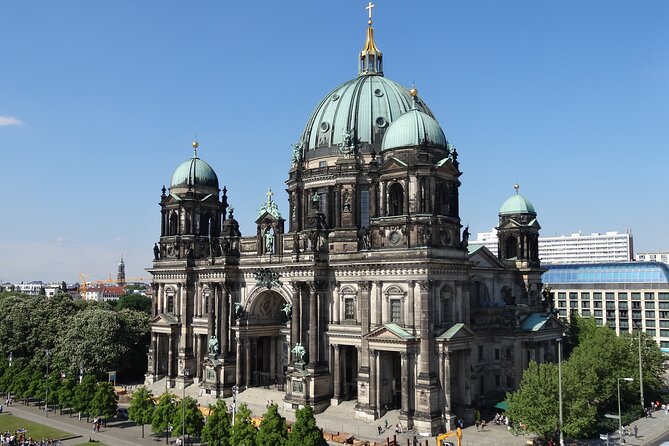
Museum Island finish: Stadt Schloss, Berlin Cathedral, and where to look next
Finally, the tour reaches Museum Island (about 20 minutes). You cross onto what is described as medieval Berlin, and you hear about the Stadt Schloss (City Palace) from the 15th century. The walk also references Berlin Cathedral and then points out that Museum Island is home to five world-class museums.
From the eastern side of Museum Island, you look toward Alexanderplatz, framed as the center of Post-War East Berlin. That view is a smart way to close the loop. It links what you learned about Cold War division to a modern, recognizable focal point in the city today.
The ending here is practical. After the tour, you are in a spot where it is easy to choose what you want next, whether that is a museum, coffee, or just more wandering.
Pace and comfort: this tour covers ground, so plan your body
This is a walking tour, about 3 hours 30 minutes. Stops are short, but you still cover distance between landmarks. “Most travelers can participate” is part of the tour description, but your feet will be doing the work.
My advice: wear comfortable walking shoes, especially if you are visiting in warmer months or you plan to do more Berlin afterward. Bring water, and if you are the type who gets snacky after long memorial stops, pack something simple.
Also, keep in mind that a big chunk of the route is about World War II and its aftermath. Even if you are prepared, it is a lot to take in all at once. The pacing is generally kept steady, but you might want a moment of quiet at the memorial-related sites.
Why the guides make or break it, and how this one is praised
This tour consistently gets high marks for guide delivery. People mention guides like Aurel, Eugen, Cairan, Rhys, Al, Paul, Steve, and Aaron, and the recurring strengths are clear:
- Clear, structured explanations that connect each site to the next
- Easy interaction with the group, including time for questions
- Friendly storytelling that keeps the tour engaging without turning it into a casual joke-fest
- Extra materials at times, including personal photos on a tablet in some tours
One review-style detail that I found especially useful in real life is the way some guides add quick exercises. Those moments make distant history feel more human, and they help you remember what you just learned when you are walking around later on your own.
The small-group format makes this work. With 15 people or fewer, it is not just a one-way lecture.
Is $32.58 good value for this Berlin highlights history walk?
At $32.58 per person for about 3 hours 30 minutes, this is usually good value if you want guided context fast. Here’s why:
- You are paying for an expert guide across multiple major sites
- Admission is listed as ticket-free at each stop on the schedule
- The itinerary hits a large span of Berlin’s 20th-century story, from Imperial Germany to the Cold War, ending in the museum district
Could you do this by yourself? Sure. You could map the stops and read plaques. But you would miss the thread that ties them together, and you would likely spend longer than planned getting your bearings.
For a first visit, or for a short trip where you want the big landmarks covered without stress, this one is priced like a focused history sampler. I think that’s the sweet spot.
Who should book this tour, and who might skip it
Book it if:
- You want a clear timeline across Berlin’s major turning points
- You like walking tours with specific stops and guided explanations
- You want to hit Brandenburg Gate, Reichstag, the Holocaust Memorial, Checkpoint Charlie, and Museum Island in one morning-style block
Skip it or consider a different format if:
- Long walking days are tough for you
- You want lighter content and shorter stops
- You are sensitive to Holocaust and Nazi-era subject matter and prefer to handle that at your own pace with more time
If you do book, decide in advance how you will handle the emotional sites. Give yourself permission to pause.
Should you book this Berlin history highlights walking tour?
I’d book it if your priority is getting oriented fast and understanding how the city’s symbols link to real events. The small group size, the English guide, and the mix of landmarks plus memorial sites make it a strong “first history lesson” in Berlin.
If you can handle walking for 3.5 hours and you are ready for heavy themes, this tour gives you a lot for the money. When you finish at Museum Island, you are also set up to keep exploring with better context than you started with.
FAQ
How long is the Explore Berlin History and Highlights Sightseeing Walking Tour?
It runs for about 3 hours 30 minutes.
Is the tour in English, and how large is the group?
The tour is offered in English. The maximum group size is 15 travelers.
Do I need tickets or extra payment for the landmarks?
The scheduled stops list admission tickets as free, so you do not have to buy entrance tickets for the items on the route.
Where do I meet, and where does the tour end?
You meet at Wurst 🙂 am Brandenburger Tor, Ebertstraße Ecke Scheidemannstraße, 10117 Berlin, Germany. The tour ends at Museum Island (10 Berlin).
Is this tour mostly walking?
Yes, it is a walking tour. The itinerary is made up of multiple short sightseeing stops across central Berlin.
Are service animals allowed, and can I cancel for a full refund?
Service animals are allowed. You can cancel up to 24 hours in advance for a full refund.
Recently added around Berlin
- Berlin Private Custom Walking Tour With A Guide (Private Tour)★ 4.5 · 8 reviews
- One Up to 3 Rickshaws(6 GUESTS)-Taylor Made Rickshaw Berlin Tour★ 5.0 · 20 reviews
- Moonshine Comedy – English Stand Up Comedy by the bay★ 5.0 · 11 reviews
- Private Half-Day Berlin Sightseeing Tour with a Minivan Including Short City Walks★ 5.0 · 31 reviews
- Private taxi tour to Potsdam and Sanssouci 6-8h★ 5.0 · 30 reviews
- Private City Kickstart Tour: Berlin★ 4.5 · 71 reviews
- Private tour of Berlin★ 5.0 · 15 reviews
- Private Tutankhamun’s Tomb Live Escape Room in Berlin★ 3.5 · 11 reviews
Historical Tours, compared.
Berlin Private Complete History All Day Walking Tour
Read our review →


Small group Potsdam: A Journey Through History and Palaces
Read our review →Browse the lists this tour appears in