
Reviewed · BERLIN WALL & COLD WAR TOURS
Stasi Museum GDR History Skip-the-line Private Tour Berlin
Berlin can feel like a museum itself. But the Stasi Museum gives you something sharper and more personal, since it’s set in the original headquarters of the former Ministry of State Security. You’ll start at Alexanderplatz and then move straight into the machinery of surveillance.
I really like two parts of this tour: the chance to hear explanations from a guide with close, lived perspective on East German life, and the smoother entry created by the skip-the-line system. You also get free admission and built-in transport, so you spend your time learning, not hunting down tickets or standing in queues.
One consideration: this is heavy subject matter. The museum visit runs long enough that you’ll want to mentally pace yourself, and you must arrive on time at the meeting point because the reserved entry slot depends on it.
Key things to know before you go
- Skip-the-line entry with a reserved time slot means you should show up on schedule.
- A private group format keeps the pace comfortable and the questions flowing.
- The museum is in the original Stasi HQ building, not a recreated space.
- You’ll see real spying tech, including items like bugs and hidden cameras (as shown in the exhibits).
- Transport tickets are included because the Stasi Museum is outside the tight city-center area.
- This is not the same museum as Hohenschönhausen, the former Stasi prison memorial.
Where this tour fits in Berlin’s East German story
If you only visit one GDR related site in Berlin, the Stasi Museum is a strong choice, mainly because it explains the system instead of just showing buildings. You’re not studying abstract history. You’re looking at how the Stasi operated day to day, how information moved, and how ordinary people got pulled into a world of control.
What I like about this tour is the way it builds context before you walk into the headquarters. You start around Alexanderplatz, one of the key public stages of East Berlin. Then you head to Normannenstraße, where the museum focuses on the institution itself.
And because it’s private and in English, you can usually get answers to the questions that matter to you, whether you care most about surveillance methods, politics, or everyday life under the GDR.
More Berlin Wall and Cold War tours in Berlin:
- Berlin: Third Reich and Cold War 2 Hour Walking Tour
★ 4.9 · 6,830 reviews - Berlin’s Best: 2 Hour Walking Tour Third Reich and the Cold War
★ 5.0 · 5,486 reviews - Skip-the-Line: Berlin Wall Museum at Checkpoint Charlie
★ 4.1 · 2,041 reviews
Alexanderplatz meet point and why punctual matters
The meeting point is Alexanderpl. 5-7 (near Park Inn by Radisson Berlin Alexanderplatz). You’ll meet your guide in front of the building, specifically between the Burger King and the T-mobile store. The key practical detail: don’t go inside the building. The staff won’t be expecting the tour group.
This matters more than usual because you’re working with a reserved entry setup for the Stasi Museum. The “skip-the-line” style here isn’t magic, it’s scheduling. If you’re late, you risk missing the smooth entry window that’s supposed to save you time and stress.
Plan to arrive a bit early and do a quick check of your email the day before. The tour operator sends important updates, and it’s worth reading them so you know the exact timing and any last-minute instructions.
Alexanderplatz and the 1989 demonstration that changed everything
This tour starts where East German public space turns into political pressure. Alexanderplatz is more than a big square with transit links. It’s the kind of place where mass action mattered, including the largest demonstration in the GDR’s history in 1989.
Starting here is a smart move for your understanding. When you later walk through a museum built in Stasi headquarters, it helps to remember the bigger picture: the system didn’t just fade away on its own. It was challenged, confronted, and overwhelmed by events at the street level.
You’ll also get a sense of geography and motion. The guide keeps the story moving from public life to institutional control. That contrast is one of the reasons this tour works better than a self-guided visit.
Public transport ride to Normannenstraße with tickets included
After the initial orientation at Alexanderplatz, you’ll head to the Stasi Museum using public transport. The tour includes two-way tickets, which is a small detail that makes a big difference in practice.
The Stasi Museum is located outside the city center area, so you’ll feel that “Berlin distances” reality. Included transit takes one anxiety off your list. You don’t have to figure out routes mid-visit, and you don’t have to juggle timing while you’re trying to focus.
This transit segment also helps you switch modes. Before you arrive, you’re still in normal city life. After you arrive, you’re in a place designed to explain a system built on secrecy, monitoring, and fear.
More museums in Berlin:
- Berlin: Natural History Museum Entrance Ticket
★ 4.6 · 3,382 reviews - Berlin: Museum Island Multiple Museum Entry Ticket
★ 4.4 · 2,007 reviews - Berlin: Interactive DeJa Vu Museum Entrance Ticket
★ 4.1 · 1,338 reviews - Berlin: “Pergamonmuseum. The Panorama” Exhibition Tickets
★ 4.6 · 1,245 reviews
Inside the Stasi Museum: the headquarters feeling is the whole point

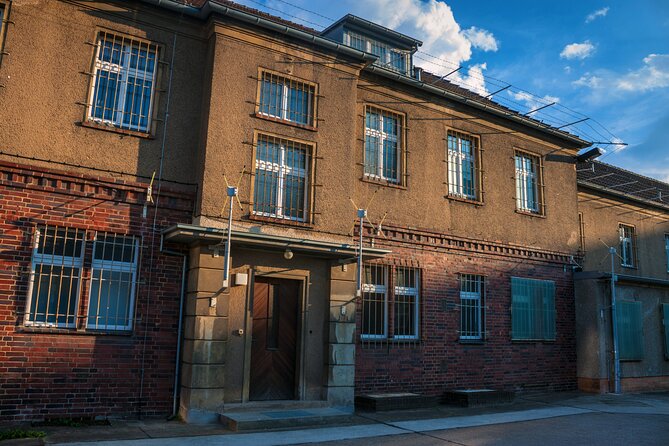
The heart of the tour is the Stasi Museum itself, at the Forschungs- und Gedenkstätte Normannenstraße. This is housed in the original building that served as former headquarters for the Ministry of State Security. That original setting changes how the exhibits hit.
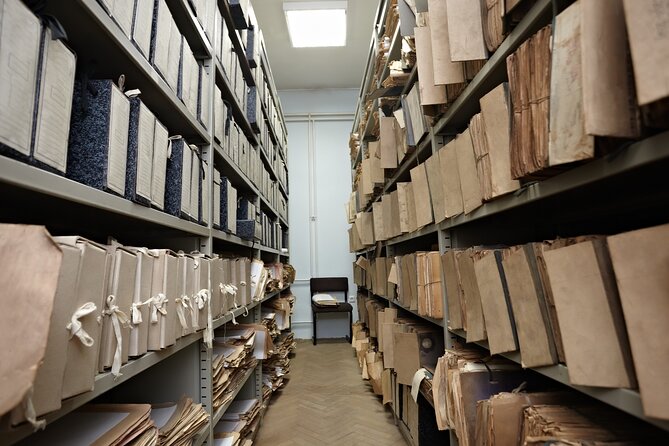
You’ll start by seeing how the secret police operated, not just what they believed. The museum focuses on actual practices and real tools. Expect details around spying, information collection, and how control played out in everyday life.
One standout category is the display of original spying technology, including examples like bugs and hidden cameras. It’s one thing to read about surveillance in a textbook. It’s another to stand in front of evidence that shows how techniques worked in the real world.
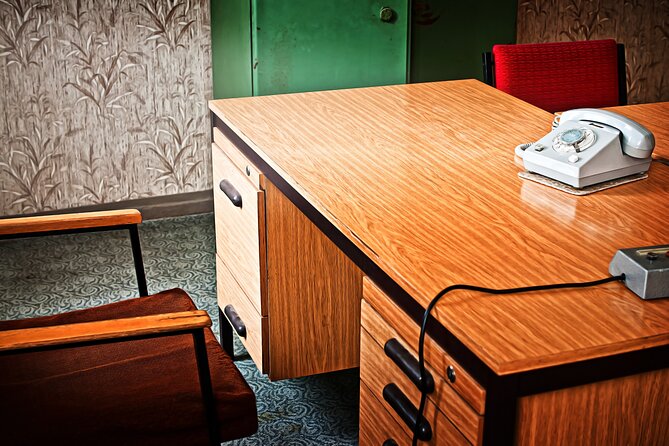
You’ll also visit key office areas, including ministerial offices and the office of Erich Mielke. That shift from “general story” to specific rooms helps you picture how authority functioned inside the institution.
Erich Mielke’s red briefcase and what it signals
Some museums show you objects. This one uses objects to explain a system. In Mielke’s office, you’ll see his famous red briefcase, shown as part of the museum’s interpretation of sensitive information handling.
Why it matters: a briefcase is a small thing compared with the scale of Stasi power. But it symbolizes what made the Stasi so effective. The system wasn’t just about watching people. It was about managing confidential information, consolidating it, and controlling what could be known.
As you move through the exhibits, the guide also connects the dots to recruitment and control. The tour focuses on how informants were recruited and how citizens were spied on and controlled. That means you get more than “police did bad things.” You learn how the machine worked, and how ordinary individuals could end up trapped in it.
How the guide’s perspective makes it easier to understand
One of the most praised aspects of this tour is the guide. A strong version of this experience includes a guide who grew up in the east and lived under Stasi rule. Even if you know the history already, that perspective changes your internal feeling for the material.
Here’s what that tends to do for you: it turns abstract political history into human scale. You start noticing the emotional logic behind the system. Why someone might hesitate to speak. Why being “watched” changes behavior. Why secrecy becomes a daily pressure.
Also, because the tour is private, you’re not stuck with a rigid script. If your curiosity is about communist politics, the GDR lived experience, or the mechanics of surveillance, you have a better chance of steering the conversation in a useful direction.
If you’re the type who likes questions, this format usually feels more satisfying than a large group where everyone is moving on without time to understand.
Timing and what to expect from the 3-hour flow

The total duration is about 3 hours. The schedule is tight enough to feel focused, without being rushed to the point of confusion.
A typical flow looks like this:
- A short meet-up at Alexanderpl. 5-7 to get started.
- A walking or transit-linked segment to set context around Alexanderplatz.
- Public transport to the Stasi Museum.
- About two hours inside the museum for the main experience.
You should treat the museum time as the real “event.” That two-hour block is where you’ll spend your attention on the original headquarters setting, office areas, and spying-related exhibits.
Since the subject is emotionally heavy, I recommend you plan a lighter block after the tour. Avoid scheduling back-to-back “serious” stops right after if you can. Your brain will need a break.
Skip-the-line value: what you actually save
Skip-the-line can be a buzzword. In this case, it’s more practical than flashy. With skip-the-line tickets, you get a reserved time slot for entry. That means you can bypass the queue at the museum in a controlled way, as long as you arrive at the meeting point on time and follow the schedule.
So you’re not only saving minutes. You’re protecting the rhythm of the tour. Late arrival can cause chain problems, like missing your slot or forcing extra waiting.
Think of it like this: when a museum experience has a planned flow, smooth entry is part of the learning. You keep your momentum.
Price and value: is $258.59 per person fair?
At $258.59 per person, this is not a budget outing. So the real question is value: are you paying for convenience, or are you paying for insight?
Here’s what you’re getting that supports the price:
- Private tour format, meaning it’s your group only.
- English-speaking guide, with context focused on GDR history and life under Stasi rule.
- Tickets included for the Stasi Museum.
- Public transport tickets (two-way) because the museum is outside the city center.
- Reserved entry time slot to reduce waiting.
When you add those elements up, the cost starts to make sense as a “managed learning experience.” If you were to plan this yourself, you’d likely spend time coordinating tickets, arrival timing, and transport. Plus, you’d be giving up the guided explanations that connect exhibits to real life.
Is it expensive? Yes, compared with a standard group tour or a do-it-yourself visit. Is it a good deal for people who care about how the system worked and want guided interpretation in English? I think so.
Also, the tour notes group discounts. If you’re traveling with friends or family and can share the cost, the value improves quickly.
Who this tour is perfect for, and who should think twice
This experience is especially good if you:
- Want to understand the Stasi as a system, including recruitment and control.
- Appreciate history that explains how surveillance translates into daily behavior.
- Like museum visits where the setting is the subject, since you’re inside former Stasi headquarters.
It can be less ideal if you:
- Are sensitive to dark topics and prefer lighter historical framing.
- Have a hard time with long museum blocks, since about two hours inside is part of the experience.
- Hate any scheduling requirement at all, since punctual arrival affects your entry slot.
If you’re a first-time visitor to Berlin trying to connect the GDR story to the fall of the Berlin Wall, this tour gives you one strong, concrete angle.
Quick practical tips to get the most out of the museum
You won’t need special equipment. Still, a few small moves help:
- Wear comfortable shoes. The tour includes transit and time walking through exhibit areas.
- Bring a phone charger or plan to use memory space wisely. You may want to photograph exhibit signage, depending on museum rules.
- Go in with one question you want answered. Examples: how informants were recruited, or how technology enabled spying.
Most importantly, give yourself permission to slow down inside the exhibits. Even if the tour keeps moving, you can take a moment to absorb how the museum explains both the tools and the human system behind them.
Should you book this Stasi Museum skip-the-line private tour?
If your goal is a guided, in-depth look at the Stasi as an organization, this is a strong booking. The combination of private format, skip-the-line reserved entry, and tickets plus transport included makes it a convenient way to focus on learning instead of logistics.
I’d especially recommend it if you care about how East German life worked under Stasi rule, and you like museum explanations that connect rooms, objects, and real techniques like bugs and hidden cameras.
If you’re on a tight schedule or you want the lowest cost option, you might choose another approach. But if you value time saved and guided context, this tour feels like money well spent.
FAQ
How long is the Stasi Museum skip-the-line private tour?
It’s about 3 hours total.
Is this tour private, and is it offered in English?
Yes, it’s a private tour, with only your group participating. It’s offered in English.
Where do I meet the guide?
Meet at Alexanderpl. 5-7, 10178 Berlin, Germany, in front of Park Inn by Radisson Berlin Alexanderplatzl, between Burger King and the T-mobile store. Wait at the entrance and do not enter the building.
Are tickets and transport included?
Yes. Admission to the Stasi Museum is included, and the tour provides two-way public transport tickets since the museum is outside the city center.
Is this tour the same as the Berlin-Hohenschönhausen Stasi prison memorial?
No. The Stasi Museum on this tour is Forschungs- und Gedenkstätte Normannenstraße, which is different from the Berlin-Hohenschönhausen Memorial.
Can I get a full refund if I cancel?
You can cancel for a full refund up to 24 hours in advance of the tour start time. If you cancel less than 24 hours before, the amount paid is not refunded.
More History Tours in Berlin
- Berlin: World Heritage Cruise to Potsdam
★ 4.5 · 1,435 reviews - Berlin Historical Highlights Walking Tour
★ 4.9 · 657 reviews - Berlin Private Complete History All Day Walking Tour
★ 5.0 · 474 reviews - Berlin: Historic Boat Sightseeing City Center Tour
★ 4.5 · 415 reviews
Recently added around Berlin
- Ultimate E-Bike Tour of Berlin with Beer Garden Stop★ 5.0 · 4 reviews
- Berlin: guided canoe | kayaktour★ 4.1 · 7 reviews
- Where It All Began: Berlin’s Queer & Trans History Tour★ 4.9 · 6 reviews
- Understanding Kreuzberg: The roots of local (sub)culture★ 4.9 · 11 reviews
- Warnemuende Shore Excursion: Private Berlin Tour★ 4.5 · 27 reviews
- Your ticket to The Wall Museum Berlin★ 3.0 · 60 reviews
- Love and War in Berlin: Self-Guided Story Puzzle Walk★ 5.0 · 7 reviews
- eSIM for Germany and 34 European Countries★ 4.5 · 16 reviews
Berlin Wall & Cold War Tours, compared.


Berlin’s Best: 2 Hour Walking Tour Third Reich and the Cold War
Read our review →
Skip-the-Line: Berlin Wall Museum at Checkpoint Charlie
Read our review →
2.5-Hour East Side Boat Cruise with Commentary
Read our review →
East Side Gallery Spree Cruise in a Solar Catamaran
Read our review →
Cold War, Berlin Wall, Spies and the East Side Gallery
Read our review →

Guided Bike Tour of the Berlin Wall and Third Reich
Read our review →Browse the lists this tour appears in