
Reviewed · QUEER BERLIN HISTORY TOURS
Where It All Began: Berlin’s Queer & Trans History Tour
Berlin’s LGBTQ+ and trans story is not one straight line. This tour threads it through real addresses across the city, from early gay rights advocacy to Nazi persecution, post-war organizing, the AIDS crisis, and the nightlife that grew afterward. It is history you can actually see on the street, then bring to life with tech.
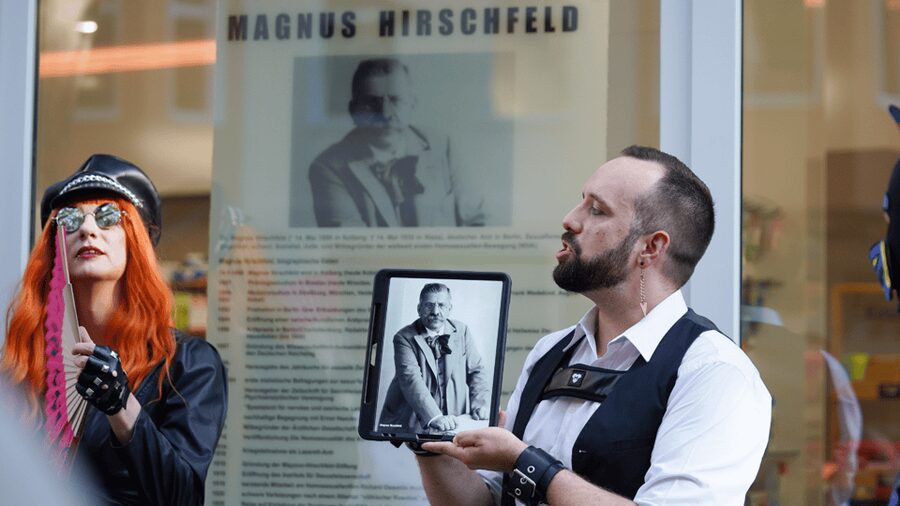
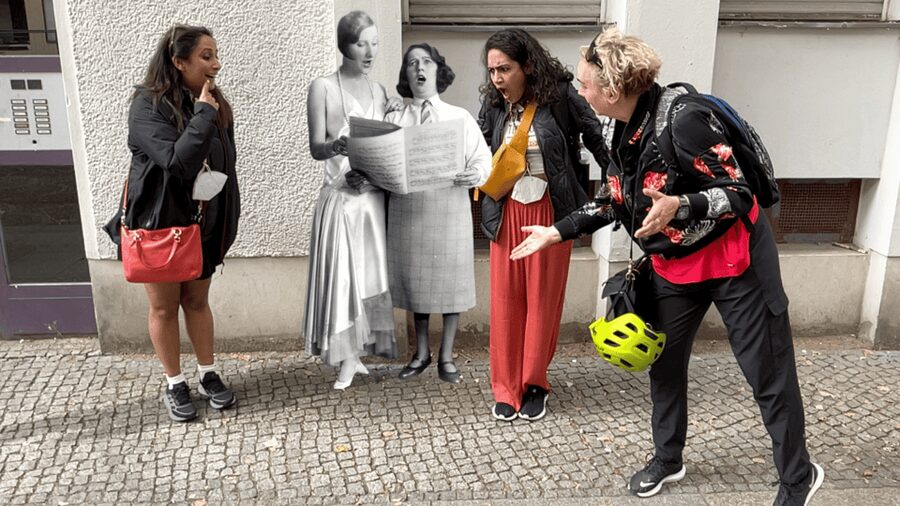
I especially like the small-group size and the focus on people you might never find on your own. I also love the iPad augmented reality moments, where you see historical images placed right where the building and street sit today.
One thing to consider is the pace. You are walking for about 3.5 hours, and the experience is designed for good weather, so comfortable shoes and a light layer matter.
Key things I think you will enjoy
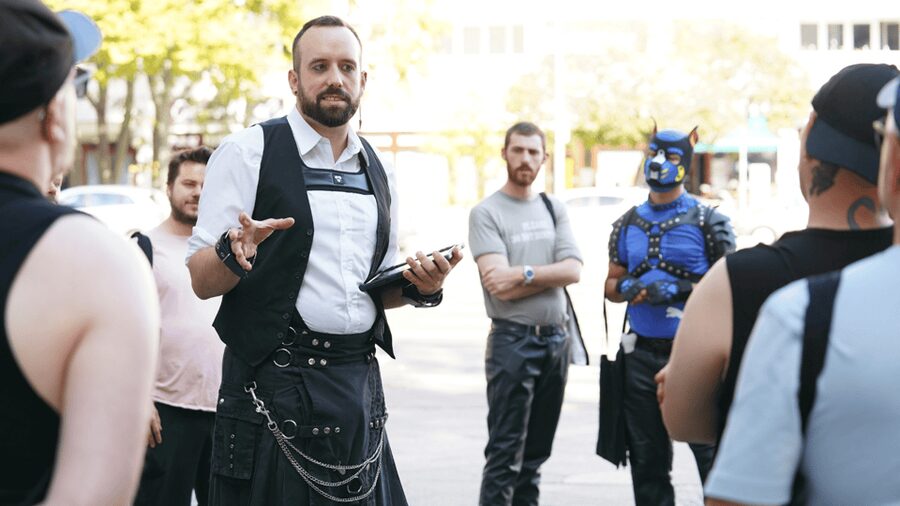
- Small group, capped at 10 people, so questions do not get lost in the back row
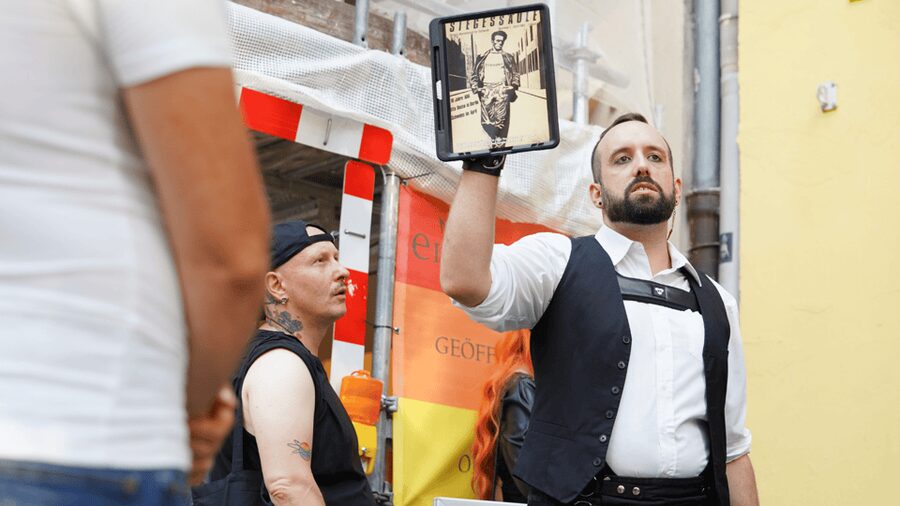
- iPad augmented reality to place archival photos in the exact spots you are standing
- Mixies AR photos for personalized keepsakes, not just ticket photos
- 200+ rare archival photos, videos, and materials handed to you as part of the experience
- A guide who teaches from lived community knowledge, led by a queer activist and gender scholar (Jeff)
- A complete arc from early activism, through Nazi oppression and Paragraph 175, to post-war clubs and today’s Pride and nightlife
What this 3.5 hour Berlin tour is really about
This is a focused walk through Berlin’s queer and trans history, with a clear goal. You are not just learning dates. You are learning how laws, clubs, police, medicine, and survival strategies shaped everyday life for LGBTQ+ people in Berlin.
I like that the tour balances joy with the hard parts. You get lesbian cabaret and drag bar legends in the same route as the pink triangle, the destruction of Hirschfeld’s institute, and the fight against criminalization. That mix matches how Berlin itself feels when you start paying attention to the past.
You also leave with more than memories. The experience includes a bundle of 200+ historical photos, videos, and archival materials, plus personalized Mixies photos using AR. For many people, that is what turns a walking tour into something you can revisit later.
More queer Berlin history tours:
- Berlin: Gay Berlin Out in Schöneberg Walking Tour
★ 4.8 · 281 reviews - Berlin’s Gay, Lesbian, and Queer Scene Small-Group Walking Tour
★ 4.5 · 66 reviews - Queer Berlin Walking Tour
★ 4.7 · 64 reviews
Price and value: $83.13 with AR, archives, and a small-group guide
At $83.13 per person, this tour is not the cheapest option in Berlin. The value comes from three things you rarely get together in one package.
First, you get a small group capped at 10, so the guide can slow down when something matters. Second, AR is included, with iPad provided for the augmented reality parts. Third, you get more than just a story, you get a visual library, 200+ items, plus the AR keepsakes.
That is why the price feels reasonable rather than random. You are paying for guided context, plus a structured way to connect historical images to the exact street corners you visit.
Starting point, timing, and how to plan your afternoon
You start at Alnatura Super Natur Markt on Else-Lasker-Schüler-Straße 18, and the tour begins at 2:00 pm. It ends at Metropol on Nollendorfpl. 5, so you finish right near major nightlife and transit.
The tour is about 3 hours 30 minutes. That means you will want to arrive a little early, use the restroom before you start, and keep your phone charged if you plan to use maps after.
Also remember: coffee and tea are not included. If you want a break, you might stop at a café along the way, but you will handle your own drink.
Stop by stop: Ulrichs, Nollendorfplatz, and the Nazi persecution story
The walk kicks off at Karl-Heinrich-Ulrichs-Straße 1, a spot named for Karl Heinrich Ulrichs, often described as one of the earliest gay rights activists. This stop is short, about 5 minutes, but it matters because it frames how queer identity and advocacy were argued long before modern vocabulary formed.
Then you move to Nollendorfplatz, a central point in Berlin’s LGBTQ+ map, where the story turns darker. This stop lasts about 20 minutes and focuses on Nazi-era persecution, including the role of Ernst Röhm and the way Hitler’s approach helped fuel mass crackdowns. You also hear about forced branding, including the pink triangle, and how people were targeted and punished even inside concentration camp systems.
One reason I like this part of the tour is the clarity. It does not treat Nazi persecution as a vague cloud over history. It gives you names, mechanisms, and the specific turning points that changed lives fast.
More history tours in Berlin:
- Berlin: Natural History Museum Entrance Ticket
★ 4.6 · 3,382 reviews - Berlin: World Heritage Cruise to Potsdam
★ 4.5 · 1,435 reviews - Berlin Historical Highlights Walking Tour
★ 4.9 · 657 reviews - Berlin Private Complete History All Day Walking Tour
★ 5.0 · 474 reviews
Lesbian life, resistance, and why music mattered on Schwerinstraße 13
At Schwerinstraße 13, you shift to lesbian life in 1920s Berlin, a chapter that is often overlooked. This stop is about 20 minutes and centers on community spaces like Toppkeller, a well-known lesbian bar.
You also connect culture to resistance. The tour brings up Claire Waldoff, a lesbian cabaret singer whose songs became defiance, and it mentions Josephine Baker, the bisexual performer who became a sex symbol for all genders. These details help you see why safe social spaces were not small things. They were survival infrastructure.
The practical takeaway is that you start noticing how Berlin’s entertainment venues, not just official institutions, shaped who felt safe and who did not.
Christopher Isherwood, queer police history, and life around Nollendorfstraße 17
Next you visit Nollendorfstraße 17, about 20 minutes, and the theme gets surprising in a good way. You explore the homosexual department of the Berlin police force, which flips the usual assumption that policing is just background noise.
This stop also covers gay male life in 1920s Berlin through Christopher Isherwood. His experiences in Berlin influenced the later cabaret story you may already know through film or theater. You also hear about his relationship with Heinz Neddermeyer and their escape from Nazi Germany as queer refugees.
For me, this is where the tour shows its craft. It uses a single address to connect literature, state power, and escape routes. That combination is hard to recreate if you are wandering without guidance.
Hirschfeld’s Institute for Sexual Science and the fight over Paragraph 175
Then you reach a cornerstone of queer activism in Berlin: Magnus-Apotheke, where Magnus Hirschfeld and the Institute for Sexual Science come into focus. This stop runs about 20 minutes and covers the Scientific-Humanitarian Committee, described as the world’s first organization dedicated to queer rights and gender studies.
You also learn about Hirschfeld’s ideas, including concepts around sexual intermediaries and Berlin’s “third gender.” The tour mentions some historically significant gender-affirming medical milestones, including surgeries associated with figures like Dora Richter, Lili Elbe, and Karl M. Baer.
And then it gets political and urgent. You hear about the fight against Paragraph 175, the law that criminalized homosexuality, and the devastating detail that Nazis destroyed Hirschfeld’s institute.
This section is heavy, but it is also empowering. It shows how activism used science, documentation, and institutions, not only protests. It also makes the Nazi destruction feel personal, because you understand what got erased.
Eldorado’s legacy: drag, gender nonconformity, and Denns BioMarkt
At Denns BioMarkt, you stand in a former location connected to Eldorado, one of Berlin’s famous drag bars of the 1920s. This stop takes about 20 minutes and focuses on drag and queer nightlife, plus the paradox of people being connected to spaces that later became dangerous.
The tour discusses Eldorado as a hotspot for gender-nonconforming people and queer performers. It also brings up the eerie detail that Ernst Röhm frequented the club even while being tied to the regime that later persecuted LGBTQ+ people.
This stop is useful because it trains your eye. You start seeing how Berlin’s nightlife history is not separate from political history. Places built for community could also become part of the story of surveillance and repression.
Post-war activism, SchwuZ, and Charlotte von Mahlsdorf at Prinz Eisenherz
At Prinz Eisenherz, you cover post-war queer activism and a trans legacy, spending about 15 minutes here. The tour highlights Homosexuelle Aktion West-Berlin, one of the first queer rights organizations after WWII, and the founding of SchwuZ, one of Berlin’s iconic queer clubs.
You also meet Charlotte von Mahlsdorf, a trans woman who preserved queer history and created safe spaces in East Berlin. This is one of those sections where the tour becomes more than education. It becomes an example of what it means to protect memory when the city keeps rewriting itself.
The trans nightclub revolution: Chez Romy Haag and Berlin nightlife’s roots
Next is Connection, about 15 minutes, focused on West Berlin’s trans community in the 1970s and 1980s. The centerpiece here is Chez Romy Haag, described as a legendary trans-led nightclub that changed Berlin nightlife.
The tour frames these venues as spaces where gender-diverse people could exist more freely. It also connects that era to the club culture that people associate with Berlin today.
Even if you are not a nightlife person, this stop is important. It explains how culture and community built new norms after decades of threat.
AIDS crisis, divided Berlin, and the Internationale Stele on memory
At Internationale Stele GEGEN DAS VERGESSEN, you tackle the AIDS crisis and how it played out in a divided city. This stop lasts about 20 minutes and emphasizes how queer communities organized to fight for survival.
The tour also compares how the crisis was handled across East and West Berlin, including a striking metaphor mentioned in the tour: the Berlin Wall was called the condom of the GDR. You also hear about activism by Rita Süssmuth, one of the few politicians advocating for AIDS awareness.
This is emotional ground, but the tour keeps it grounded in what communities did. You come away understanding that survival was not only personal. It was collective, political, and persistent.
Modern queer nightlife, Pride, and the fight against gentrification at Metropol
The final stop brings you to Metropol, spending about 15 minutes here. The tour ties this club to early gay community life and techno culture, and it notes the club’s connection to today’s world-famous spaces like Berghain and Lab.Oratory.
You also hear about SO36 and legendary queer nights, plus major events like Folsom Europe (Europe’s biggest fetish festival). The route also includes mentions of Kreuzberg Pride, the Dyke March, and ongoing fights for affordability, including the radical Tuntenhaus squat.
This ending is practical. It gives you context for what you might see later that evening, rather than treating today’s Berlin nightlife as a disconnected trend.
The AR part: how the iPad experience actually changes your walk
The tour provides iPad for AR, which is more than a gimmick if you use it the right way. When you stand at each place, historical photographs are presented in relation to where you are now. You can also get group photos with AR elements, which helps you remember the route as a sequence of locations, not just facts.
On top of that, you receive Mixies personalized AR photos. It is a fun add-on, but the deeper value is that it anchors history to your own viewpoint. You start to recognize the street layout, the street width, the building frontage, and how the past fits into the present.
I also like that the experience includes a bundle of 200+ rare archival photos and videos. That means you can look up anything you missed in the moment without relying on memory alone.
Who this tour fits best (and who might want a different option)
This tour suits you if you want a structured way to learn Berlin’s queer and trans history without getting lost in research. The guided element matters here, because the stories connect across decades, laws, and social spaces.
It also fits well if you enjoy walking tours but want something more than general sightseeing. You are moving through meaningful addresses, hearing context, and ending near nightlife.
If you are sensitive to heavy topics like Nazi persecution and the AIDS crisis, go in with eyes open. The tour covers those parts directly, and you should expect emotion, not just education.
Should you book this Berlin Queer and Trans History Tour?
Yes, I think you should book it if you want Berlin’s LGBTQ+ and trans story in a single, human-sized walk. The small-group cap, the AR iPad experience, and the 200+ archival visuals make it feel like more than a standard guided tour.
Book it especially if you like learning from a guide who brings both scholarship and community knowledge to the streets, and if you want stops you likely would not find on your own, from Ulrichs to Hirschfeld, from lesbian bars to trans nightlife, and ending at Metropol.
If you hate walking for a few hours or you are traveling only for light entertainment, you might want something gentler. But if you want real context, and you care about seeing how Berlin became what it is, this one is a smart choice.
FAQ
How long is the tour?
The tour runs for about 3 hours 30 minutes.
What time does the tour start, and where does it end?
It starts at 2:00 pm and ends at Metropol on Nollendorfpl. 5, Berlin.
How many people are in a group?
The tour has a maximum of 10 travelers.
Is the tour offered in English?
Yes, it is offered in English.
What augmented reality tools are included?
An iPad is provided for the augmented reality parts. It also includes Mixies for fun personalized AR photos.
Are drinks like coffee included?
No, coffee and tea are not included.
What should I know about weather or cancellation?
The tour requires good weather. If it is canceled due to poor weather, you will be offered a different date or a full refund. Cancellation is free, and you can cancel up to 24 hours in advance for a full refund.
Recently added around Berlin
- Berlin Private Custom Walking Tour With A Guide (Private Tour)★ 4.5 · 8 reviews
- One Up to 3 Rickshaws(6 GUESTS)-Taylor Made Rickshaw Berlin Tour★ 5.0 · 20 reviews
- Moonshine Comedy – English Stand Up Comedy by the bay★ 5.0 · 11 reviews
- Private Half-Day Berlin Sightseeing Tour with a Minivan Including Short City Walks★ 5.0 · 31 reviews
- Private taxi tour to Potsdam and Sanssouci 6-8h★ 5.0 · 30 reviews
- Private City Kickstart Tour: Berlin★ 4.5 · 71 reviews
- Private tour of Berlin★ 5.0 · 15 reviews
- Private Tutankhamun’s Tomb Live Escape Room in Berlin★ 3.5 · 11 reviews
Queer Berlin History Tours, compared.
Berlin’s Gay, Lesbian, and Queer Scene Small-Group Walking Tour
Read our review →
Street Art & Berlin Gay, Queer, Trans History + Free Gay Map
Read our review →
Queer Berlin Tour: Birthplace of LGBTQ+ Movements
Read our review →Browse the lists this tour appears in